

How to Choose a Lobbyist
Since the early 2000s, there has been a steady increase in the amount of government activity that has directly affected healthcare stakeholders. Prior to this time-period, companies could afford to focus only on differentiating their products from their competitors. Now companies are finding that during their strategic planning meetings, they must account for how state and federal government activity may impact their bottom line. In addition to having a Government Affairs staff, these same companies are starting to realize the importance of having established a relationship with a lobbyist. The question is how do you find the right lobbyist for your organization?
Since the early 2000s, there has been a steady increase in the amount of government activity that has directly affected healthcare stakeholders. Prior to this time-period, companies could afford to focus only on differentiating their products from their competitors. Now companies are finding that during their strategic planning meetings, they must account for how state and federal government activity may impact their bottom line. In addition to having a Government Affairs staff, these same companies are starting to realize the importance of having established a relationship with a lobbyist. The question is how do you find the right lobbyist for your organization?
First you want to make sure the lobbyist has experience. To be a good lobbyist there is no magic number of how many years you have worked within the political system. However; many lobbyists have worked an average of six months in the legislature as an aide to a legislator or on the other side of the spectrum, many legislators have left the legislature to work as a lobbyist. These individuals have an insider’s perspective into how the legislature works such as when a bill filing deadline date is and whether or not a bill can be introduced due to if a state is in an emergency session where the rules for introducing legislation is different from regular session.
Second the lobbyist should have a minimum number of contacts in the legislature. Whether it is in Congress or on the state level, the lobbyist should be able to have a go to legislator that can get a bill introduced quickly. However; the most successful lobbyist will not be limited to one party. Having contacts on both sides of the aisle will allow the lobbyist the opportunity to bring any bill at any time regardless of what political party has the majority.
Third the best lobbyist should be strategic. He or she should be able to know when a good time to introduce legislation is. The lobbyist should know what legislator to target as the bill sponsor. This is important because the bill sponsor will be the champion for your particular bill from start to finish. The lobbyist will need to educate the bill sponsor on the nuances of the bill so that the sponsor will be educated enough to be able to respond to technical questions during a hearing or when the sponsor is in caucus meetings; explaining to their respective party about why your bill should be voted on. The lobbyists should be able to pick and choose what committee will be best for your bill to go into, who to use as strategic allies for your legislation and be intuitive enough on when to negotiate and when not to.
Next it is important for your lobbyist to know the industry and to have foresight. You need to be comfortable knowing that your lobbyist understands your industry because if not, how can you be sure that your lobbyist is communicating the correct outcome for you? The lobbyist should be skilled enough to draft a bill that solves your problem without having to continuously ask you how something works. Additionally, while many lobbyists only focus on the legislature, the best lobbyists will think long-term to determine if a regulatory body will be involved once your bill passes. If so a lobbyist should be able to guide you through the regulatory process without leaving you to fend for yourself after a bill has passed.
Finally, as with any other professional, you need to be aware of the reputation your lobbyist has. Do they take the time to make sure their clients understand everything that is happening? Does the lobbyist prepare the client and relevant legislators ahead of time for crucial hearings? Does the lobbyist make everything easy to understand? Does the lobbyist dress appropriately for meetings and do they have the needed respect from the legislature? Does the lobbyist closely follow the bill from start to finish or are they overloaded with too many clients? These are important issues to talk with your prospective lobbyist about before entering into a contractual relationship.
While there are other nuances to the lobbying relationship, these should be enough for you to think about as your organization considers whether to engage a lobbyist. Lobbyist should no longer be considered a luxury item. The best lobbyist are quickly becoming essential parts of today’s corporate environment for the value they bring to their clients in either advancing their interests through legislation, or being available to respond to legislative targeting that has been on the rise. You know you have picked the right lobbyist when you can breathe a sigh of relief knowing that they have your back.
Lanton Law is a national boutique law and government affairs firm that closely monitors legislative, regulatory and legal developments for our clients. We help stakeholders understand what’s at issue so that we can help our valued clients achieve their priorities. Contact us to learn about how either our legal or lobbying services can help you attain your goals.
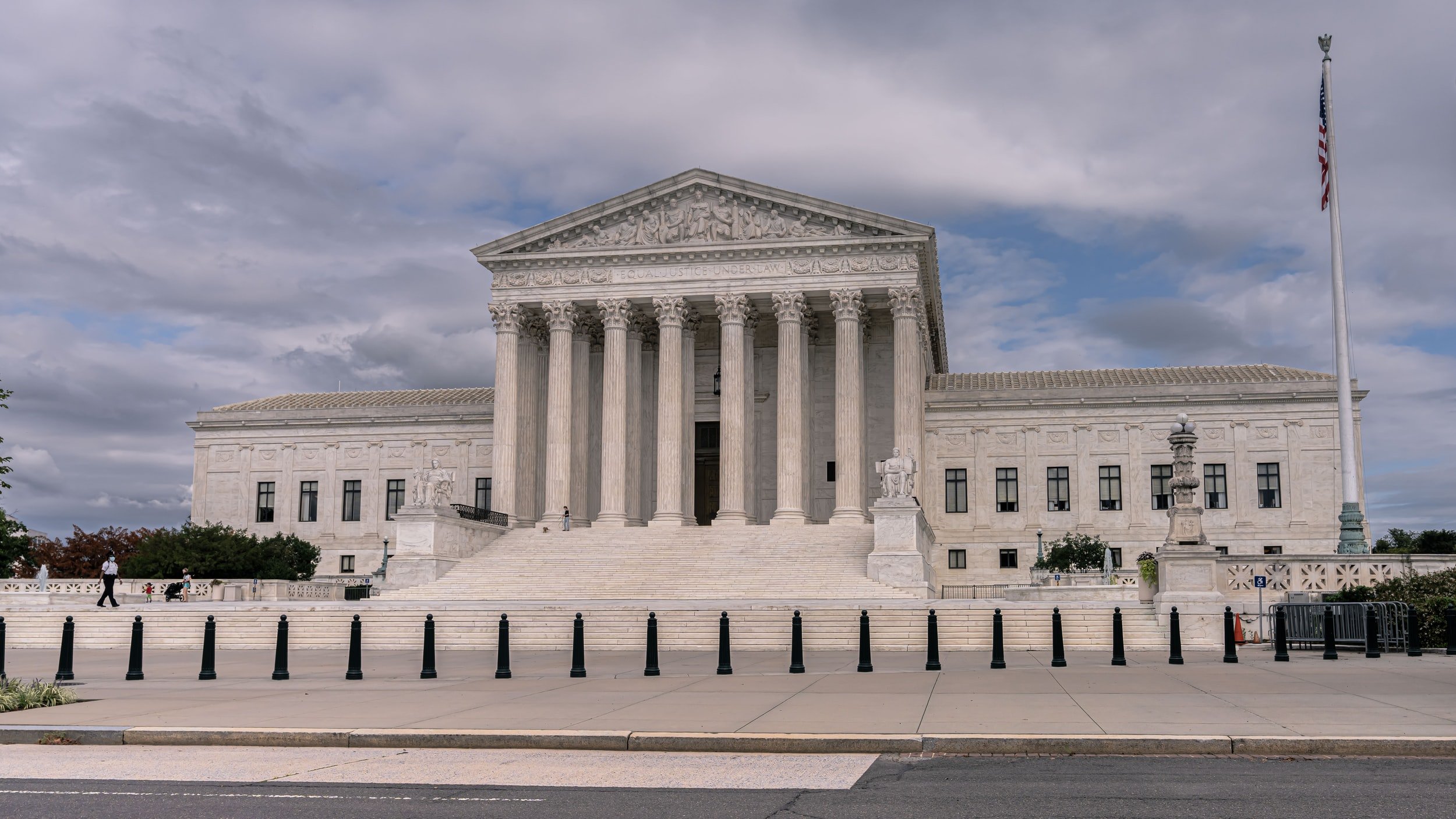
U.S. Supreme Court Blocks Texas Content Moderation Law Applicable to Social Media Companies
The United States Supreme Court issued a May 31, 2022 5-4 opinion found here that blocks a Texas law that prohibits large social media companies, from banning or removing users’ posts based on political viewpoints.
The United States Supreme Court issued a May 31, 2022 5-4 opinion found here that blocks a Texas law that prohibits large social media companies, from banning or removing users’ posts based on political viewpoints.
According to the opinion:
The law in question, HB20, regulates “social media plat- form[s]” that are “open to the public;” that “enabl[e] users to communicate with other users for the primary purpose of posting information, comments, messages, or images;” and that have at least “50 million active users in the United States in a calendar month.” App. to Application 39a–41a (App.). Section 7 of HB20 prohibits these platforms from “censor[ing]” users based on viewpoint, and §2 requires cov- ered platforms to disclose certain information about their business practices, including an “acceptable use policy” and “a biannual transparency report.” Id., at 39a–46a, 48a– 52a. These platforms must also establish procedures by which users can appeal a platform’s decision to “remove content posted by the user.” Id., at 44a.
Applicants are two trade associations that represent ma- jor social media platforms covered by the statute. They challenged the constitutionality of HB20 in the United States District Court for the Western District of Texas, con- tending, among other things, that the law is facially uncon- stitutional under the First Amendment. The court agreed, and it preliminarily enjoined the Texas attorney general from enforcing the statute. The United States Court of Appeals for the Fifth Circuit—after full briefing and oral ar- gument—stayed that preliminary injunction.
The Court granted NetChoice and the Computer & Communications Industry Association’s request to reinstate a block imposed by a federal district judge as the lawsuit goes through the court system.
The decision does not rule on the merits of the law, known as HB20, but reimposes an injunction blocking it from taking effect while federal courts decide whether it can be enforced. The Supreme Court is likely to be asked to take a look at the constitutionality of the law in question at some point in the near future.
Lanton Law is a national boutique law and government affairs firm that closely monitors legislative, regulatory and legal developments for our clients. We help stakeholders understand what’s at issue so that we can help our valued clients achieve their priorities. Contact us to learn about how either our legal or lobbying services can help you attain your goals.

Lanton Law Interviews Famlee Founder & CEO Shelley Bailey
Ron Lanton of Lanton Law interviews Shelley Bailey of Famlee. They discuss fertility, entrepreneurship and the benefits of technology for the advancement of women's health.
Ron Lanton of Lanton Law interviews Shelley Bailey of Famlee. They discuss fertility, entrepreneurship and the benefits of technology for the advancement of women's health. The interview can be heard here.

Lanton Law Podcast Episode 1
On Episode 1 Lanton Law speaks with STACK CEO Jonathan Ogurchak about privacy trends, healthcare efficiencies using SAAS and whether healthcare is ready for tech disruption.
On Episode 1 Lanton Law speaks with STACK CEO Jonathan Ogurchak about privacy trends, healthcare efficiencies using SAAS and whether healthcare is ready for tech disruption. Click here to listen to the podcast.

FDA Releases Draft Cybersecurity Guidance
The FDA has just released a new cybersecurity draft titled “Cybersecurity in Medical Devices: Quality System Considerations and Content of Premarket Submissions; Draft Guidance for Industry and Food and Drug Administration Staff; Availability.”
The FDA has just released a new cybersecurity draft titled “Cybersecurity in Medical Devices: Quality System Considerations and Content of Premarket Submissions; Draft Guidance for Industry and Food and Drug Administration Staff; Availability.” The draft guidance can be viewed here. Comments are due July 7, 2022.
What is the FDA proposing?
In 2018, the FDA proposed updates to the final guidance, ‘‘Content of Premarket Submissions for Management of Cybersecurity in Medical Devices,’’ and issued a draft guidance of the same name.”
This draft guidance replaces the aforementioned 2018 guidance and is “intended to further emphasize the importance of ensuring that devices are designed securely, are designed to be capable of mitigating emerging cybersecurity risks throughout the Total Product Life Cycle, and to clearly outline FDA’s recommendations for premarket submission content to address cybersecurity concerns.”
Why is the FDA doing this?
According to the draft guidance as “more medical devices are becoming interconnected, cybersecurity threats have become more numerous, more frequent, more severe, and more clinically impactful. As a result, ensuring medical device safety and effectiveness includes adequate medical device cybersecurity, as well as its security as part of the larger system.”
How Lanton Law can help
Society’s reliance on technology has become even more vital with the effects of COVID-19. With all of the hacking and malware attacks we have witnessed against various data stakeholders, we foresee cybersecurity as a major legal & policy area that will continue to be expanded.
Lanton Law is a national boutique law and lobbying firm that focuses on technology and healthcare. If you are a tech or healthIT industry stakeholder with questions about the current landscape or if you would like to discuss how your organization’s strategic initiatives might be impacted by either Congress, regulatory agencies or legal decisions, contact us today.

Major Tech Legislation Passes U.S. Senate Judiciary Committee
The Senate Judiciary Committee voted 16-6 to advance the American Innovation and Choice Online Act.
The Senate Judiciary Committee voted 16-6 to advance the American Innovation and Choice Online Act. The legislation seeks to provide that certain discriminatory conduct by covered platforms shall be unlawful. Essentially this bill stops large tech platform companies from the practice of “self-preferencing” meaning these platforms will not be able to discriminate against other businesses that rely on the platform companies’ services. With momentum gaining in the Senate for passage along with similar language in the House via H.R. 3816, this bill definitely seems to be going places these days.
For a while now we have been forecasting greater policy and regulatory oversight when it comes to technology stakeholders. We believe that we will see more scrutiny this year, as technology oversight is an issue that crosses party lines. Don’t wait to form your strategic plan for 2022.
Lanton Law is a national boutique regulatory law and lobbying firm that focuses on technology and healthcare/life science. If you are an industry stakeholder with questions about the current landscape or if you would like to discuss how your organization’s strategic initiatives might be impacted by either Congress, regulatory agencies or legal decisions, contact us today.

The Platform Accountability and Transparency Act (PATA) Introduced to Ensure Social Media Platform Transparency
Senators Coons (D-DE), Kloubuchar (D-MN) and Portman (R-OH) have introduced a bi-partisan proposed bill that would require social media companies to provide vetted, independent researchers and the public with access to certain platform data.
Senators Coons (D-DE), Kloubuchar (D-MN) and Portman (R-OH) have introduced a bi-partisan proposed bill that would require social media companies to provide vetted, independent researchers and the public with access to certain platform data.
According to the bill’s press release, PATA proposes the following:
Under PATA, independent researchers would be able to submit proposals to the National Science Foundation, an independent agency designed to promote the progress of science by approving research and development proposals from researchers across the sciences. If the requests are approved, social media companies would be required to provide the necessary data subject to certain privacy protections.
Companies that failed to comply would be subject to enforcement from the Federal Trade Commission (FTC) and face the potential loss of immunity under Section 230 of the Communications Decency Act.
Additionally, the bill would give the FTC the authority to require that platforms proactively make certain information available to researchers or the public on an ongoing basis, such as a comprehensive ad library with information about user targeting and engagement.
The proposal would also protect researchers from legal liability that may arise from automatically collecting platform information if they comply with various privacy safeguards.
The bill can be viewed here.
This bill is important to watch as part of an ongoing trend of increasing policy scrutiny on the tech sector.
Lanton Law is a national boutique regulatory law and lobbying firm that focuses on technology and healthcare/life science. Our technology practice monitors relevant policy and regulatory decision makers and we counsel clients on emerging trends within this rapidly developing field.
If you are an industry stakeholder with questions about the current landscape or if you would like to discuss how your organization’s strategic initiatives might be impacted by either Congress, regulatory agencies or legal decisions, contact us today.

Rohit Chopra of the Consumer Financial Protection Bureau testified before the House Financial Services Committee on Changing Tech Stakeholder Influence
Rohit Chopra who is the Director of the Consumer Financial Protection Bureau testified before the House Financial Services Committee regarding how “Congress has tasked the CFPB with monitoring market conditions to spot risks, ensure compliance with existing law, and promote competition in order to protect families and honest businesses.”
Rohit Chopra who is the Director of the Consumer Financial Protection Bureau testified before the House Financial Services Committee regarding how “Congress has tasked the CFPB with monitoring market conditions to spot risks, ensure compliance with existing law, and promote competition in order to protect families and honest businesses.”
He outlined the Bureau’s concerns with today’s tech and fintech market influences.
“Technological progress holds the potential for enormous benefits to households and the economy, particularly with respect to real-time consumer payments. At the same time, the desire of Big Tech to gain greater control over the flow of money in the economy raises a number of questions. For example, how will these firms harvest 2 and monetize data they collect on our transactions? What criteria will they use to decide who is removed from the platform? How will they ensure that payment systems adhere to consumer protections? Will Big Tech giants have an incentive to impede the entry of new firms seeking to offer competitive products and services? With this in mind, the CFPB has issued orders to dominant firms such as Facebook, Google, Apple, Amazon, Square, and PayPal to shed light on some of these questions. We will also be studying some of the practices of Chinese tech giants, including services provided by WeChat Pay and AliPay. These efforts complement other work within the Federal Reserve System to ensure families and businesses can rely on a fast and reliable payments system. It will also inform other initiatives to ensure that our evolving payments landscape is in alignment with our national interest. Given the state of today’s economic conditions, the Bureau also intends to ramp up its monitoring of other markets and their impact on specific population segments.”
Mr. Chopra’s testimony can be viewed here. Throughout the year we have seen where the fintech and technology stakeholder interests have begun to merge due to a changing marketplace.
Lanton Law is a national boutique regulatory law and lobbying firm that focuses on technology and healthcare/life science. If you are an industry stakeholder with questions about the current landscape or if you would like to discuss how your organization’s strategic initiatives might be impacted by either Congress, regulatory agencies or legal decisions, contact us today.

First Meeting of the President’s Council of Advisors on Science and Technology Occurs
The White House held the first meeting of the President’s Council of Advisors on Science and Technology Occurs (PCAST). PCAST deals with “1) U.S. competitiveness, security, and international science and technology leadership; and 2) U.S. public health and pandemic preparedness.”
The White House held the first meeting of the President’s Council of Advisors on Science and Technology (PCAST). PCAST deals with “1) U.S. competitiveness, security, and international science and technology leadership; and 2) U.S. public health and pandemic preparedness.”
“PCAST focused its meeting on two topics: U.S. competitiveness, security, and international science and technology leadership; and U.S. public health and pandemic preparedness. The meeting provided PCAST with an opportunity to hear from representatives of a broad range of sectors, including federal, state, and local governments, academia, and industry.”
Additional details on this meeting can be found here.
Lanton Law is a national boutique regulatory law and lobbying firm that focuses on technology and healthcare/life science. We continue to monitor the policy and legal developments around the FTC.
If you are an industry stakeholder with questions about the current landscape or if you would like to discuss how your organization’s strategic initiatives might be impacted by either Congress, regulatory agencies or legal decisions,contact us today.

FTC Report to Congress on Privacy and Security
The Federal Trade Commission (FTC) last month issued the FTC Report to Congress on Privacy and Security.
The Federal Trade Commission (FTC) last month issued the FTC Report to Congress on Privacy and Security.
What’s in the Report?
According to the agency “This report responds to the Joint Explanatory Statement accompanying the Consolidated Appropriations Act, 2021, P.L. 116-260, directing the Federal Trade Commission (“Commission” or “FTC”) to “conduct a comprehensive internal assessment measuring the agency’s current efforts related to data privacy and security while separately identifying all resource-based needs of the FTC to improve in these areas. The agreement also urges the FTC to provide a report describing the assessment’s findings to the Committees [on Appropriations of the House and Senate] within 180 days of enactment of this Act.”
Additionally, “The report first provides an overview of the FTC’s authority related to privacy and security, highlighting certain recent efforts in those areas. Second, it discusses priorities for improving the effectiveness of our efforts to protect Americans’ privacy. Third, it identifies areas in which we could use additional resources to further ensure Americans’ privacy is protected. Finally, it discusses the need for Congressional action on the FTC’s authority.”
Lanton Law is a national boutique regulatory law and lobbying firm that focuses on healthcare/life science and technology. We continue to monitor the policy and legal developments around the FTC.
If you are an industry stakeholder with questions about the current landscape or if you would like to discuss how your organization’s strategic initiatives might be impacted by either Congress, regulatory agencies or legal decisions, contact us today.

New Request for Public Comment Regarding Technology Stakeholders
The Bureau of Industry and Security, Office of Technology Evaluation, U.S. Department of Commerce has issued a Notice of request for public comment. The notice is titled Notice of Request for Public Comments. According to the Bureau:
The Bureau of Industry and Security, Office of Technology Evaluation, U.S. Department of Commerce has issued a Notice of request for public comment. The notice is titled Notice of Request for Public Comments. According to the Bureau:
On February 24, 2021, President Biden issued Executive Order 14017 (E.O. 14017) on “America's Supply Chains,” which directs several federal agency actions to secure and strengthen America's supply chains. One of these directions is for the Secretary of Commerce and the Secretary of Homeland Security, in consultation with the heads of appropriate agencies, to submit, within one year of the date of E.O. 14017, a report on supply chains for critical sectors and subsectors of the information and communications technology (ICT) industrial base (as determined by the Secretary of Commerce and the Secretary of Homeland Security), including the industrial base for the development of ICT software, data, and associated services. This notice requests comments and information from the public to assist the Secretary of Commerce and the Secretary of Homeland Security in preparing the report required by E.O. 14017.
The comment deadline is November 4, 2021.
Lanton Law’s technology practice has been monitoring similar legislative and legal developments. If you are a technology or healthcare/life science stakeholder with questions about the current landscape or if you would like to discuss how your organization’s strategic initiatives might be impacted by either Congress, regulatory agencies or legal decisions, contact us today.

Illumina Acquires Grail
According to the press release, Illumina announced that it has acquired GRAIL.
According to the press release, Illumina announced that it has “acquired GRAIL, a healthcare company focused on life-saving early detection of multiple cancers, but will hold GRAIL as a separate company during the European Commission's ongoing regulatory review.
Illumina, the global leader in DNA sequencing, first announced its intention to acquire GRAIL nearly a year ago, reuniting Illumina with GRAIL four years after it was spun off. GRAIL's Galleri blood test detects 50 different cancers before they are symptomatic. Illumina's acquisition of GRAIL will accelerate access and adoption of this life-saving test worldwide.”
This acquisition has been announced despite the fact that it faces a legal challenge from the FTC as well as European antitrust scrutiny.
Here are the reasons Illumnia gave for the deal according to the press release:
The deal will save lives. Cancer kills around 10 million people annually worldwide and 600,000 people in the US alone. Cancers responsible for nearly 71% of cancer deaths have no recommended early detection screening, and most cancers are detected when chances of survival are lower. Illumina feels there is a moral obligation to have the deal decided by a thoughtful and full review by the EU regulators and the US courts. This can only be done if Illumina acquires GRAIL now. Otherwise, the company is locked into a situation where the deal terms will expire before there is a chance for full review; the clock will just run out.
Right now, the Galleri test is available but costs $950 because it is not covered by insurance. Reuniting the two companies is the fastest way to make the test broadly available and affordable. Illumina's expertise in market development and access has resulted in coverage of genomic testing for over 1 billion people around the world already. This experience will help lead to coverage and reimbursement for the Galleri test.
GRAIL and Illumina have a long history. Illumina formed GRAIL and spun it out in 2016. GRAIL's first employees were part of Illumina, which still owns 12 percent of the company. GRAIL and Illumina are not competitors—this is a vertical acquisition.
Based on past experience, when Illumina enters a market, the market expands. When Illumina entered the non-invasive prenatal testing space, prices dropped, reimbursement expanded, the number of providers increased, and more expectant parents had access to testing.
Illumina's acquisition of GRAIL is driven by the belief that this test should be available to as many people as possible as quickly as possible. From fighting the COVID-19 pandemic to matching cancer patients to therapies, Illumina's mandate is to save lives and transform healthcare. The first COVID-19 viral sequence was on an Illumina machine and now genomic surveillance has emerged as a critical tool in the global fight against the pandemic, with over 70 countries now using Illumina platforms for COVID-19 variant tracking.
Lanton Law is a national boutique law and lobbying firm that focuses on healthcare/life sciences and technology.
If you are an industry stakeholder with questions about the current landscape or if you would like to discuss how your organization’s strategic initiatives might be impacted by either Congress, regulatory agencies or legal decisions, contact us today.

Bipartisan Antitrust Legislation to Promote App Store Competition Introduced
Last week U.S. Senators Richard Blumenthal (D-CT), Marsha Blackburn (R-TN), and Amy Klobuchar (D-MN) introduced the Open App Markets Act.
Last week U.S. Senators Richard Blumenthal (D-CT), Marsha Blackburn (R-TN), and Amy Klobuchar (D-MN) introduced the Open App Markets Act. According to the press release, “ The Open App Markets Act would protect developers’ rights to tell consumers about lower prices and offer competitive pricing; protect sideloading of apps; open up competitive avenues for startup apps, third party app stores, and payment services; make it possible for developers to offer new experiences that take advantage of consumer device features; give consumers more control over their devices; prevent app stores from disadvantaging developers; and set safeguards to continue to protect privacy, security, and safety of consumers.”
Lanton Law is a national boutique regulatory law and lobbying firm that focuses on technology and healthcare/life sciences. If you are an industry stakeholder with questions about the current landscape or if you would like to discuss how your organization’s strategic initiatives might be impacted by either Congress, regulatory agencies or legal decisions, contact us today.

President Biden Issues Executive Order Aimed at Multiple Industries
President Biden has issued an Executive Order (EO) titled Executive Order on Promoting Competition in the American Economy.
President Biden has issued an Executive Order (EO) titled Executive Order on Promoting Competition in the American Economy. The EO advocates for promoting “competition in the American economy, which will lower prices for families, increase wages for workers, and promote innovation and even faster economic growth.” In doing so multiple sectors of the economy including labor, healthcare, transportation, agriculture, communications, technology, banking and finance have been targeted.
As our economy emerges from the pandemic, we foresee that state and federal policymakers will be taking a look to see what laws need to be strengthened or reworked for our reimagined economy.
Lanton Law is a national boutique law and lobbying firm that focuses on highly regulated industries such as healthcare, technology, and finance. If you are an industry stakeholder with questions about the current landscape or if you would like to discuss how your organization’s strategic initiatives might be impacted by either Congress, regulatory agencies or legal decisions, contact us today.

U.S. Senate Passes the Innovation and Competition Act
Earlier this month the U.S. Senate passed a rare bi-partisan bill called the United States Innovation and Competition Act, which seeks to improve America's competitive edge by investing billions of dollars in scientific and technological innovations – including artificial intelligence, computer chips and robotics.
Earlier this month the U.S. Senate passed a rare bi-partisan bill called the United States Innovation and Competition Act, which seeks to improve America's competitive edge by investing billions of dollars in scientific and technological innovations – including artificial intelligence, computer chips and robotics. The bill would boost funding for research and technology manufacturing to increase America's competitiveness, strengthen national security and grow the economy. The bill’s future is uncertain in the U.S. House of Representatives, where the House has a similar bill but it is unlikely that there will not be some kind of compromise between the House and Senate, especially where national security is concerned.
Lanton Law’s technology practice has been monitoring similar legislative and legal developments. If you are a technology or healthcare/life science stakeholder with questions about the current landscape or if you would like to discuss how your organization’s strategic initiatives might be impacted by either Congress, regulatory agencies or legal decisions, contact us today.

Protecting Rural Telehealth Access Act Introduced
Via a recently released a press release describing how a group of bipartisan Senators including Joe Manchin (D-WV), Joni Ernst (R-IA), Jeanne Shaheen (D-NH), and Jerry Moran (R-KS) have introduced the bipartisan Protecting Rural Telehealth Access Act to make current telehealth flexibilities permanent.
Via a recently released a press release describing how a group of bipartisan Senators including Joe Manchin (D-WV), Joni Ernst (R-IA), Jeanne Shaheen (D-NH), and Jerry Moran (R-KS) have introduced the bipartisan Protecting Rural Telehealth Access Act to make current telehealth flexibilities permanent.
“This legislation would ensure rural and underserved community healthcare providers are able to continue offering telehealth services after the current public health emergency ends. These services include the ability to offer audio-only telehealth appointments because many rural Americans don’t have reliable, affordable broadband access.”
According to the press release the proposed Act would:
Allow payment-parity for audio-only health services for clinically appropriate appointments. During COVID-19, recognizing not everyone has access to the technology in their home, Congress made allowances for audio-only telephone services to be used to allow doctors to reach patients wherever they are.
Permanently waive the geographic restriction allowing patients to be treated from their homes. Pre-COVID-19, the home was allowed as an eligible originating site in Medicare and some Medicaid programs, but only for very specific services, and only for the patient, not the provider.
Permanently allow rural health clinics and Federally Qualified Health Centers to serve as distance sites for providing telehealth services.
Lift the restrictions on “store and forward” technologies for telehealth. Currently this is only allowed in Hawaii and Alaska.
Allows Critical Access Hospitals (CAHs) to directly bill for telehealth services.
Lanton Law is a national boutique law and lobbying firm that focuses on healthcare/life science and technology. Our telepharmacy practice has been helping pharmacies and physicians with operational issues, mergers and acquisitions, regulatory inquiries, audits, licensure, employment issues and contracting.
If you are an industry stakeholder with questions about the current landscape or if you would like to discuss how your organization’s strategic initiatives might be impacted by either Congress, regulatory agencies or legal decisions, contact us today.

White House Releases Report Outlining Steps to Strengthen Critical Supply Chains
In February 2021, President Biden issued an Executive Order to direct a government-wide “approach to assessing vulnerabilities in, and strengthening the resilience of, critical supply chains.”
In February 2021, President Biden issued an Executive Order to direct a government-wide “approach to assessing vulnerabilities in, and strengthening the resilience of, critical supply chains.”
The key findings highlight recommendations from its “comprehensive 100-day supply chain assessments for four critical products: semiconductor manufacturing and advanced packaging; large capacity batteries, like those for electric vehicles; critical minerals and materials; and pharmaceuticals and active pharmaceutical ingredients (APIs).”
Lanton Law has several years of experience with supply chain issues. Our firm is a national boutique regulatory law and lobbying firm that focuses on healthcare/life science and technology.
If you are an industry stakeholder with questions about the current landscape or if you would like to discuss how your organization’s strategic initiatives might be impacted by either Congress, regulatory agencies or legal decisions, contact us today.

Data Protection Agency (DPA) Legislation Reintroduced
U.S. Senator Gillibrand (D-NY) issued a press release announcing the Data Protection Act of 2021, which would create the DPA, an independent federal agency whose goal is to protect Americans’ data, instill privacy safeguards and work to ensure that there is transparency in data sharing practices.
U.S. Senator Gillibrand (D-NY) issued a press release announcing the Data Protection Act of 2021, which would create the DPA, an independent federal agency whose goal is to protect Americans’ data, instill privacy safeguards and work to ensure that there is transparency in data sharing practices.
There have been some changes to this proposed legislation since last year’s version of the bill. These changes include:
Supervision of Data Aggregators: Grants the DPA authority to review Big Tech mergers involving a large data aggregator, or any merger that proposes the transfer of personal data of 50,000 or more individuals.
Office of Civil Rights: Establishes the DPA Office of Civil Rights to advance data justice and protect individuals from discrimination.
Enforcement Powers: Improves DPA enforcement powers to oversee the use of high-risk data practices and to penalize, examine, and propose remedies to the social, ethical, and economic impacts of data collection.
Penalties and Fines: Prohibits data aggregators from committing any unlawful, unfair, deceptive, abusive, or discriminatory data practices; and allows for penalties and fines to be levied if violated, including triple penalties for violations against children.
Defines Key Terms for Transparency: Provides Key Definitions for Privacy Harm, Data Aggregators, and High-Risk Data Practice, among other key terms.
According to the release “The DPA would be an executive agency. The director would be appointed by the president and confirmed by the Senate, serves a 5-year term, and must have knowledge of technology, protection of personal data, civil rights, and law. The agency may investigate, subpoena for testimony or documents, and issue civil investigative demands. It may prescribe rules and issue orders and guidance as is necessary to carry out federal privacy laws. The authority of state agencies and state attorneys general are preserved in the Act. The DPA would have three core missions:
1. Give Americans control and protection over their own data by authorizing the DPA to create and enforce data protection rules.
2. Maintain the most innovative, successful tech sector in the world by ensuring fair competition within the digital marketplace.
3. Prepare the American government for the digital age.”
Lanton Law’s technology practice has been monitoring privacy developments nationwide. If you are a banking/finance, technology or healthcare/life science stakeholder with questions about the current landscape or if you would like to discuss how your organization’s strategic initiatives might be impacted by either Congress, regulatory agencies or legal decisions, contact us today.

House Lawmakers Release Anti-Monopoly Agenda for “A Stronger Online Economy: Opportunity, Innovation, Choice”
According to press release, the House Committee on the Judiciary’s Antitrust Subcommittee Chairman Cicilline (D-RI) and Ranking Member Buck (R-CO) announced their antitrust bi-partisan agenda outlined below:
According to press release, the House Committee on the Judiciary’s Antitrust Subcommittee Chairman Cicilline (D-RI) and Ranking Member Buck (R-CO) announced their antitrust bi-partisan agenda outlined below:
“‘A Stronger Online Economy: Opportunity, Innovation, Choice’ consists of five bipartisan bills drafted by lawmakers on the Antitrust Subcommittee, which last year completed a 16-month investigation into the state of competition in the digital marketplace and the unregulated power wielded by Amazon, Apple, Facebook, and Google.”
The “American Innovation and Choice Online Act” to prohibit discriminatory conduct by dominant platforms, including a ban on self-preferencing and picking winners and losers online. The bill is sponsored by Chairman Cicilline and co-sponsored by U.S. Rep. Lance Gooden (TX-05).
The “Platform Competition and Opportunity Act” prohibits acquisitions of competitive threats by dominant platforms, as well as acquisitions that expand or entrench the market power of online platforms. The bill is sponsored by U.S. Rep. Hakeem Jeffries (NY-08) and co-sponsored by Ranking Member Buck.
The “Ending Platform Monopolies Act” eliminates the ability of dominant platforms to leverage their control over multiple business lines to self-preference and disadvantage competitors in ways that undermine free and fair competition. The bill is sponsored by U.S. Rep. Pramila Jayapal (WA-07) and co-sponsored by U.S. Rep. Lance Gooden (TX-05).
The “Augmenting Compatibility and Competition by Enabling Service Switching (ACCESS) Act” promotes competition online by lowering barriers to entry and switching costs for businesses and consumers through interoperability and data portability requirements. This bill is sponsored by U.S. Rep. Mary Gay Scanlon (PA-05) and co-sponsored by U.S. Rep. Burgess Owens (UT-04).
The “Merger Filing Fee Modernization Act” updates filing fees for mergers for the first time in two decades to ensure that the Department of Justice and Federal Trade Commission have the resources they need to aggressively enforce the antitrust laws. This bill is sponsored by U.S. Rep. Joe Neguse (CO-02) and co-sponsored by U.S. Rep. Victoria Spartz (IN-05).
Lanton Law has been monitoring both Congress and the FTC for our technology and healthcare clients, especially as both Congress and the FTC have taken a more aggressive tone on antitrust issues lately.
Lanton Law is a national boutique regulatory law and lobbying firm that focuses on healthcare/life science and technology. If you are an industry stakeholder with questions about the current landscape or if you would like to discuss how your organization’s strategic initiatives might be impacted by either Congress, regulatory agencies or legal decisions,contact us today.

Lina Khan Sworn in as FTC Chair
The Federal Trade Commission (FTC) released a June 15th press release announcing Lina Khan as the Chair of the FTC, with her term expiring on September 25, 2024. Ms. Khan was confirmed by the U.S. Senate on June 15, 2021.
The Federal Trade Commission (FTC) released a June 15th press release announcing Lina Khan as the Chair of the FTC, with her term expiring on September 25, 2024. Ms. Khan was confirmed by the U.S. Senate on June 15, 2021.
Lanton Law has been monitoring the FTC for our technology and healthcare clients. This move may signal that the Biden Administration and Congress may take on a more aggressive role in antitrust policy. Technology stakeholders should take note.
Lanton Law is a national boutique regulatory law and lobbying firm that focuses on healthcare/life science and technology. If you are an industry stakeholder with questions about the current landscape or if you would like to discuss how your organization’s strategic initiatives might be impacted by either Congress, regulatory agencies or legal decisions, contact us today.