

Lanton Law Speaks with Pharmaceutical Executive on Navigating NIH Funding Cuts, Diversity Bans, and Tariff Challenges
Lanton Law spoke with Pharmaceutical Executive on NIH Funding cuts. The interview is titled “Navigating NIH Funding Cuts, Diversity Bans, and Tariff Challenges: Legal and Industry Implications for Medical Research”
Lanton Law spoke with Pharmaceutical Executive on NIH Funding cuts. The interview is titled “Navigating NIH Funding Cuts, Diversity Bans, and Tariff Challenges: Legal and Industry Implications for Medical Research”
The interview can be seen here.

Lanton Law Will Speak at New York Bar's Food Drug & Cosmetic Section's Annual Meeting
We are proud to announce that Lanton Law will be presenting at the NY State Bar Association's Spring Meeting. We are excited about our presentation titled Drug Pricing Wars: "Trends, Politics and Policies." To register and hear the other great presentations click the link below. To register click here
We are proud to announce that Lanton Law will be presenting at the NY State Bar Association's Spring Meeting. We are excited about our presentation titled Drug Pricing Wars: "Trends, Politics and Policies." To register and hear the other great presentations click the link below. To register click here
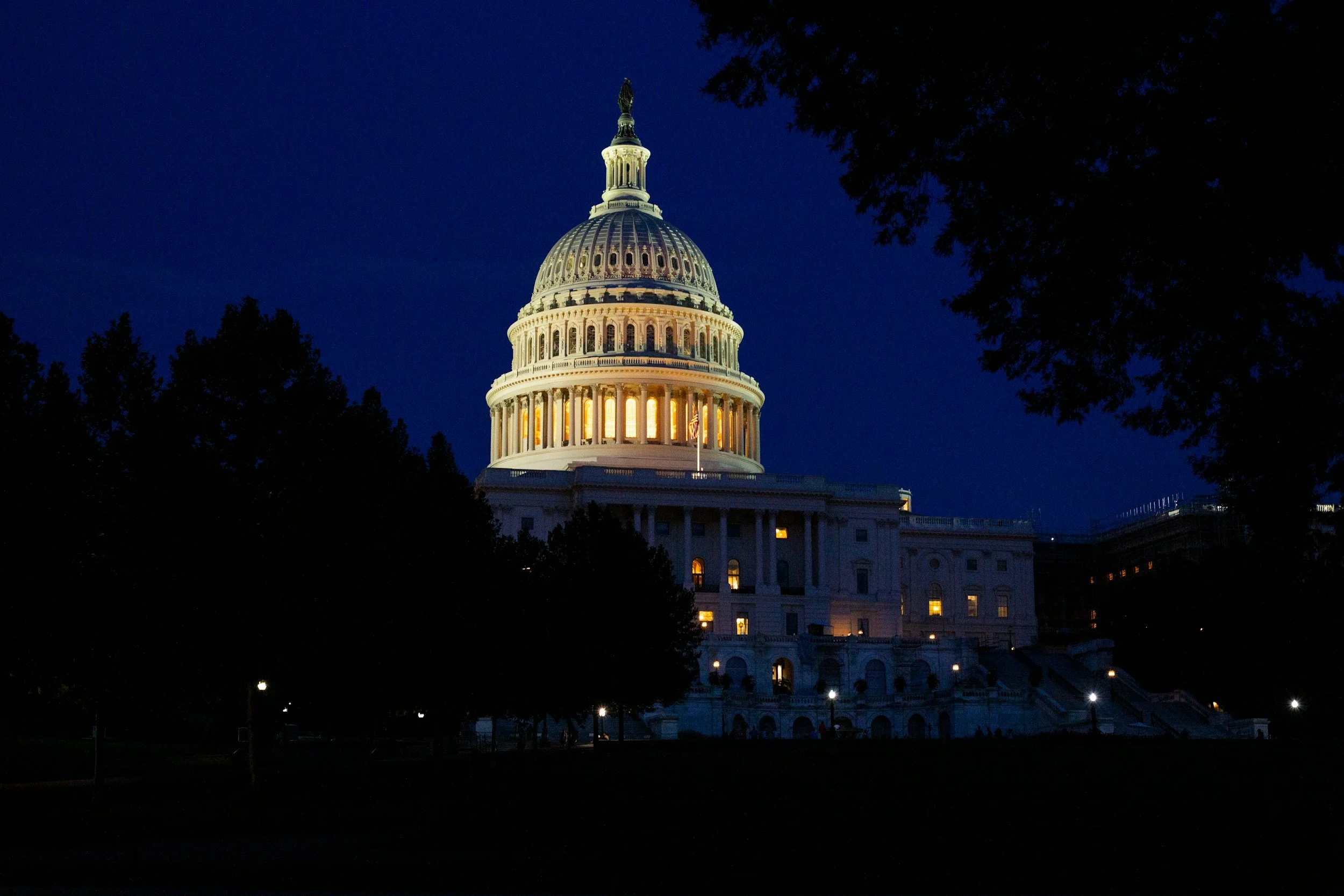
Federal Privacy Rights Legislaton Introduced into Congress
House Committee on Energy and Commerce Chair Cathy McMorris Rodgers (R-WA) and Senate Committee on Commerce, Science and Transportation Chair Maria Cantwell (D-WA) have introduced the American Privacy Rights Act.
House Committee on Energy and Commerce Chair Cathy McMorris Rodgers (R-WA) and Senate Committee on Commerce, Science and Transportation Chair Maria Cantwell (D-WA) have introduced the American Privacy Rights Act.
According to the legislator’s press release, this proposal seeks to establish national data privacy rights and protections for Americans, eliminates the existing patchwork of state comprehensive data privacy laws, and establishes robust enforcement mechanisms to hold violators accountable, including a private right of action for individuals.
Furthermore, the release describes other provisions of the proposed legislation:
Establishes Foundational Uniform National Data Privacy Rights for Americans
Gives Americans the Ability to Enforce Their Data Privacy Rights
Protects Americans’ Civil Rights
Holds Companies Accountable and Establishes Strong Data Security Obligations
Focuses on the Business of Data, Not Mainstreet Business
The draft can be seen here.
Lanton Law's experience in privacy and data protection enables these companies to navigate the complex legal and regulatory landscape effectively. By partnering with us, tech and healthcare organizations can develop robust strategies, ensuring compliance, safeguarding personal data, and maintaining trust among your consumers.
Contact us to learn more.

Pharmaceutical Commerce Speaks with Lanton Law about New Drug Pricing Models
Pharmaceutical Commerce interviews Ron Lanton; Partner at Lanton Law on newly emerging pricing models such as the cost plus drug model.
Pharmaceutical Commerce interviews Ron Lanton; Partner at Lanton Law on newly emerging pricing models such as the cost plus drug model. Ron gives his insight on what impacts these emerging models will have on the pharmaceutical industry. The interview can be seen here.

Congress Reintroduces the Access to Prescription Digital Therapeutics Act
Congress has introduced The Access to Prescription Digital Therapeutics Act of 2023
At Lanton Law we have been monitoring the both exciting and emerging field of prescription digital therapeutics. While the technologies we have been witnessing are promising, there does remain the challenge of reimbursement, since there has not yet been a statutory benefit category established for this new technology. However; behavioral health shows the most immediate promise.
With that in mind, Congress has introduced The Access to Prescription Digital Therapeutics Act of 2023. The bill proposes to “expand Medicare coverage to include PDTs, which are software-based disease treatments designed to directly treat disease. PDTs are designed and tested much like traditional prescription drugs but rather than swallowing a pill or taking an injection, patients receive cognitive therapy through software. The treatments are tested for safety and efficacy in randomized clinical trials, evaluated by the U.S. Food and Drug Administration (FDA) and prescribed by health care providers.” The bill can be read here.
Lanton Law is a national healthcare and life science boutique law and government affairs firm that closely monitors legislative, regulatory and legal developments for our clients. Our HealthIT practice can help stakeholders understand what’s at issue with topics like digital therapeutics, RTM and RPM so that we can help our valued clients reach their goals. Contact us to learn about how either our legal or lobbying services can help you attain your goals.

What's in the Bipartisan Infrastructure Deal?
The Bipartisan Infrastructure Deal is a $1.2 trillion investment in the nation's infrastructure, including roads, bridges, public transit, broadband internet, clean water, and power grids.
There are many people that may have heard about the Bipartisan Infrastructure Deal, but don’t really know a summary of the new law’s details. Below is a quick “cheat sheet” on the recently enacted law.
The Bipartisan Infrastructure Deal is a $1.2 trillion investment in the nation's infrastructure, including roads, bridges, public transit, broadband internet, clean water, and power grids.
The legislation was passed by Congress on November 5, 2021, and signed into law by President Biden on November 15, 2021.
The Bipartisan Infrastructure Deal is the largest investment in infrastructure in the United States since the Interstate Highway System was built in the 1950s.
The legislation is expected to create millions of jobs and boost the economy.
Here are some of the specific investments that are included in the Bipartisan Infrastructure Deal:
$110 billion to repair and rebuild roads and bridges.
$65 billion to expand access to clean drinking water.
$65 billion to help ensure that every American has access to reliable high-speed internet.
$39 billion to modernize public transit.
$25 billion to upgrade airports.
$17 billion to improve port infrastructure.
$66 billion to invest in passenger rail.
$7.5 billion to build a national network of electric vehicle chargers.
$65 billion to upgrade the power grid.
$50 billion to protect against climate change and extreme weather events.
$1 billion to deliver the largest investment in tackling legacy pollution in American history.
Lanton Law is a national boutique law and government affairs firm that closely monitors legislative, regulatory and legal developments in the clean energy space. Contact us to learn about how either our legal or lobbying services can help you attain your goals.

H.R. 3831: The AI Disclosure Act of 2023 Explained
H.R. 3831, the AI Disclosure Act of 2023, is a bill that would require companies that use artificial intelligence (AI) to disclose certain information about their use of AI. This information would include the purpose of the AI system, the data that the AI system is trained on, the algorithms that the AI system uses, and the potential risks and benefits of the AI system. The bill would also create a new agency within the Federal Trade Commission (FTC) to oversee the implementation of the law.
H.R. 3831, the AI Disclosure Act of 2023, is a bill that would require companies that use artificial intelligence (AI) to disclose certain information about their use of AI. This information would include the purpose of the AI system, the data that the AI system is trained on, the algorithms that the AI system uses, and the potential risks and benefits of the AI system. The bill would also create a new agency within the Federal Trade Commission (FTC) to oversee the implementation of the law.
This bill is important because it would increase transparency and accountability in the use of AI. By requiring companies to disclose information about their use of AI, the bill would help consumers to understand how AI is being used and to make informed decisions about whether to use AI-powered products and services.
It is still too early to say whether H.R. 3831 will become law. However, the bill has generated a lot of interest and debate, and it is likely to continue to be a topic of discussion in the coming months.
If you are a stakeholder in the AI industry, you should be aware of H.R. 3831 and its potential implications for your business. Lanton Law’s technology section can help you to understand the bill and to help you develop a strategy to comply with looming regulatory oversight.
Contact Lanton Law today to learn more about how we can help you with your AI legal and policy needs.

Lanton Law Speaks at Summit & Reverse Expo
We were pleased to be invited to Orlando, Florida to speak with IDN with our presentation titled “Price, Innovation & Policy: What’s on the Horizon for the Industry.
We were pleased to be invited to Orlando, Florida to speak with IDN with our presentation titled “Price, Innovation & Policy: What’s on the Horizon for the Industry.

Prescription Digital Therapeutics Bill Introduced in Congress
The Medicaid and CHIP Access to Prescription Digital Therapeutics Act also known as S. 5238 seen here was introduced on December 12, 2022 by Senator Capito (R-WV).
The Medicaid and CHIP Access to Prescription Digital Therapeutics Act also known as S. 5238 seen here was introduced on December 12, 2022 by Senator Capito (R-WV). The bill seeks to “require the Administrator of the Centers for Medicare & Medicaid Services to provide guidance regarding coverage of prescription digital therapeutics under Medicaid and the State Children's Health Insurance Program.” While this bill is a step forward for digital therapeutics, questions remain about this bill such as whether this bill will get introduced in the new Congress, will this bill create more access, reduce costs and is the correct reimbursement model?
At Lanton Law we have been monitoring the both exciting and emerging field of prescription digital therapeutics. While the technologies we have been witnessing are promising, there does remain the challenge of reimbursement, since there has not yet been a statutory benefit category established for this new technology.
Lanton Law is a national healthcare and technology boutique law and government affairs firm that closely monitors legislative, regulatory and legal developments for our clients. Our HealthIT practice can help stakeholders understand what’s at issue with topics like digital therapeutics, RTM and RPM so that we can help our valued clients reach their goals. Contact us to learn about how either our legal or lobbying services can help you attain your goals.

American Data Privacy and Protection Act Introduced
In late June 2022 H.R. 8152 was introduced which seeks to provide consumers with foundational data privacy rights, create strong oversight mechanisms, and establish meaningful enforcement.
In late June 2022 H.R. 8152 was introduced which seeks to provide consumers with foundational data privacy rights, create strong oversight mechanisms, and establish meaningful enforcement.
What are some of the important aspects of the bill?
According to the Congressional Research Service the bill proposes the following:
Covered Entities. It would apply to most entities, including nonprofits and common carriers. Some entities, such as those defined as large data holders that meet certain thresholds or service providers that use data on behalf of other covered entities, would face different or additional requirements.
Covered Data. It would apply to information that “identifies or is linked or reasonably linkable” to an individual.
Duties of Loyalty. It would impose several duties on covered entities, including requirements to abide by data minimization principles and special protections for certain types of data, such as geolocation information, biometric information, and nonconsensual intimate images.
Transparency. It would require covered entities to disclose, among other things, the type of data they collect, what they use it for, how long they retain it, and whether they make the data accessible to the People’s Republic of China, Russia, Iran, or North Korea.
Consumer Control and Consent. It would give consumers various rights over covered data, including the right to access, correct, and delete their data held by a particular covered entity. It would require covered entities to get a consumer’s affirmative, express consent before using their “sensitive covered data” (defined by a list of sixteen different categories of data). It would further require covered entities to give consumers an opportunity to object before the entity transfers their data to a third party or targets advertising toward them.
Youth Protections. It would create additional data protections for individuals under the age of 17, including a prohibition on targeted advertising, and it would establish a Youth Privacy and Marketing Division at the Federal Trade Commission (FTC).
Third-Party Collecting Entities. It would create specific obligations for third-party collecting entities, which are entities whose main source of revenue comes from processing or transferring data that it does not directly collect from consumers (e.g., data brokers). These entities would have to comply with FTC auditing regulations and, if they collect data above the threshold amount of individuals or devices, would have to register with the FTC.
Civil Rights and Algorithms. It would prohibit most covered entities from using covered data in a way that discriminates on the basis of protected characteristics (such as race, gender, or sexual orientation). It would also require large data holders to conduct algorithm impact assessments. These assessments would need to describe the entity’s steps to mitigate potential harms resulting from its algorithms, among other requirements. Large data holders would be required to submit these assessments to the FTC and make them available to Congress on request.
Data Security: It would require covered entities to adopt data security practices and procedures that are reasonable in light of their size and activities. It would authorize the FTC to issue regulations elaborating on these data security requirements.
Small- and Medium-size Businesses: It would also relieve small- and medium-size businesses from complying with several requirements; for instance, these businesses may respond to a consumer’s request to correct their data by deleting the data, rather than correcting it.
Enforcement. It would be enforceable by the FTC, under that agency’s existing enforcement authorities, and by state attorneys general in civil actions.
Private right of action. It would create a delayed private right of action starting four years after the law’s enactment. Injured individuals would be able to sue covered entities in federal court for damages, injunctions, litigation costs, and attorneys’ fees. Individuals would have to notify the FTC or their state attorney general before bringing suit. Before bringing a suit for injunctive relief or a suit against a small- or medium-size business, individuals would be required to give the violator an opportunity to address the violation.
Preemption. It would generally preempt any state laws that are “covered by the provisions” of the ADPPA or its regulations, although it would expressly preserve sixteen different categories of state laws, including consumer protection laws of general applicability and data breach notification laws. It would also preserve several specific state laws, such as Illinois’ Biometric Information Privacy Act and Genetic Information Privacy Act and California’s private right of action for victims of data breaches.
Section by section specifics can be found here.
We are going to see more privacy proposals on the state and federal level.
Lanton Law is a national healthcare & technology law and government affairs firm. Our technology practice has been monitoring privacy developments nationwide. If you are a commerce, technology or healthcare/life science stakeholder with questions about the current landscape or if you would like to discuss how your organization’s strategic initiatives might be impacted by either Congress, regulatory agencies or legal decisions, contact us today.

Comprehensive national data privacy and data security draft legislation framework released
The U.S. House Committee on Energy and Commerce has introduced a bi-partisan discussion framework on privacy.
According to the U.S. House Committee on Energy and Commerce:
“U.S. Representatives Frank Pallone, Jr., D-N.J. and Cathy McMorris Rodgers, R-Wash., Chairman and Ranking Member of the House Committee on Energy and Commerce, and U.S. Senator Roger Wicker, R-Miss., Ranking Member of the Senate Committee on Commerce, Science, and Transportation, today released a discussion draft of a comprehensive national data privacy and data security framework. The draft legislation is the first comprehensive privacy proposal to gain bipartisan, bicameral support.”
What does the American Data Privacy and Protection Act do?
Establish a strong national framework to protect consumer data privacy and security;
Grant broad protections for Americans against the discriminatory use of their data;
Require covered entities to minimize on the front end, individuals’ data they need to collect, process, and transfer so that the use of consumer data is limited to what is reasonably necessary, proportionate, and limited for specific products and services;
Require covered entities to comply with loyalty duties with respect to specific practices while ensuring consumers don’t have to pay for privacy;
Require covered entities to allow consumers to turn off targeted advertisements;
Provide enhanced data protections for children and minors, including what they might agree to with or without parental approval;
Establish regulatory parity across the internet ecosystem; and
Promote innovation and preserve the opportunity for start-ups and small businesses to grow and compete.
The discussion draft can be found here.
Lanton Law is a national healthcare & technology law and government affairs firm. Our technology practice has been monitoring privacy developments nationwide. If you are a commerce, technology or healthcare/life science stakeholder with questions about the current landscape or if you would like to discuss how your organization’s strategic initiatives might be impacted by either Congress, regulatory agencies or legal decisions, contact us today.

How to Choose a Lobbyist
Since the early 2000s, there has been a steady increase in the amount of government activity that has directly affected healthcare stakeholders. Prior to this time-period, companies could afford to focus only on differentiating their products from their competitors. Now companies are finding that during their strategic planning meetings, they must account for how state and federal government activity may impact their bottom line. In addition to having a Government Affairs staff, these same companies are starting to realize the importance of having established a relationship with a lobbyist. The question is how do you find the right lobbyist for your organization?
Since the early 2000s, there has been a steady increase in the amount of government activity that has directly affected healthcare stakeholders. Prior to this time-period, companies could afford to focus only on differentiating their products from their competitors. Now companies are finding that during their strategic planning meetings, they must account for how state and federal government activity may impact their bottom line. In addition to having a Government Affairs staff, these same companies are starting to realize the importance of having established a relationship with a lobbyist. The question is how do you find the right lobbyist for your organization?
First you want to make sure the lobbyist has experience. To be a good lobbyist there is no magic number of how many years you have worked within the political system. However; many lobbyists have worked an average of six months in the legislature as an aide to a legislator or on the other side of the spectrum, many legislators have left the legislature to work as a lobbyist. These individuals have an insider’s perspective into how the legislature works such as when a bill filing deadline date is and whether or not a bill can be introduced due to if a state is in an emergency session where the rules for introducing legislation is different from regular session.
Second the lobbyist should have a minimum number of contacts in the legislature. Whether it is in Congress or on the state level, the lobbyist should be able to have a go to legislator that can get a bill introduced quickly. However; the most successful lobbyist will not be limited to one party. Having contacts on both sides of the aisle will allow the lobbyist the opportunity to bring any bill at any time regardless of what political party has the majority.
Third the best lobbyist should be strategic. He or she should be able to know when a good time to introduce legislation is. The lobbyist should know what legislator to target as the bill sponsor. This is important because the bill sponsor will be the champion for your particular bill from start to finish. The lobbyist will need to educate the bill sponsor on the nuances of the bill so that the sponsor will be educated enough to be able to respond to technical questions during a hearing or when the sponsor is in caucus meetings; explaining to their respective party about why your bill should be voted on. The lobbyists should be able to pick and choose what committee will be best for your bill to go into, who to use as strategic allies for your legislation and be intuitive enough on when to negotiate and when not to.
Next it is important for your lobbyist to know the industry and to have foresight. You need to be comfortable knowing that your lobbyist understands your industry because if not, how can you be sure that your lobbyist is communicating the correct outcome for you? The lobbyist should be skilled enough to draft a bill that solves your problem without having to continuously ask you how something works. Additionally, while many lobbyists only focus on the legislature, the best lobbyists will think long-term to determine if a regulatory body will be involved once your bill passes. If so a lobbyist should be able to guide you through the regulatory process without leaving you to fend for yourself after a bill has passed.
Finally, as with any other professional, you need to be aware of the reputation your lobbyist has. Do they take the time to make sure their clients understand everything that is happening? Does the lobbyist prepare the client and relevant legislators ahead of time for crucial hearings? Does the lobbyist make everything easy to understand? Does the lobbyist dress appropriately for meetings and do they have the needed respect from the legislature? Does the lobbyist closely follow the bill from start to finish or are they overloaded with too many clients? These are important issues to talk with your prospective lobbyist about before entering into a contractual relationship.
While there are other nuances to the lobbying relationship, these should be enough for you to think about as your organization considers whether to engage a lobbyist. Lobbyist should no longer be considered a luxury item. The best lobbyist are quickly becoming essential parts of today’s corporate environment for the value they bring to their clients in either advancing their interests through legislation, or being available to respond to legislative targeting that has been on the rise. You know you have picked the right lobbyist when you can breathe a sigh of relief knowing that they have your back.
Lanton Law is a national boutique law and government affairs firm that closely monitors legislative, regulatory and legal developments for our clients. We help stakeholders understand what’s at issue so that we can help our valued clients achieve their priorities. Contact us to learn about how either our legal or lobbying services can help you attain your goals.

The Pharmacy Benefit Manager Transparency Act of 2022 Introduced in Congress
The Pharmacy Benefit Manager Transparency Act of 2022 was introduced by Senate Commerce Science, and Transportation Committee Chair Maria Cantwell and Senate Judiciary Committee Ranking Member Chuck Grassley.
The Pharmacy Benefit Manager Transparency Act of 2022 was introduced by Senate Commerce Science, and Transportation Committee Chair Maria Cantwell and Senate Judiciary Committee Ranking Member Chuck Grassley.
The bill which can be viewed here, seeks to prevent unfair and deceptive acts or practices and the dissemination of false information related to pharmacy benefit management services for prescription drugs, and for other purposes.
According to the Senate Commerce Committee’s announcement the proposed bill seeks to specifically do the following:
PROHIBITS UNFAIR OR DECEPTIVE PRICING PRACTICES
The legislation would make it illegal for PBMs to engage in “spread pricing” in which they charge health plans and payers more for a prescription drug than what they reimburse to the pharmacy, and then pocket the difference – the “spread” – as profit.
The bill would also prohibit PBMs from arbitrarily, unfairly, or deceptively clawing back payments made to pharmacies, or arbitrarily, unfairly, or deceptively increasing fees or lowering reimbursements to offset reimbursement changes in federally-funded health plans.
INCENTIVIZES FAIR AND TRANSPARENT PBM PRACTICES
The bill would encourage fair and transparent PBM practices that benefit local pharmacies and consumers by making clear that a PBM would not be in violation of the Act if it:
Passes along 100 percent of any rebate to the health plan or payer; and
Provide full and complete disclosure of:
The cost, price, and reimbursement of prescription drugs to the health plans and pharmacies;
All fees,markups, and discounts the PBM charges or imposes on health plans and pharmacies; or
The aggregate remuneration fees it receives from drugmakers to health plans, payers, and any federal agency.
MANDATES TRANSPARENCY
The bill would require PBMs to file an annual report with the FTC, shining a brighter light on how they charge health plans and pharmacies for prescription drugs. Specifically, it would require PBMs to disclose:
The aggregate amount of the difference between how much each health plan paid the PBM for prescription drugs, and how much the PBM paid each pharmacy on behalf of health plans for such drugs;
The aggregate total amount of fees the PBM charged to pharmacies and the total amount of reimbursements the PBM clawed back from pharmacies;
Why the cost, copay, coinsurance, or deductible for a consumer increased, or why the reimbursement rate to a pharmacy decreased for a prescription drug; and
For PBMs that control or are affiliated with a pharmacy, a description of any differences between what they reimburse or charge affiliated and nonaffiliated pharmacies.
ENFORCEMENT
The bill would authorize the FTC and state attorneys general to enforce its mandates, including by seeking civil penalties from PBM companies for each violation, plus an additional penalty of up to $1 million.
Lanton Law is a national boutique law and lobbying firm that focuses on healthcare/life sciences and technology. Our pharmacy practice has been helping pharmacies nationwide with operational issues, mergers and acquisitions, regulatory inquiries, audits, licensure, employment issues and contracting. Our lobbying efforts help pharmacies nationwide achieve improved business climates through carefully crafted legislation.
If you are an industry stakeholder with questions about the current landscape or if you would like to discuss how your organization’s strategic initiatives might be impacted by either Congress, regulatory agencies or legal decisions, contact us today.

U.S. Hemp Roundtable Highlights New Industry CBD Study
The U.S. Hemp Roundtable is highlighting a study conducted by Validcare “confirms prior research that orally-ingested cannabidiol (CBD) has a strong safety profile, providing data that addresses FDA’s specific safety concerns regarding CBD, with the results indicating that daily consumption across a range of typical retail products and serving sizes is not associated with elevated liver tests, low testosterone levels, or daytime drowsiness.”
The U.S. Hemp Roundtable is highlighting a study conducted by Validcare “confirms prior research that orally-ingested cannabidiol (CBD) has a strong safety profile, providing data that addresses FDA’s specific safety concerns regarding CBD, with the results indicating that daily consumption across a range of typical retail products and serving sizes is not associated with elevated liver tests, low testosterone levels, or daytime drowsiness.”
“We are excited to report that the ‘real-world data’ that FDA has been soliciting addresses the agency’s safety concerns,” stated Jonathan Miller, General Counsel to the U.S. Hemp Roundtable, the hemp industry’s national advocacy organization. “The time has come for FDA to regulate CBD and other hemp derivatives. If FDA does not act, we call on Congress to pass legislation such as HR 841, HR 6134 and S. 1698 which would require the FDA to develop regulatory pathways for the sale of hemp extracts like CBD in ingestible form.”
The FDA is the deciding factor in determining whether CBD products make it in the marketplace. This study could help push innovation in the right direction and answer the lingering safety questions and concerns that we have seen in previous FDA product rulings.
Lanton Law is a national boutique law and lobbying firm that focuses on healthcare/life sciences and technology. Specifically we have expertise in cannabis and CBD related issues. Contact us to learn about how either our legal or lobbying services can help you attain your priorities.
Lanton Law’s publications should not be construed as legal advice on any specific facts or circumstances. The contents are intended for general information purposes only and may not be quoted or referred to in any other publication or proceeding without prior written consent of us. To request reprint permission for any of our publications, please use our “Let’s Chat” form, which can be found on our website at www.lantonlaw.com. The mailing of this publication is not intended to create, and receipt of it does not constitute, an attorney-client relationship.

U.S. Houses Passes the MORE Act Helping Cannabis Stakeholders
The U.S. House has passed the Marijuana Opportunity Reinvestment and Expungement Act otherwise known as the MORE Act. The proposed bill removes marijuana from the list of scheduled substances under the Controlled Substances Act and eliminates criminal penalties for an individual who manufactures, distributes, or possesses marijuana.
The U.S. House has passed the Marijuana Opportunity Reinvestment and Expungement Act otherwise known as the MORE Act. The proposed bill removes marijuana from the list of scheduled substances under the Controlled Substances Act and eliminates criminal penalties for an individual who manufactures, distributes, or possesses marijuana.
Sepcifically the bill:
requires the Bureau of Labor Statistics to regularly publish demographic data on cannabis business owners and employees,
establishes a trust fund to support various programs and services for individuals and businesses in communities impacted by the war on drugs,
imposes an excise tax on cannabis products produced in or imported into the United States and an occupational tax on cannabis production facilities and export warehouses,
makes Small Business Administration loans and services available to entities that are cannabis-related legitimate businesses or service providers,
prohibits the denial of federal public benefits to a person on the basis of certain cannabis-related conduct or convictions,
prohibits the denial of benefits and protections under immigration laws on the basis of a cannabis-related event (e.g., conduct or a conviction),
establishes a process to expunge convictions and conduct sentencing review hearings related to federal cannabis offenses,
directs the Government Accountability Office to study the societal impact of state legalization of recreational cannabis,
directs the National Highway Traffic Safety Administration to study methods for determining whether a driver is impaired by marijuana,
directs the National Institute for Occupational Safety and Health to study the impact of state legalization of recreational cannabis on the workplace, and
directs the Department of Education to study the impact of state legalization of recreational cannabis on schools and school-aged children.
The bill H.R. 3617 can be viewed here. The bill faces an unknown future in the U.S. Senate.
Lanton Law is a national boutique law and lobbying firm that focuses on healthcare/life sciences and technology. Specifically we have expertise in cannabis and CBD related issues.
If you are an industry stakeholder with questions about the current landscape or if you would like to discuss how your organization’s strategic initiatives might be impacted by either Congress, regulatory agencies or legal decisions, contact us today.

What to Know about CURES 2.0
In November 2021, U.S. Reps. Fred Upton (R-MI) and Diana DeGette (D-CO) today introduced their bipartisan Cures 2.0 legislation. The bill which is aimed at helping patients of innovative companies within healthcare and life sciences can be viewed here.
In November 2021, U.S. Reps. Fred Upton (R-MI) and Diana DeGette (D-CO) today introduced their bipartisan Cures 2.0 legislation. The bill which is aimed at helping patients of innovative companies within healthcare and life sciences can be viewed here.
According to Congressman Upton’s press release the bill:
Creates an entirely new agency aimed at ending some of the world’s most difficult diseases – such as cancer, diabetes, ALS, Alzheimer’s and more. The so-called Advanced Research Projects Agency for Health, or ARPA-H, would be housed within the National Institutes of Health and tasked with finding new cures and treatments to a slate of illnesses that affect tens of millions of Americans across the country.
Transform how Medicare covers innovative new treatments and technologies to make those new discoveries available to patients sooner.
Increase access to telehealth services for Medicare and Medicaid patients, including those covered under the Children’s Health Insurance Program, known as CHIP, to ensure more Americans are getting the help they need, when they need it.
Provide training and educational programs for at-home caregivers – including family members with no prior health care experience to help them better care for loved ones when they are home.
Require more diversity in clinical trials to ensure any new drugs and treatments approved for use in the U.S. are both safe and effective for a greater – and more representative – portion of the population.
Provide patients more information about the illness they face and the treatment options available to them to make them a more integral part of the decision-making process.
We have featured this bill in a previous November 23, 2021 blog post. We believe that this is a great opportunity if you are a manufacturer, telehealth provider or clinical trial stakeholder. CURES 2.0 is something that we have been forceasting since 2020 as a way to make our system better.
Lanton Law is a national healthcare and life science boutique law and government affairs firm that closely monitors legislative, regulatory and legal developments for our clients. Our life sciences practice can help stakeholders understand what’s at issue so that we can help our valued clients reach their goals. Contact us to learn about how either our legal or lobbying services can help you attain your goals.

Lanton Law Speaks with Pharmacy Times About the Mark Cuban Cost Plus Drug Company
Lanton Law spoke with Pharmacy Times about the possible market implications of the new Mark Cuban Cost Plus Drug Company.
Lanton Law spoke with Pharmacy Times about the possible market implications of the new Mark Cuban Cost Plus Drug Company.
“In an interview with Pharmacy Times, Ron Lanton III, Esq, principal at Lanton Law, said entrepreneur Mark Cuban's new venture into the pharmacy field is very interesting, although it maybe just another player in the mail-order pharmacy market.
In the interview, Lanton discussed the company's steep discounts on drugs in a myriad of disease states, as well as the company's pharmacy benefits manager, which is expected to be operational in 2023. Ultimately, Lanton said the company's broader impacts on the pharmacy field and drug pricing remain to be seen, although several other legislative efforts to lower drug prices have been discussed in recent years.”
The interview can be seen by clicking here.

Major Tech Legislation Passes U.S. Senate Judiciary Committee
The Senate Judiciary Committee voted 16-6 to advance the American Innovation and Choice Online Act.
The Senate Judiciary Committee voted 16-6 to advance the American Innovation and Choice Online Act. The legislation seeks to provide that certain discriminatory conduct by covered platforms shall be unlawful. Essentially this bill stops large tech platform companies from the practice of “self-preferencing” meaning these platforms will not be able to discriminate against other businesses that rely on the platform companies’ services. With momentum gaining in the Senate for passage along with similar language in the House via H.R. 3816, this bill definitely seems to be going places these days.
For a while now we have been forecasting greater policy and regulatory oversight when it comes to technology stakeholders. We believe that we will see more scrutiny this year, as technology oversight is an issue that crosses party lines. Don’t wait to form your strategic plan for 2022.
Lanton Law is a national boutique regulatory law and lobbying firm that focuses on technology and healthcare/life science. If you are an industry stakeholder with questions about the current landscape or if you would like to discuss how your organization’s strategic initiatives might be impacted by either Congress, regulatory agencies or legal decisions, contact us today.

House Committee on Oversight and and Reform Releases Report on Drug Pricing
Last week Representative Maloney (D-NY) who is the Chairwoman of the Committee on Oversight and Reform released the final staff report, resulting from a multi-year investigation into drug pricing. The Committee investigation was originally started by the late Representative Cummings.
Last week Representative Maloney (D-NY) who is the Chairwoman of the Committee on Oversight and Reform released the final staff report, resulting from a multi-year investigation into drug pricing. The Committee investigation was originally started by the late Representative Cummings.
Here are a few findings from the report.
Drug companies aggressively raise prices to meet revenue targets, and executive compensation structures create incentives to raise prices. The companies in the Committee’s investigation collectively raised prices more than 250 times on the 12 drugs examined. The drugs in the Committee’s investigation are now priced at a median of almost 500% higher than when they were brought to market. The Committee ’s investigation revealed evidence that company executives made aggressive price increases to meet ever-increasing revenue targets and earnings goals. All ten companies have compensation structures that tie incentive payments to revenue and other financial targets, and several companies directly tied incentive compensation to drug-specific revenue targets.
Drug companies target the U.S. market for higher prices and use the Medicare program to boost revenue. Internal strategy documents show that drug companies targeted the U.S. market for price increases—while maintaining or lowering prices in the rest of the world—in part because Medicare cannot negotiate directly for lower prices. The Committee’s analysis found that taxpayers could have saved more than $25 billion over a five-year period for just seven of the drugs investigated—Humira, Imbruvica, Sensipar, Enbrel, Lantus, NovoLog, and Lyrica—if private Medicare Part D plans had obtained the same discounts as other federal health programs that are empowered to negotiate.
Drug companies abuse the patent system and FDA market exclusivities to suppress competition. Collectively, the companies in the Committee’s investigation have obtained more than 600 patents on the 12 drugs examined, which could potentially extend their monopoly periods to a combined total of nearly 300 years.
Drug companies use strategies to suppress competition and maintain monopoly pricing. Every company in the Committee’s investigation engaged in one or more strategies to suppress competition from generics or biosimilars. These strategies include what are often described as “life-cycle management” or “loss of exclusivity” strategies: (1) shifting patients to new products or formulations of a drug just before facing generic competition for the old formula (known as “product hopping” or “evergreening”); (2) pursuing contracts with PBMs and insurers that condition rebates and discounts on excluding competitor products; and (3) aggressively marketing directly to patients and physicians to drive sales, especially as drugs faced generic competition. The Committee’s investigation also uncovered new evidence of “shadow pricing,” a practice in which would-be competitor companies follow each other’s price increases.
Drug companies use patient assistance programs as a public relations tool to boost sales. The Committee’s investigation uncovered new evidence that companies emphasized the significant returns on investment from these programs in the form of increased sales, particularly for drugs approaching loss of exclusivity. Internal documents show that companies view these programs as an important public relations tool, but that companies’ spending on patient assistance programs is minimal compared to the enormous amount of revenue brought in by these drugs. These programs often do not provide sustainable support for patients and do not address the burden that the company’s pricing practices have placed on the U.S. health care system.
Research and manufacturing costs do not justify price increases. The Committee’s investigation found that companies’ investments in R&D are far outpaced by revenue gains. The investigation also found that even if the pharmaceutical industry collected less revenue due to pricing reforms, drug companies could maintain or even exceed their current R&D expenditures if they reduced spending on stock buybacks and dividends. From 2016 to 2020, the 14 leading drug companies spent $577 billion on stock buybacks and dividends—$56 billion more than they spent on R&D over the same period. In addition, companies dedicated a significant portion of their R&D expenditures to research intended to extend market monopolies, support the companies’ marketing strategies, and suppress competition.
Lanton Law is a national boutique law and lobbying firm that focuses on healthcare/life sciences and technology. Our healthcare and life science practice has been helping entities nationwide with operational issues, mergers and acquisitions, regulatory inquiries, audits, licensure, employment issues and contracting. Our lobbying efforts help stakeholders nationwide achieve improved business climates through carefully crafted legislation.
If you are an industry stakeholder with questions about the current landscape or if you would like to discuss how your organization’s strategic initiatives might be impacted by either Congress, regulatory agencies or legal decisions, contact us today.

The Platform Accountability and Transparency Act (PATA) Introduced to Ensure Social Media Platform Transparency
Senators Coons (D-DE), Kloubuchar (D-MN) and Portman (R-OH) have introduced a bi-partisan proposed bill that would require social media companies to provide vetted, independent researchers and the public with access to certain platform data.
Senators Coons (D-DE), Kloubuchar (D-MN) and Portman (R-OH) have introduced a bi-partisan proposed bill that would require social media companies to provide vetted, independent researchers and the public with access to certain platform data.
According to the bill’s press release, PATA proposes the following:
Under PATA, independent researchers would be able to submit proposals to the National Science Foundation, an independent agency designed to promote the progress of science by approving research and development proposals from researchers across the sciences. If the requests are approved, social media companies would be required to provide the necessary data subject to certain privacy protections.
Companies that failed to comply would be subject to enforcement from the Federal Trade Commission (FTC) and face the potential loss of immunity under Section 230 of the Communications Decency Act.
Additionally, the bill would give the FTC the authority to require that platforms proactively make certain information available to researchers or the public on an ongoing basis, such as a comprehensive ad library with information about user targeting and engagement.
The proposal would also protect researchers from legal liability that may arise from automatically collecting platform information if they comply with various privacy safeguards.
The bill can be viewed here.
This bill is important to watch as part of an ongoing trend of increasing policy scrutiny on the tech sector.
Lanton Law is a national boutique regulatory law and lobbying firm that focuses on technology and healthcare/life science. Our technology practice monitors relevant policy and regulatory decision makers and we counsel clients on emerging trends within this rapidly developing field.
If you are an industry stakeholder with questions about the current landscape or if you would like to discuss how your organization’s strategic initiatives might be impacted by either Congress, regulatory agencies or legal decisions, contact us today.