
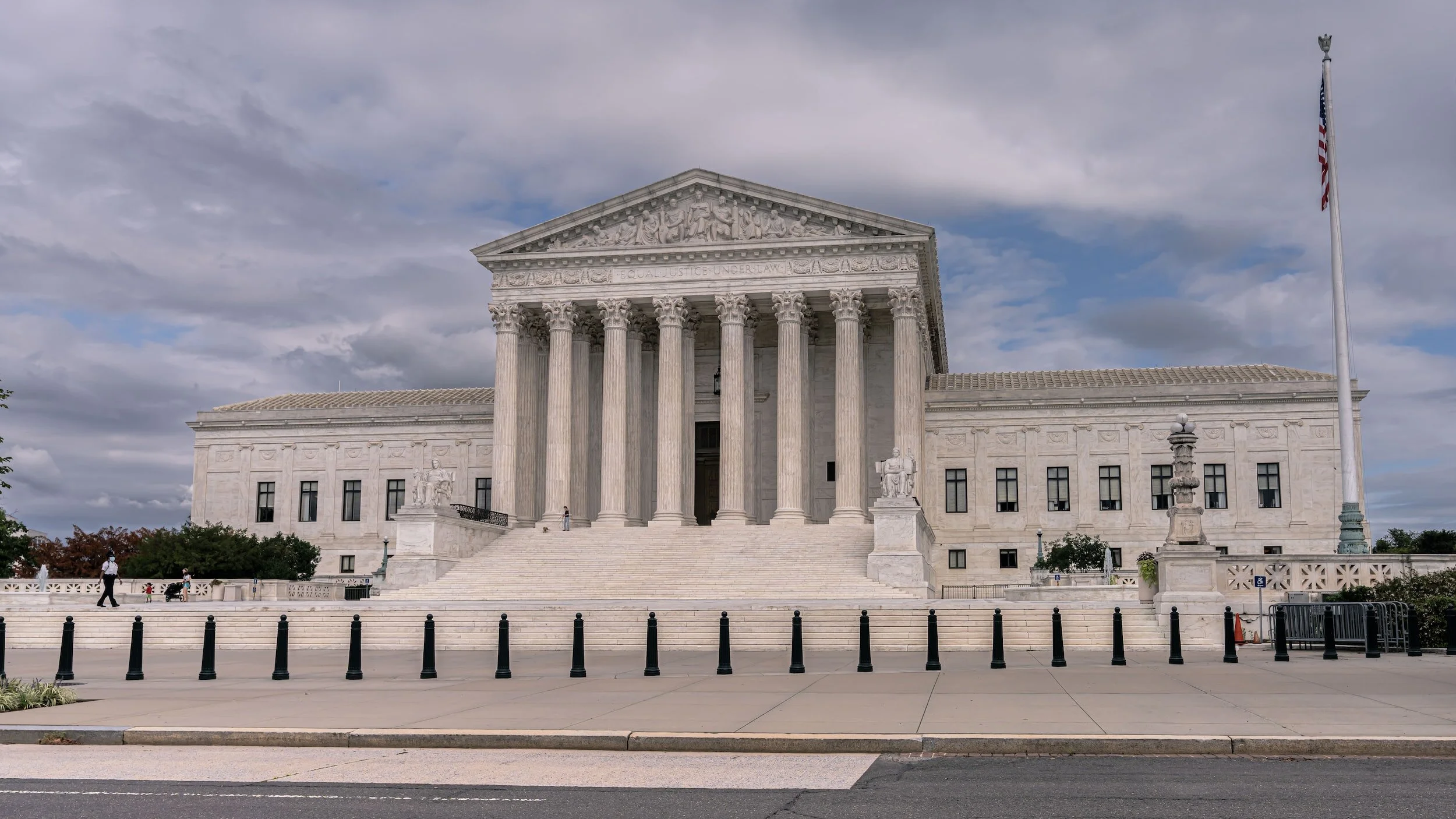
Latest Mifepristone Legal Debates Raise More Questions, Confusion for Health Care Professionals
Lanton Law speak with Pharmacy Times about the Supreme Court’s decision on Mifepristone.
Lanton Law speak with Pharmacy Times about the Supreme Court’s decision on Mifepristone. Click here for the interview.

Expert Discusses Long-Term Implications of Roe V. Wade Decision for Pharmacists, Contraception Access
In an interview with Pharmacy Times, Ron Lanton III, Esq, partner at Lanton Law, discussed the recent Supreme Court ruling on Dobbs v. Jackson Women’s Health and what this could mean for pharmacists. In the interview, Lanton said the decision leaves many things ambiguous, which will most likely result in litigation around the country in the coming weeks and months.
In an interview with Pharmacy Times, Ron Lanton III, Esq, partner at Lanton Law, discussed the recent Supreme Court ruling on Dobbs v. Jackson Women’s Health and what this could mean for pharmacists. In the interview, Lanton said the decision leaves many things ambiguous, which will most likely result in litigation around the country in the coming weeks and months.
The interview can be viewed here. We have also provided the text from Aislinn Antrim’s interview at Pharmacy Times below:
In an interview with Pharmacy Times, Ron Lanton III, Esq, partner at Lanton Law, discussed the recent Supreme Court ruling on Dobbs v. Jackson Women’s Health and what this could mean for pharmacists. In the interview, Lanton said the decision leaves many things ambiguous, which will most likely result in litigation around the country in the coming weeks and months.
Aislinn Antrim: Hi, I'm Aislinn Antrim with Pharmacy Times,and I'm here with Ron Lanton, partner at Lanton Law, to discuss the recent Supreme Court decision in Dobbs v. Jackson Women's Health and what this means for pharmacists, contraception access, and all of these other questions. So to get started, can you explain the Supreme Court reasoning in this case?
Ron Lanton III, Esq: Absolutely. And before I get started, let me just put a disclaimer out there that while I'm not going to be discussing my personal views about the Supreme Court decision, I'm just going to talk like a lot of health care providers are probably talking right now, where they're just trying to figure out what happened, and what does this mean for them. So, with that out of the way, I'll quickly explained Dobb.
So basically, what happened in this case is that Roe v. Wade and Casey v. Planned Parenthood were both actually overturned by the Supreme Court on the basis that abortion at any time was not protected by the constitution. So basically, what they've done is that they didn't really put any standards around what they thought abortion was, or you know, how many weeks there should be at, because they felt that the state should actually control the outcome. So, the facts within Dobbs is that the state of Mississippi banned abortions at 15 weeks, which is pre-viability (viability referring to if the fetus can survive outside of the womb). And what Justice Alito said, writing for the majority opinion, is a quote that I wanted to make sure that everybody has heard in case they have not read the opinion. And the quote talks about this, it says, “The inescapable conclusion is that a right to abortion is not deeply rooted in the nation's history and traditions. On the contrary, an unbroken tradition of prohibiting abortion, on pain of criminal punishment, persisted from the earliest days of the common law until 1973.” So, this is definitely a landmark decision. You know, my entire life has been post-Roe. So, this is going to be very, very different for a lot of people and we'll see what happens.
Aislinn Antrim: Definitely. Where do states stand currently in terms of abortion access? And where do you see this headed in the coming weeks and months?
Ron Lanton III, Esq: I see a lot of litigation coming in the next weeks and months. Right now, it's kind of weird how we say this, because right now, there are 5 states where abortion is either illegal or banned. Those states are Texas, South Dakota, Oklahoma, Louisiana, and Kentucky. Soon there will be 16. And the reason I say that is because of what's called trigger laws. So basically, if Roe was ever overturned, which it was in this case, there were some states that have laws in the books that said, should this happen, then, you know, within 30 days abortions will be banned in that state.There is also another thing called zombie lawsthat are out there, in addition to the trigger laws, and what zombie laws are, is that these are pre-Roe abortion laws that may come back, they were never officially taken off of the books. So, they're just kind of there and a lot of states really don't know what to do with these and businesses that are operating there don't know what to do with these, or if they'll ever come back. So that number, while it may go up to 16 with the trigger laws, it may be more with these zombie laws. So, we really have to do a close scrutiny of what's on the books. And I think that if health care providers are wondering what that might be, I would just suggest that they look and see if their states do in fact have these laws on the books. There have been some states, though, that have taken the stance that they will be arresting medical providers that actually attempt to do these services. So, my prediction is just like I mentioned earlier, is that we're probably going to see a lot of different lawsuits, just for people that are trying to understand their rights and what they can and can't do, especially the health care providers.
Aislinn Antrim: Absolutely. There are many things that are still really unclear. One of the major things that's come into play is access to mail-order abortion pills, and from my understanding, the FDA has permanently allowed these pills to be accessible by mail. But some governors are still looking to ban them. Can you explain this, what this means, and where it stands?
Ron Lanton III, Esq: Yeah, of course. Well, the FDA has been using the pill since 2000, and in December of 2021 what they did was they had some labeling and some evidence-based medicine requirements that they put in and finalized in December of 2021. I can't really speak to specifics about what those are. I know they did them, but if people are interested, I would just go to the FDA and just look. They have that stuff there on their site. The FDA does allow the pill to be prescribed by mail or by telehealth and it's authorized for use during the first 10 weeks of pregnancy. And what was interesting was that when I was looking at this is that more than half of the abortions in the United States are actually medication abortions, which I did not know.
You have mentioned some of the anti-abortion policies that tend to happen with this. So, there have been some anti-abortion states that have laws on the books that stipulate that this pill either has to be given in-person or it has to be prescribed, instead of done through telehealth or by mail. And also, they're saying it's only allowed through the seventh week, whereby the FDA says that it's the tenth week. So that's different. So, what we're seeing here, and what we're also hearing, is that some states may even try to ban the pill. And there's questions legally on whether they can do this. It's really a Tenth Amendment versus Supremacy Clause question. You know, I don't think the FDA, this is just me personally, I think you should check this out. But you know, just for me, I'm not sure you could do that as a state, just legally, with something that the FDA has already approved. It's also going to come down to what the Board of Medicine in your particular state is allowing a physician to do. So, these are just other things that a health care provider would have to check out.
I do think it is interesting to bring up what the Department of Justice has said about this very issue. So, here's a quote I’d like to share with you. So, in what the Department of Justice has said, has stated, “…and we stand ready to work with other arms of the federal government that seek to use their lawful authorities to protect and preserve access to reproductive care. In particular, the FDA has approved the use of medication (Mifeprex). States may not ban this based on disagreement with the FDA’s expert judgment about safety and efficacy.” So, if a state has a policy where it's just challenging the safety of it, that's not going to stand. So, what really remains to be seen is if states are going to continue to do this regardless, we'll have to see.
Aislinn Antrim: Very interesting. And there are also states where legislators are attempting to interpret IUDs as abortion to restrict their access. What is the legal basis for this? And what are the implications if they are successful?
Ron Lanton III, Esq: Yeah, so let's go back to the Supreme Court majority opinion. In this case, they said that other rights, like the rights to contraception and marriage, do not discuss the ending of human life as abortion does. So, they tried to make a distinction in this ruling. Now, with what you just brought up, I started thinking about Plan B and copper IUDs because those stop an already fertilized egg or an embryo from implanting and thus creating the pregnancy. Right? So, the argument Dobbs was they sided with Mississippi in that Mississippi could deny an abortion at pre-viability, which they already ruled that they can. So, therefore, a state could potentially rule with regards to Plan B or the copper IUD, that these are not contraception and that they are a form of abortion. I mean, theoretically it could happen, as they stop an embryo from implanting, thus stopping human life. So especially if the state believes that human life starts at fertilization, and not implantation. So, many health care providers are definitely likely to be concerned about this because it could also affect IVF treatments. Basically, this ruling has allowed states to ban abortion but kind of has left the door open because they were ambiguous on, you know, they didn't say anything about weeks or what abortion was, there was no definition about it. So, this could potentially bleed over into contraception. So honestly, a legal basis for this could be a new law that describes when human life starts, such as fertilization instead of implantation. So, Dobbs opened the door to that and, you know, that's another one of those things we just don't know.
Aislinn Antrim: Definitely. Many people are urging the Biden administration and Congress to codify a right to abortion. Do you have a sense of whether this could happen or where this stands?
Ron Lanton III, Esq: Well, let's just talk about the Senate makeup right now. So, to get anything passed in Congress has been very difficult to do lately because of just the hyper-partisanship stuff that's been going on. And the Senate, it's almost like forget about it. You know, if you don't have those 60 votes to satisfy the threshold, then you're just not getting anything done. So right now, with an issue this divisive—and really, I mean, anything can be hyper-partisan but, you know, this is definitely one of those issues. I don't know if they can get anything passed in the Senate that could codify Roe.
Now, I like to go back to whether it's accurate when we say codify Roe, because Roe v. Wade hasn't been in place since 1992. And the reason I say that is because the Supreme Court had the Casey v. Planned Parenthood case that I referenced earlier, which was also overturned with Roe in the Dobbs decision. Now, in Casey, the court upheld Roe’s decision holding that a woman has the right to choose to terminate a pregnancy up until the point of fetal viability, and that states could restrict abortion after that point, subject to exceptions such as, you know, protecting the life and health of the pregnant woman. But in Casey the court said that Roe too severely limited state regulation prior to fetal viability and held that states can impose restrictions on abortion throughout pregnancy to protect potential life, as well as the maternal health, which, you know, which has been status quo up until just recently. What was also interesting about Casey is that had had the undue burden test, which basically said that states can't make a law that makes it too hard for someone that wants to seek an abortion. So again, that's been status quo until now. And now we're really not sure what's going to happen.
Aislinn Antrim: Definitely. Going back to what you were saying a few minutes ago, there are also discussions of whether a future Supreme Court case could impact contraception access. What could this look like from a policy or legal standpoint?
Ron Lanton III, Esq: I think [policy and legality] these are 2 related issues, but when we're looking at legalities, I mean, you know, we can split hairs all day but those legally are 2 different issues. So, for contraception that prevents fertilization, you know, such as the pill, that would require a state to draft an entirely new law that outlawed contraception. And that would have to be pushed through several states, and then in order to get to the Supreme Court, someone would have to challenge that and make it all the way up through the ladder. So, these cases are coming faster than they used to before, but that's the process that would have to happen. The rights of contraception is a bit different than what we were talking about in Dobbs because the contraception was actually a different case based on Griswold v. Connecticut. And that basically held that married couples have a protected right to privacy, and that this is being violated by states banning contraception. So, Griswold was not overturned or even mentioned in the majority opinion. Now, I think what has people talking is the Justice Thomas concurring opinion, which basically said that we ought to look at cases like Griswold. Well, that's different from the majority opinion. So, the majority opinion is what we base everything off of now. Concurring opinions happen, judges put their opinions in there all the time. Whether someone later may look at that concurring opinion and shape a different policy, legally or whatnot, that remains to be seen. But the majority opinion did not talk about Griswold. I just want to make sure that was very clear.
Aislinn Antrim: Definitely. Thank you. Could this Dobbs ruling potentially impact the legality of scientific research and innovation in the area of women's health and contraception?
Ron Lanton III, Esq: Yes. So, any current or future research that is connected to the use of an already fertilized egg or an embryo may be deemed unlawful by a state, depending on what their abortion laws actually are. So, as we talked about earlier, Dobbs opens the door for states to determine when human life actually begins. And they're now able to put in their own standards about how they feel about abortion. So, I think in order to answer your question, it really depends on how the state is going to regulate the practice of medicine. So, it’s going to come down to where you live and how medicine is regulated.
Aislinn Antrim: With a wide range of restrictions varying state-to-state, do you have any resources or suggestions for pharmacists who may not know exactly how to handle things in their state, what's legal what they can and can't do? Where can they look?
Ron Lanton III, Esq: That's a good question. I think if I were a pharmacist in this environment, I would definitely look at the Board of Pharmacy to see if there's any guidance about that. I think the second thing that you have to do is really understand how Plan B is going to be regulated. And I think if that's the case, you might want to call an attorney—I'd hate to even get to that kind of level, but you want to make sure that you're complying with what is going on. But I think an issue that most people miss is privacy and HIPAA. And, you know, if you have someone that's coming to a pharmacy that is in a state like the Northeast, where it's pretty much status quo with how they're going to rule or regulate this issue, you know, you can't be telling another state what's going on based on that. So, you really should understand your privacy laws and just look at that in your state. And just make sure you have a good understanding of HIPAA, which will help you in your practice going forward. So, I think those are the 3 places that I would look at first, to make sure. So, make sure that you understand your privacy, get a lawyer if you have questions about things, and just make sure that you're familiar with Board of Pharmacy and their policies and procedures.
Aislinn Antrim: Absolutely. Well, we've covered a lot. Is there anything that you wanted to add?
Ron Lanton III, Esq: I wish I could, I wish I had a crystal ball to kind of figure out how all this is going to go. Like I said, I think with this decision it's going to be a lot of litigation. So, this is not going to be over by, you know, any short imagination. This is going to go on for quite a while. And the only thing that could change things again, back to the way things were, is either an act by Congress, which would invalidate a court decision, or this comes back up through the Supreme Court again and they rule a different way. So that's a long way of me saying that we just have to wait and see what happens.
Aislinn Antrim: Absolutely. Well, thank you so much for diving into this with me.
Ron Lanton III, Esq: You’re welcome, thank you for the time.
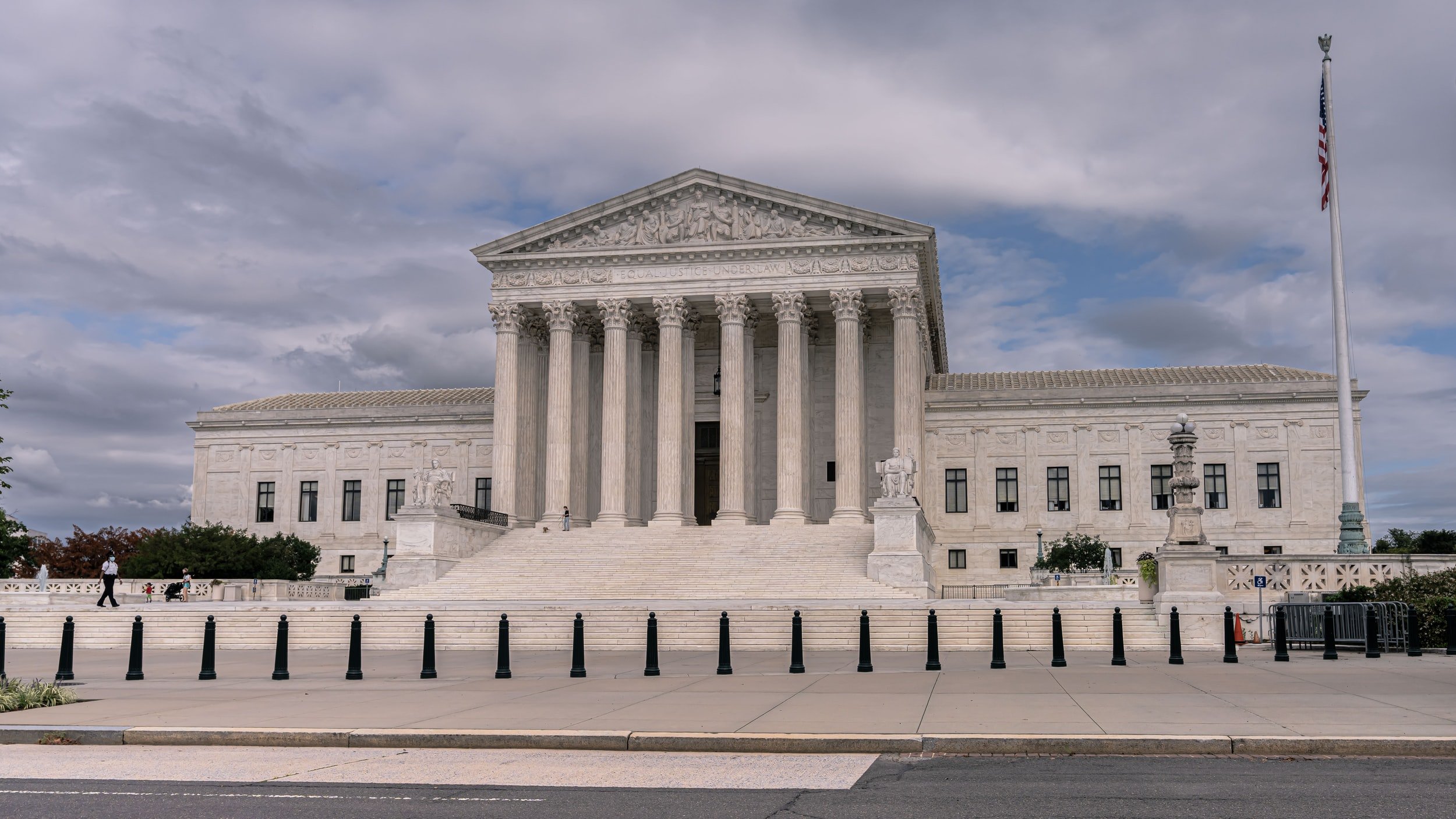
U.S. Supreme Court Blocks Texas Content Moderation Law Applicable to Social Media Companies
The United States Supreme Court issued a May 31, 2022 5-4 opinion found here that blocks a Texas law that prohibits large social media companies, from banning or removing users’ posts based on political viewpoints.
The United States Supreme Court issued a May 31, 2022 5-4 opinion found here that blocks a Texas law that prohibits large social media companies, from banning or removing users’ posts based on political viewpoints.
According to the opinion:
The law in question, HB20, regulates “social media plat- form[s]” that are “open to the public;” that “enabl[e] users to communicate with other users for the primary purpose of posting information, comments, messages, or images;” and that have at least “50 million active users in the United States in a calendar month.” App. to Application 39a–41a (App.). Section 7 of HB20 prohibits these platforms from “censor[ing]” users based on viewpoint, and §2 requires cov- ered platforms to disclose certain information about their business practices, including an “acceptable use policy” and “a biannual transparency report.” Id., at 39a–46a, 48a– 52a. These platforms must also establish procedures by which users can appeal a platform’s decision to “remove content posted by the user.” Id., at 44a.
Applicants are two trade associations that represent ma- jor social media platforms covered by the statute. They challenged the constitutionality of HB20 in the United States District Court for the Western District of Texas, con- tending, among other things, that the law is facially uncon- stitutional under the First Amendment. The court agreed, and it preliminarily enjoined the Texas attorney general from enforcing the statute. The United States Court of Appeals for the Fifth Circuit—after full briefing and oral ar- gument—stayed that preliminary injunction.
The Court granted NetChoice and the Computer & Communications Industry Association’s request to reinstate a block imposed by a federal district judge as the lawsuit goes through the court system.
The decision does not rule on the merits of the law, known as HB20, but reimposes an injunction blocking it from taking effect while federal courts decide whether it can be enforced. The Supreme Court is likely to be asked to take a look at the constitutionality of the law in question at some point in the near future.
Lanton Law is a national boutique law and government affairs firm that closely monitors legislative, regulatory and legal developments for our clients. We help stakeholders understand what’s at issue so that we can help our valued clients achieve their priorities. Contact us to learn about how either our legal or lobbying services can help you attain your goals.

Pharmacy Celebrates Another Win Over PBMs in the 8th Circuit
This week the 8th Circuit issued a decision in the case of Pharmaceutical Care Management Association v. Wehbi, which supported North Dakota’s legislative actions to regulate pharmacy benefit managers (PBMs). PCMA v. Wehbi is the first case at the federal appellate level since the landmark Rutledge v. PCMA decision last year that upheld Arkansas law also regulating PBMs.
This week the 8th Circuit issued a decision in the case of Pharmaceutical Care Management Association v. Wehbi, which supported North Dakota’s legislative actions to regulate pharmacy benefit managers (PBMs). PCMA v. Wehbi is the first case at the federal appellate level since the landmark Rutledge v. PCMA decision last year that upheld Arkansas law also regulating PBMs.
The PCMA v. Wehbi case can be found here.
With these huge decisions serving as tailwinds for pharmacy there is still more work to be done.
Lanton Law is a national boutique law and lobbying firm that focuses on healthcare/life sciences and technology. Our pharmacy practice has been helping pharmacies nationwide with operational issues, mergers and acquisitions, regulatory inquiries, audits, licensure, employment issues and contracting. Our lobbying efforts help pharmacies nationwide achieve improved business climates through carefully crafted legislation.
If you are an industry stakeholder with questions about the current landscape or if you would like to discuss how your organization’s strategic initiatives might be impacted by either Congress, regulatory agencies or legal decisions, contact us today.

Oral Arguments Scheduled for North Dakota PBM Case
Oral arguments have been scheduled for September 1, 2021 at 2:00 PM CST for PCMA v. Wehbi. Earlier this year, the U.S. Supreme Court vacated this 8th Circuit case formerly known as Wilke v. PCMA.
A group of nine pharmacy associations have filed an amicus curiae (friend of the court) brief in the 8th Circuit matter known as PCMA v. Wehbi. This case is formerly known as Wilke v. PCMA. The amicus brief argues that ERISA does not preempt North Dakota PBM laws.
How did we get here? Last year (August) the 8th Circuit struck down contested North Dakota PBM laws due to ERISA. This is the argument that PBM attorneys advanced as a reason that the contested PBM laws in North Dakota could not stand. This decision was prior to the now landmark Rutledge case.
Surprisingly and much to the relief of the pharmacy community, the U.S. Supreme Court’s 2021 PCMA v. Rutledge decision determined that the 8th Circuit decision could not stand due to the Supreme Court’s Rutledge decision and its ERISA interpretations.
Oral arguments PCMA v. Wehbi have been scheduled for September 1, 2021 at 2:00 PM CST.
Lanton Law is a national boutique law and lobbying firm that focuses on healthcare/life sciences and technology. Our pharmacy practice has been helping pharmacies nationwide with operational issues, mergers and acquisitions, regulatory inquiries, audits, licensure, employment issues and contracting. Our lobbying efforts help pharmacies nationwide achieve improved business climates through carefully crafted legislation.
If you are an industry stakeholder with questions about the current landscape or if you would like to discuss how your organization’s strategic initiatives might be impacted by either Congress, regulatory agencies or legal decisions, contact us today.

U.S. Supreme Court Limits the FTC’s Ability to Obtain Restitution for Deceptive Practices
On April 22, 2021, Justice Breyer wrote the majority opinion for AMG CAPITAL MANAGEMENT, LLC, ET AL. v. FEDERAL TRADE COMMISSION, which was a shock to many consumer advocates where the Court ruled unanimously against the Federal Trade Commission (FTC).
On April 22, 2021, Justice Breyer wrote the majority opinion for AMG CAPITAL MANAGEMENT, LLC, ET AL. v. FEDERAL TRADE COMMISSION, which was a shock to many consumer advocates where the Court ruled unanimously against the Federal Trade Commission (FTC). The ruling could make it less cost effective for the FTC to pursue companies that violate privacy rules.
According to the case, the Federal Trade Commission filed a complaint against Scott Tucker and his companies alleging deceptive payday lending practices in violation of §5(a) of the Federal Trade Commission Act. The District Court granted the Commission’s request pursuant to §13(b) of the Act for a permanent injunction to prevent Tucker from committing future violations of the Act, and relied on the same authority to direct Tucker to pay $1.27 billion in restitution and disgorgement. On appeal, the Ninth Circuit rejected Tucker’s argument that §13(b) does not authorize the award of equitable monetary relief.
The Court held that “Section 13(b) does not authorize the Commission to seek, or a court to award, equitable monetary relief such as restitution or disgorgement.” Congress is set to address this issue soon as it looks to reaffirm the agency’s power to provide consumer relief.
FTC Acting Chairwoman Rebecca Kelly Slaughter released a statement about the case where she stated:
“In AMG Capital, the Supreme Court ruled in favor of scam artists and dishonest corporations, leaving average Americans to pay for illegal behavior,” Acting Chairwoman Rebecca Kelly Slaughter said. “With this ruling, the Court has deprived the FTC of the strongest tool we had to help consumers when they need it most. We urge Congress to act swiftly to restore and strengthen the powers of the agency so we can make wronged consumers whole.”
Over the past four decades, the Commission has relied on Section 13(b) of the Federal Trade Commission Act to secure billions of dollars in relief for consumers in a wide variety of cases, including telemarketing fraud, anticompetitive pharmaceutical practices, data security and privacy, scams that target seniors and veterans, and deceptive business practices, among many others. More recently, in the wake of the pandemic, the FTC has used Section 13(b) to take action against entities operating COVID-related scams. Section 13(b) enforcement cases have resulted in the return of billions of dollars to consumers targeted by a wide variety of illegal scams and anticompetitive practices, including $11.2 billion in refunds to consumers during just the past five years.
Lanton Law is a national boutique law and lobbying firm that focuses on highly regulated industries such as technology, fintech, healthcare and clean energy. If you are an industry stakeholder with questions about the current landscape or if you would like to discuss how your organization’s strategic initiatives might be impacted by either Congress, regulatory agencies or legal decisions, contact us today.

PBM Lobby Has 8th Circuit Win Vacated & Remanded
The U.S. Supreme Court ruled in a February 22, 2021 decision against the Pharmaceutical Care Management Association (PCMA); the Washington D.C. based trade group that represents pharmacy benefit managers (PBMs).
The U.S. Supreme Court ruled in a February 22, 2021 decision against the Pharmaceutical Care Management Association (PCMA); the Washington D.C. based trade group that represents pharmacy benefit managers (PBMs).
The Court described the merits of Dirk Wilke, Interim State Health Officer of North Dakota, et al., Petitioners v. Pharmaceutical Care Management Association below:
In Rutledge v. Pharmaceutical Care Management Association, No. 18-540 (U.S.), this Court granted a writ of certiorari to decide whether the Employee Re- tirement Income Security Act of 1974 preempts an Arkansas law that regulates the rates that pharmacy benefit managers (PBMs) reimburse pharmacies for dispensing generic drugs. In that case, the Eighth Circuit had held that Arkansas’s law made a prohib- ited “reference to” ERISA plans and had a forbidden “connection with” such plans.
In this case, Respondent sought to enjoin two North Dakota laws that regulate, among other things, certain fees that PBMs charge pharmacies, which drugs pharmacists are allowed to dispense, and what pharmacists are allowed to say to their pa- tients. These laws apply the same standards regard- less of whether PBMs are providing services to an ERISA or non-ERISA plan.
In ruling in Respondent’s favor, the Eighth Cir- cuit applied its decision in Rutledge to do two things. First, it held that, under Rutledge’s logic, North Da- kota’s laws make an impermissible “reference to” ERISA plans because they apply to PBMs serving plans that “include[]” ERISA plans. Second, the court held that a finding of preemption under ERISA nullifies a State law “in its entirety”—even as ap- plied to non-ERISA plans. Because of the first hold- ing, the Eighth Circuit elected not to decide whether North Dakota’s laws also had a forbidden “connection with” ERISA plans. And because of the second hold- ing, the Eighth Circuit stated that it did not reach Respondent’s separate claims of preemption under Medicare Part D.
The questions in this case are: 1) Whether, contrary to decisions of this Court and every other court of appeals that has addressed the issue, ERISA preempts a State law simply be- cause it is broad enough to “include[ ]” ERISA plans among those affected by the law; 2) Whether, contrary to the text of ERISA and deci- sions of this Court and every other court of ap- peals to consider the issue, ERISA preempts a State law “in its entirety”—even as that law ap- plies to non-ERISA plans.
The Court granted the petition then vacated the prior Court’s decision and remanded the case for further consideration in light of Rutledge v. Pharmaceutical Care Management Assn. Rutledge was a December 2020 unanimous decision that ruled ERISA did not preempt Arkansas’ law on reimbursing pharmacies below acquisition costs, ruling that ERISA does not preempt rate regulations.
Lanton Law was quoted by Law360’s article describing the Court’s Rutledge decision.
Lanton Law is a national boutique law and government affairs firm that closely monitors and counsels clients on legislative, regulatory and legal developments in the LTC, specialty and retail pharmacy space. If you are in industry stakeholder with questions about strategy or simply need advice,contact us today.

Lanton Law quoted in Bloomberg Law Article
We were quoted in Bloomberg Law’s article titled “States Risk Losing Power to Regulate Pharmacy Drug Middlemen” by Lydia Wheeler. The article discusses the pros and cons of Rutledge v. PCMA, which is currently being debated at the Supreme Court.
We were quoted in Bloomberg Law’s article titled “States Risk Losing Power to Regulate Pharmacy Drug Middlemen” by Lydia Wheeler. The article discusses the pros and cons of Rutledge v. PCMA, which is currently being debated at the Supreme Court.
For those that have trouble accessing the article we have provided it below.
States are going to have a hard time controlling the cost of prescription drugs if the Supreme Court broadens a federal law prohibiting states from regulating employee benefit plans.
A challenge to an Arkansas law meant to protect independent pharmacies from abusive reimbursement practices of rate-setting pharmacy middlemen is testing the bounds of the Employee Retirement Income Security Act. A decision striking down Arkansas’s law could cripple state efforts to control the cost of prescription drugs and other health-care services. That could lead to a flood of litigation challenging dozens of similar laws in other states, health policy experts say.
“This is really the tip of the iceberg because states are trying to control drug costs in all kinds of different ways,” said Katherine Gudiksen, a senior health policy researcher at the Source on Healthcare Price and Competition, a project of the University of California Hastings College of Law.
The case could be one of the first decided by the Supreme Court this term. Arguments were heard Oct. 6.
Drawing the Line
Arkansas’s fighting to save its law, which regulates the rates at which pharmacy benefit managers reimburse pharmacies for drugs and gives pharmacies a right to appeal the rates they set.
The U.S. Court of Appeals for the Eighth Circuit held the law was preempted by ERISA, which prohibits states from passing laws that reference an ERISA plan or have an impermissible connection to an ERISA plan. But Arkansas argues pharmacy reimbursement regulation is basic rate regulation, which the Supreme Court has ruled isn’t preempted by ERISA.
“It’s hard to see how a law that directly affects benefits claims processing isn’t central to ERISA plan administration,” said Stacey Cerrone, a principal in the New Orleans office of Jackson Lewis PC.
“The court is struggling on where to draw the line with preemption,” she said.
Patchwork of State Laws
A win for Pharmaceutical Care Management Association (PCMA)—the trade group for PBMs that’s aggressively fighting this law and others—would likely open the door for more legal challenges. Laws regulating PBMs have passed in 36 states.
“There’s no agency that oversees federally a pharmacy benefit manager,” said Ron Lanton, principal at Lanton Law, which helped lobby for some state PBM laws. “That’s the problem, so the states have had to come up with their own solution on how to regulate this problem.”
But PCMA argues Congress set out to create a uniform set of standards in administering ERISA plans, which include most private sector health plans. The trade group said employers will have to spend more money on administrative services and compliance, increasing the cost of care, if laws like the one in Arkansas remain.
“More than 266 million Americans rely on the prescription drug benefits PBMs administer, and now more than ever we’re committed to protecting accessible, affordable health care,” JC Scott, PCMA’s president and CEO, said in a statement after oral arguments in October.
In addition to Arkansas, PCMA has challenged laws in North Dakota, Oklahoma, and Iowa in recent years.
The trade group has been successful in winning challenges in the Eighth Circuit. The appeals court ruled Iowa’s law and two North Dakota lawsare preempted by ERISA. Iowa’s law regulates how PBMs establish generic drug pricing, and requires certain disclosures on their drug pricing methodology. North Dakota’s laws regulate the fees PBMs can charge pharmacies. North Dakota officials have appealed the court’s decision to the Supreme Court.
In July, a federal judge blocked part of Oklahoma’s law. PCMA filed an appeal to the U.S. Court of Appeals for the Tenth Circuit, which it later had dismissed. The case is still playing out in the district court.
Lanton, who represents independent pharmacies, said his clients hope the Supreme Court provides some uniformity to what’s become a patchwork of state laws. He’s also hoping for a clear definition of what a pharmacy benefit manager is and isn’t.
“It comes down to this split in the court of whether or not the court sees a pharmacy benefit manager as an insurer that provides benefits or as an administrator that simply regulates reimbursement and cost.”
Market Power
The three largest PBM companies are OptumRx, a subsidiary of UnitedHealth Group; CVS Caremark, a subsidiary of CVS Health; and Express Scripts, a subsidiary of Cigna Corp. They control 85% of the market share for PBM services, according to the National Association of Specialty Pharmacy’s brief in support of Arkansas.
That market power gives health plans very little bargaining power, said Erin Fuse Brown, director of the Center for Law, Health and Society at Georgia State University College of Law.
PBMs say they use their size and power to negotiate discounts with the pharmaceutical manufacturers, but it’s not clear they’re passing along those savings to the health plans, she said.
The case is Rutledge v. Pharm. Care Mgmt. Ass’n, U.S., No. 18-540.
To contact the reporter on this story: Lydia Wheeler in Washington at lwheeler@bloomberglaw.com
To contact the editors responsible for this story: Fawn Johnson at fjohnson@bloombergindustry.com; Brent Bierman at bbierman@bloomberglaw.com

Lanton Law Quoted in Law360 Article Titled "High Court PBM Case Could Be Turning Point In 20-Year Fight"
Lanton Law was again quoted in Law360’s article titled “High Court PBM Case Could Be Turning Point in 20-Year Fight.” The article can be found here.
Lanton Law was again quoted in Law360’s article titled “High Court PBM Case Could Be Turning Point in 20-Year Fight.” The article can be found here. For those having trouble finding the article written by Emily Brill we have provided it below:
Law360 (October 13, 2020, 8:47 PM EDT) -- Last week's U.S. Supreme Court arguments over Arkansas' attempt to regulate how much middlemen called pharmacy benefit managers reimburse pharmacies for drugs on insurers' behalf could mark a turning point in a broader legal fight that's been playing out for 20 years.
Here, Law360 brings you up to speed on what led to the pending high court showdown between the Pharmaceutical Care Management Association and the Natural State.
The Laws Come Down
Pharmacy benefit managers have assumed an increasingly large role in the health care landscape since the first PBM arose in 1968.
These companies started as third-party administrators, processing patients' prescription drug claims on behalf of health insurance plans. Over the years, though, PBMs have launched drug formularies, pharmacy networks and their own mail-order pharmacies as the industry has grown, and the largest PBMs have integrated with insurers in multibillion-dollar deals.
"They've always been a partner to the insurer, but now they're a crucial extension of the insurer," said Ron Lanton, an attorney and lobbyist who specializes in health care law. "The PBM has grown to this huge marketplace player — determining who's the provider in their networks, setting the prices for insurance reimbursement."
Today, PBMs have a hand in most aspects of prescription drug dispensing, from how much consumers pay and how much pharmacies are reimbursed to where patients get their drugs and whether they receive name-brand or generic versions.
PBMs have drawn praise for saving consumers and plan sponsors money, but they've also met criticism, particularly from pharmacists, who say PBMs routinely reimburse their own mail-order pharmacies at much higher rates and thus drive local pharmacies out of business.
"PBMs are not only managing benefits for their clients — they're actively competing in the networks they manage," said Linda Clark, a partner at Barclay Damon LLP. "That's the fundamental optical conflict of interest that's in play. And as a result, many states have attempted to even the playing field."
States have been attempting to regulate PBMs since at least 2003, passing laws that primarily target the industry's pricing and reimbursement practices. Today, all but three states have some legislation on the books impacting PBMs, according to the National Community Pharmacists Association.
Much of that legislation has arrived recently. An influential model bill released in December 2018 by the National Council of Insurance Legislators inspired the introduction of between 250 and 300 pieces of PBM reform legislation around the country in 2019, according to the NCPA.
Another model bill from a different insurance regulators group is in the works, with the National Association of Insurance Commissioners releasing a first draft in July after working on the policy for a year. The model bill proposes requiring PBMs to get licensed and banning practices such as self-dealing and retroactive payment reductions to pharmacies.
The Suits Flood In
PBMs have not sat idly by as states have tried to regulate them. They've met lawmakers' bills with aggressive lobbying and sued a half-dozen states that adopted PBM reform legislation.
"A lot of times when there are regulations in states proposed to provide some kind of oversight, the PBM lobby tends to get very aggressive," Lanton said. "I've directly lobbied on a lot of these issues, so I've come face to face with what they've been saying to legislators."
The PBM industry's lobbying group, the Pharmaceutical Care Management Association, began suing states over their PBM laws in the early 2000s. The first suit arose in Maine, a challenge to a law that required PBMs to disclose their payments from pharmaceutical companies and forbade them from switching patients to more expensive drugs.
That law survived the PCMA's challenge, with both a Maine federal judge and the First Circuit handing wins to the state and then the U.S. Supreme Court declining to take up the case in 2006. But other jurisdictions have not fared as well in the years since.
Since Maine's win, Washington, D.C., Iowa and North Dakota have been forced to walk back PBM regulations after the PCMA convinced the D.C. Circuit and Eighth Circuit that the laws tread on territory that could only be regulated by the federal Employee Retirement Income Security Act.
Oklahoma could be next, with a court battle playing out in the Tenth Circuit to determine the viability of a PBM law there. An Oklahoma federal judge blocked part of the law in July, ruling some of its language was likely preempted by Medicare Part D.
High Court Joins the Fray
As the Tenth Circuit weighs the legitimacy of Oklahoma's law, the U.S. Supreme Court is considering whether to strike down an Arkansas law in a case with huge implications for the legal fight between states and PBMs.
On Oct. 6, the high court heard oral arguments in the PCMA's challenge to a 2015 Arkansas law requiring PBMs to reimburse local pharmacies at the same rates as their affiliated pharmacies.
If the high court rules that the law flouts ERISA, other state laws could fall on similar grounds, attorneys say.
"There are implications for other state laws based on what happens in this case," said Ben Conley, a partner at Seyfarth Shaw LLP.
Many states have placed their PBM reform plans on hold while waiting on the outcome of the case, Barclay Damon's Clark said. Other states aren't enforcing their PBM laws but would likely start if the Supreme Court rules in Arkansas' favor, she said.
She said her pharmacist clients also have their eyes trained on the high court, waiting on a decision that could have a huge effect on them.
"The decision in this case is really going to define the scope of permissible state regulation of pharmacy benefit manager practices. It's going to define the contours of what states can and can't do," Clark said. "And there could be a lot of nuances in the decision that could affect the impact on state legislation. That's why everybody's watching it so carefully."
The case is Rutledge v. Pharmaceutical Care Management Association, case number 18-540, in the Supreme Court of the United States.

Lanton Law Follow Up Interview with Law360
Lanton Law had a follow up interview with Law360 regarding the Rutledge v. PCMA Supreme Court oral arguments on October 6, 2020.
Lanton Law had a follow up interview with Law360 regarding the Rutledge v. PCMA Supreme Court oral arguments on October 6, 2020. Below is a link to the story titled “Justices Eye Arkansas PBM Law’s Impact on Workers.” The story can be viewed here.
If you have trouble accessing the story we have included Emily Brill’s article below.
Justices Eye Arkansas PBM Law's Impact On Workers
By Emily Brill
Law360 (October 6, 2020, 1:50 PM EDT) -- The U.S. Supreme Court on Tuesday focused on whether an Arkansas law's potential costliness to employee benefit plans is enough to place it in conflict with the Employee Retirement Income Security Act, with two conservative justices questioning whether the statute regulating pharmacy benefit managers would end up hurting workers.
Counsel for the Pharmaceutical Care Management Association, the PBM lobby that challenged Arkansas' Act 900, argued that increased plan costs could cause employers to squeeze benefits. Therefore, laws like Act 900 — which could increase plans' costs by increasing PBMs' costs in the form of compliance burdens — pose enough of a threat to workers' benefits that they should be preempted by ERISA, argued Seth Waxman, a partner at WilmerHale.
"Those additional costs, both in terms of reimbursement obligations and plan administration, would manifestly affect how munificent the pharmacy benefits a plan could offer would be," Waxman said.
Arkansas' solicitor general bucked this argument, claiming PCMA's approach to ERISA preemption would spell the end for far more laws than Congress intended to strike down when it stated that ERISA should be the only law regulating employee benefit plans.
"If you accept their position that anytime a regulation imposes cost, that can lead to preemption because it might affect the benefits calculation, that really has no limiting principle," Arkansas Solicitor General Nicholas Bronni said. "It would, frankly, preempt things like state minimum wage laws that have exactly that same effect."
Justice Brett Kavanaugh questioned why increased costs shouldn't be considered an ERISA preemption issue.
"Why shouldn't ERISA care about costs that are going to be increased and then passed on in the form of worse benefits to Arkansas workers?" Justice Kavanaugh asked the assistant to the U.S. solicitor general, Frederick Liu, who argued in support of Arkansas' position.
Liu responded that "increased costs actually don't affect the basic bargain between the plan and its beneficiaries," which was what Justice Kavanaugh had stated that ERISA was designed to protect.
"I totally agree that ERISA was enacted to protect that relationship, but increased costs don't affect the terms of that relationship," Liu argued.
Justice Samuel Alito Jr. questioned whether Act 900, which regulates how PBMs reimburse local pharmacies, would indeed increase costs for employee benefit plans and workers.
"You said that these laws affect the benefits that employees get, but do we know whether that is in fact true?" Justice Alito said. "Assuming they increase the costs for the PBMs, do we know how much of that increase in cost is passed on to plans and beneficiaries, and how much is absorbed by the PBMs?"
Waxman said he didn't "have specific data on this" but knew that "one way or another, in the very short term or the long term, this is going to cost plans more to administer," which would affect "the munificence of the pharmacy benefits that plans feel they can afford."
Arkansas Takes on PBMs
The case the justices heard Tuesday asks them to decide whether Arkansas was allowed to pass a law regulating the rates at which PBMs reimburse pharmacies for prescription drugs.
Critics of PBMs, which manage health insurance plans' relationships with pharmacies, say they're pushing local pharmacies out of business by regularly shortchanging them on prescription reimbursements, while paying PBM-owned pharmacies higher rates for the same drugs.
Those critics — which include pharmacy groups and a coalition of 46 attorneys general — say Arkansas was within its rights in 2015 to pass a law that purported to protect local pharmacies from unfair treatment by PBMs. Act 900, among other things, required PBMs to reimburse at rates at least equal to what pharmacies pay for drugs.
But supporters of PBMs, which include business and insurance trade groups, say Act 900 violated ERISA. They say Congress intended ERISA to be the only law that regulates matters impacting employee benefit plans, so Arkansas' law cannot stand.
In 2017, an Arkansas federal judge agreed with the law's challengers and struck down Act 900. The Eighth Circuit upheld the lower court's decision in June 2018, and Arkansas petitioned the Supreme Court for review in October 2018. The high court picked up the case in January.
Mulling Travelers
Much of Tuesday's debate on whether a law's costliness to benefit plans could trigger ERISA preemption centered on interpretation of the Supreme Court's 1995 decision in New York State Conference of Blue Cross & Blue Shield Plans v. Travelers Insurance Co .
In the Travelers case, the high court upheld a New York law that required hospitals to impose a surcharge on patients with certain types of insurance, including employer-provided health insurance.
The justices ruled unanimously that the law wasn't preempted by ERISA because "it simply bears on the cost of benefits" without "bind[ing] plan administrators to any particular choice," as now-retired Justice David Souter wrote in the opinion.
Bronni argued Tuesday that the justices' logic in Travelers neatly applies to this case, saying that "for the same reason that New York's rate regulation wasn't preempted in Travelers, Arkansas' is not preempted here."
But Travelers left the door open for a law's costliness to trigger ERISA preemption if that statute produced "such acute, albeit indirect, economic effects as to force an ERISA plan to adopt a certain scheme of coverage," as Justice Souter put it in a footnote.
That's what PCMA is arguing could happen here, said Mark Casciari, a benefits attorney at Seyfarth Shaw LLP who watched Tuesday's oral arguments.
"A plan sponsor has to decide what they're going to cover, and this law could have the effect of forcing its hand on those decisions because of onerous administrative burdens," Casciari said. "By regulating costs, the state law is rearticulating the plan terms."
But PCMA's argument could be weakened by the fact it's choosing to pass on those costs to benefit plans, when it could just absorb those costs, said Ron Lanton, an attorney and lobbyist with 15 years of experience in health care law.
When Waxman referenced the footnote in the Travelers decision, Chief Justice John Roberts pointed out that increasing costs for PBMs doesn't necessarily increase costs for benefit plans; that only happens because PBMs set things up that way.
"If the state law produced economic effects as to force the ERISA plan to adopt a certain scheme of coverage, it would, indeed, be preempted," Waxman said.
"Well, it's not the state or the pharmacy's fault that the PBMs have such Byzantine procedures that affect drug prices," Justice Roberts said.
Lanton said he thinks Justice Roberts was "undermining PCMA's argument" with his comment.
"Where they're saying this affects the plan, I think Justice Roberts is saying, 'Yeah, I hear what you're saying, but we're only here because of the way you guys structured this business.'"
Arkansas Attorney General Leslie Rutledge is represented at oral arguments by Arkansas Solicitor General Nicholas Bronni.
The federal government is represented by Frederick Liu of the U.S. Office of the Solicitor General.
PCMA is represented by Seth Waxman of WilmerHale.
The case is Rutledge v. Pharmaceutical Care Management Association, case number 18-540, in the Supreme Court of the United States.
--Editing by Orlando Lorenzo.
Update: This article has been updated with more details from the hearing and further comment.

Lanton Law Quoted in Law360 Article on Rutledge v. PCMA
Lanton Law was quoted in Law360’s article titled “High Court to Weight States’ Ability to Rein in Drug Middlemen,” which was written in response to current developments around the Rutledge v. PCMA case.
Lanton Law was quoted in Law360’s article titled “High Court to Weight States’ Ability to Rein in Drug Middlemen,” which was written in response to current developments around the Rutledge v. PCMA case. This case was heard this morning in the U.S. Supreme Court. The article can be accessed here.
We have included Emily Brill’s article from Law360 below in case you have trouble accessing it.
Analysis High Court To Weigh States' Ability To Rein In Drug Middlemen
By Emily Brill
Law360 (October 5, 2020, 7:45 PM EDT) -- The U.S. Supreme Court will hear arguments Tuesday over whether states can control the rates at which local pharmacies get reimbursed for drugs by health insurance plans, a case that could determine whether states can regulate pharmacy benefit managers without getting waylaid by federal benefits law.
Local pharmacists call the case the most significant health care suit the high court will hear this term aside from the one that threatens the Affordable Care Act. The pharmacists say a loss for their side would give pharmacy benefit managers — the middlemen who reimburse pharmacies for drugs on insurers' behalf — a green light to put pharmacies that lack PBM ties out of business.
"The outcome of the Rutledge case will be the tipping point of whether Americans will continue to have access to their local pharmacist or whether that access will go away," said Michael Hogue, the president of the American Pharmacists Association.
The outcome could also affect how far companies can stretch the Employee Retirement Income Security Act's preemption provision, which is often used in court to strike down state and local laws regulating employee benefit plans and related entities.
Here, Law360 breaks down what's at stake and what's being argued in Rutledge v. Pharmaceutical Care Management Association .
What Are the Arguments?
The Rutledge case concerns the viability of a 2015 Arkansas law that attempted to regulate PBMs. The law arrived after lobbying from local pharmacies, which said they would be forced to close if PBMs' allegedly predatory business practices weren't reined in.
Chief among those practices was PBMs' refusal to pay local pharmacies for drugs at the same rates that they paid their affiliated pharmacies, local pharmacists said. This practice led to local pharmacies consistently getting shortchanged on prescription reimbursements, making it difficult to stay in business, the pharmacists said.
In response to these concerns, Arkansas passed Act 900, which required PBMs to reimburse local pharmacies at the same rates as their affiliated pharmacies. But shortly after the bill became law, the PBM industry slapped the state with a lawsuit alleging that Act 900 was preempted by ERISA.
The suit, filed by the PBM industry lobbying group the Pharmaceutical Care Management Association, argued that Act 900 regulated business dealings that were central to administering benefit plans and that only ERISA is allowed to do that.
An Arkansas federal judge agreed, striking down the law in 2017. The Eighth Circuit upheld the ruling the following year, at which point Arkansas asked the Supreme Court to step in. The justices agreed to take the case in January.
Arkansas has argued that ERISA doesn't stretch as far as PCMA is claiming it does and that the courts are stepping into dangerous territory by accepting the PBM lobby's argument.
"Its approach would ... exempt ERISA plans from any number of generally applicable health-and-safety regulations. And that cannot be the case," Arkansas' attorney general, Leslie Rutledge, wrote in the state's opening brief to the high court.
What's at Stake?
Rutledge v. PCMA has attracted significant attention, drawing amicus briefs from 46 attorneys general and the U.S. solicitor general in support of Arkansas and from a number of employer interest groups in support of PCMA.
The state and federal governments argue that ERISA only preempts health care regulations that have an impermissible reference to employee benefit plans, which the Arkansas law does not.
Allowing PCMA to succeed in its argument could endanger states' ability to regulate health care, which could have dire consequences, the officials argued.
A ruling in favor of PCMA would also allow PBMs to operate essentially free of oversight, continuing business practices that have already bankrupted far too many local pharmacies, the pharmacists' groups argued.
If the Supreme Court upholds the Eighth Circuit ruling, "there's really nothing stopping a PBM from doing whatever it wants," said Ron Lanton, an attorney and lobbyist who specializes in health care law.
"It would be great if the Supreme Court ruled for Rutledge because then we won't have chaos," Lanton said.
But PCMA argues that a ruling in Rutledge's favor would create chaos for the PBM industry, subjecting it to a patchwork of state laws that would complicate the process of working with employee benefit plans that operate across state lines.
This argument gained PCMA the support of groups that represent employers and their benefit plans, such as America's Health Insurance Plans, the Society for Human Resource Management and the American Benefits Council.
"It was delicate for us to weigh in on because oftentimes there's no love lost between employers and PBMs," said Ben Conley, a partner at Seyfarth Shaw LLP who helped author SHRM's amicus brief. "But at the end of the day, employers want to pay less. They want the flexibility to design their plans in a manner that allows them to do so."
A win for Rutledge "could be seen as chipping away at ERISA preemption, which large, multistate employers view as of the utmost importance because it impacts their ability to design a uniform, nationwide plan," Conley said.
PCMA also argued that it has been unfairly vilified by local pharmacists, saying they have overstated the damage PBMs have done.
"The fact is the current state of independent pharmacies in the U.S. is secure," PCMA spokesperson Greg Lopes said in an emailed statement to Law360. He added that by attacking PBMs, local pharmacies are going after "the only entity in the prescription drug supply chain that is fighting to reduce drug costs for patients."
Counsel
Arkansas is represented by Leslie Rutledge, Nicholas Jacob Bronni and Shawn J. Johnson of the Arkansas Attorney General's Office.
The Pharmaceutical Care Management Association is represented by Michael B. Kimberly, Sarah P. Hogarth and Matthew Waring of McDermott Will & Emery LLP and Seth P. Waxman, Catherine M.A. Carroll, Paul R.Q. Wolfson, Justin Baxenberg, Claire H. Chung and Hillary S. Smith of WilmerHale.
The case is Rutledge v. Pharmaceutical Care Management Association, case number 18-540, in the Supreme Court of the United States.
--Additional reporting by Danielle Nichole Smith. Editing by Jill Coffey.

Lanton Law Speaks with Pharmacy Times about U.S. Supreme Court Case Rutledge v. PCMA & Its Implication on Pharmacy Policy
Lanton Law was interviewed by Pharmacy Times on the implications of the October 6, 2020 U.S. Supreme Court case of Rutledge v. PCMA.
Lanton Law was interviewed by Pharmacy Times on the implications of the October 6, 2020 U.S. Supreme Court case of Rutledge v. PCMA. This case has major consequences for future PBM policies. Click here to access the interview.