

What's in the Bipartisan Infrastructure Deal?
The Bipartisan Infrastructure Deal is a $1.2 trillion investment in the nation's infrastructure, including roads, bridges, public transit, broadband internet, clean water, and power grids.
There are many people that may have heard about the Bipartisan Infrastructure Deal, but don’t really know a summary of the new law’s details. Below is a quick “cheat sheet” on the recently enacted law.
The Bipartisan Infrastructure Deal is a $1.2 trillion investment in the nation's infrastructure, including roads, bridges, public transit, broadband internet, clean water, and power grids.
The legislation was passed by Congress on November 5, 2021, and signed into law by President Biden on November 15, 2021.
The Bipartisan Infrastructure Deal is the largest investment in infrastructure in the United States since the Interstate Highway System was built in the 1950s.
The legislation is expected to create millions of jobs and boost the economy.
Here are some of the specific investments that are included in the Bipartisan Infrastructure Deal:
$110 billion to repair and rebuild roads and bridges.
$65 billion to expand access to clean drinking water.
$65 billion to help ensure that every American has access to reliable high-speed internet.
$39 billion to modernize public transit.
$25 billion to upgrade airports.
$17 billion to improve port infrastructure.
$66 billion to invest in passenger rail.
$7.5 billion to build a national network of electric vehicle chargers.
$65 billion to upgrade the power grid.
$50 billion to protect against climate change and extreme weather events.
$1 billion to deliver the largest investment in tackling legacy pollution in American history.
Lanton Law is a national boutique law and government affairs firm that closely monitors legislative, regulatory and legal developments in the clean energy space. Contact us to learn about how either our legal or lobbying services can help you attain your goals.

American Data Privacy and Protection Act Introduced
In late June 2022 H.R. 8152 was introduced which seeks to provide consumers with foundational data privacy rights, create strong oversight mechanisms, and establish meaningful enforcement.
In late June 2022 H.R. 8152 was introduced which seeks to provide consumers with foundational data privacy rights, create strong oversight mechanisms, and establish meaningful enforcement.
What are some of the important aspects of the bill?
According to the Congressional Research Service the bill proposes the following:
Covered Entities. It would apply to most entities, including nonprofits and common carriers. Some entities, such as those defined as large data holders that meet certain thresholds or service providers that use data on behalf of other covered entities, would face different or additional requirements.
Covered Data. It would apply to information that “identifies or is linked or reasonably linkable” to an individual.
Duties of Loyalty. It would impose several duties on covered entities, including requirements to abide by data minimization principles and special protections for certain types of data, such as geolocation information, biometric information, and nonconsensual intimate images.
Transparency. It would require covered entities to disclose, among other things, the type of data they collect, what they use it for, how long they retain it, and whether they make the data accessible to the People’s Republic of China, Russia, Iran, or North Korea.
Consumer Control and Consent. It would give consumers various rights over covered data, including the right to access, correct, and delete their data held by a particular covered entity. It would require covered entities to get a consumer’s affirmative, express consent before using their “sensitive covered data” (defined by a list of sixteen different categories of data). It would further require covered entities to give consumers an opportunity to object before the entity transfers their data to a third party or targets advertising toward them.
Youth Protections. It would create additional data protections for individuals under the age of 17, including a prohibition on targeted advertising, and it would establish a Youth Privacy and Marketing Division at the Federal Trade Commission (FTC).
Third-Party Collecting Entities. It would create specific obligations for third-party collecting entities, which are entities whose main source of revenue comes from processing or transferring data that it does not directly collect from consumers (e.g., data brokers). These entities would have to comply with FTC auditing regulations and, if they collect data above the threshold amount of individuals or devices, would have to register with the FTC.
Civil Rights and Algorithms. It would prohibit most covered entities from using covered data in a way that discriminates on the basis of protected characteristics (such as race, gender, or sexual orientation). It would also require large data holders to conduct algorithm impact assessments. These assessments would need to describe the entity’s steps to mitigate potential harms resulting from its algorithms, among other requirements. Large data holders would be required to submit these assessments to the FTC and make them available to Congress on request.
Data Security: It would require covered entities to adopt data security practices and procedures that are reasonable in light of their size and activities. It would authorize the FTC to issue regulations elaborating on these data security requirements.
Small- and Medium-size Businesses: It would also relieve small- and medium-size businesses from complying with several requirements; for instance, these businesses may respond to a consumer’s request to correct their data by deleting the data, rather than correcting it.
Enforcement. It would be enforceable by the FTC, under that agency’s existing enforcement authorities, and by state attorneys general in civil actions.
Private right of action. It would create a delayed private right of action starting four years after the law’s enactment. Injured individuals would be able to sue covered entities in federal court for damages, injunctions, litigation costs, and attorneys’ fees. Individuals would have to notify the FTC or their state attorney general before bringing suit. Before bringing a suit for injunctive relief or a suit against a small- or medium-size business, individuals would be required to give the violator an opportunity to address the violation.
Preemption. It would generally preempt any state laws that are “covered by the provisions” of the ADPPA or its regulations, although it would expressly preserve sixteen different categories of state laws, including consumer protection laws of general applicability and data breach notification laws. It would also preserve several specific state laws, such as Illinois’ Biometric Information Privacy Act and Genetic Information Privacy Act and California’s private right of action for victims of data breaches.
Section by section specifics can be found here.
We are going to see more privacy proposals on the state and federal level.
Lanton Law is a national healthcare & technology law and government affairs firm. Our technology practice has been monitoring privacy developments nationwide. If you are a commerce, technology or healthcare/life science stakeholder with questions about the current landscape or if you would like to discuss how your organization’s strategic initiatives might be impacted by either Congress, regulatory agencies or legal decisions, contact us today.

U.S. House Sends Chips and Science Act & Sends to the President For Signature
The U.S. House has passed the bipartisan Chips and Science Act of 2022. The bill can be viewed here. The bill aims to strengthen U.S. competitiveness with China by providing more than $52 billion for U.S. companies producing computer chips, as well as billions more in tax credits to encourage investment in chip manufacturing. It also provides tens of billions of dollars to fund scientific research, and to spur the innovation and development of other U.S. technologies.
The U.S. House has passed the bipartisan Chips and Science Act of 2022. The bill can be viewed here. The bill aims to strengthen U.S. competitiveness with China by providing more than $52 billion for U.S. companies producing computer chips, as well as billions more in tax credits to encourage investment in chip manufacturing. It also provides tens of billions of dollars to fund scientific research, and to spur the innovation and development of other U.S. technologies.
This legislation will provide several opportunities for both technology companies and technology stakeholders to expand and thrive.
Lanton Law is a national boutique law and lobbying firm that focuses on technology and healthcare. If you are a tech or healthIT industry stakeholder with questions about the current landscape or if you would like to discuss how your organization’s strategic initiatives might be impacted by either Congress, regulatory agencies or legal decisions, contact us today.

California Privacy Regulator Releases Draft Regulations
The California Privacy Protection Agency, the regulator established by the California Privacy Rights Act in November 2020 has posted draft regulations for its upcoming June 8 Board meeting. The draft CPRA regulations can be viewed here.
The California Privacy Protection Agency, the regulator established by the California Privacy Rights Act in November 2020 has posted draft regulations for its upcoming June 8 Board meeting. The draft CPRA regulations can be viewed here.
The draft regulations do need work to clarify several issues. The draft does address privacy notice requirements, as well as how companies must notify its contractors and vendors to delete personal information as well as how to respond to opt out preference signals. The rules are forecasted to take effect on January 1, 2023.
Lanton Law is a national healthcare & technology law and government affairs firm. Our technology practice has been monitoring privacy developments nationwide. If you are a commerce, technology or healthcare/life science stakeholder with questions about the current landscape or if you would like to discuss how your organization’s strategic initiatives might be impacted by either Congress, regulatory agencies or legal decisions, contact us today.

Comprehensive national data privacy and data security draft legislation framework released
The U.S. House Committee on Energy and Commerce has introduced a bi-partisan discussion framework on privacy.
According to the U.S. House Committee on Energy and Commerce:
“U.S. Representatives Frank Pallone, Jr., D-N.J. and Cathy McMorris Rodgers, R-Wash., Chairman and Ranking Member of the House Committee on Energy and Commerce, and U.S. Senator Roger Wicker, R-Miss., Ranking Member of the Senate Committee on Commerce, Science, and Transportation, today released a discussion draft of a comprehensive national data privacy and data security framework. The draft legislation is the first comprehensive privacy proposal to gain bipartisan, bicameral support.”
What does the American Data Privacy and Protection Act do?
Establish a strong national framework to protect consumer data privacy and security;
Grant broad protections for Americans against the discriminatory use of their data;
Require covered entities to minimize on the front end, individuals’ data they need to collect, process, and transfer so that the use of consumer data is limited to what is reasonably necessary, proportionate, and limited for specific products and services;
Require covered entities to comply with loyalty duties with respect to specific practices while ensuring consumers don’t have to pay for privacy;
Require covered entities to allow consumers to turn off targeted advertisements;
Provide enhanced data protections for children and minors, including what they might agree to with or without parental approval;
Establish regulatory parity across the internet ecosystem; and
Promote innovation and preserve the opportunity for start-ups and small businesses to grow and compete.
The discussion draft can be found here.
Lanton Law is a national healthcare & technology law and government affairs firm. Our technology practice has been monitoring privacy developments nationwide. If you are a commerce, technology or healthcare/life science stakeholder with questions about the current landscape or if you would like to discuss how your organization’s strategic initiatives might be impacted by either Congress, regulatory agencies or legal decisions, contact us today.

How to Choose a Lobbyist
Since the early 2000s, there has been a steady increase in the amount of government activity that has directly affected healthcare stakeholders. Prior to this time-period, companies could afford to focus only on differentiating their products from their competitors. Now companies are finding that during their strategic planning meetings, they must account for how state and federal government activity may impact their bottom line. In addition to having a Government Affairs staff, these same companies are starting to realize the importance of having established a relationship with a lobbyist. The question is how do you find the right lobbyist for your organization?
Since the early 2000s, there has been a steady increase in the amount of government activity that has directly affected healthcare stakeholders. Prior to this time-period, companies could afford to focus only on differentiating their products from their competitors. Now companies are finding that during their strategic planning meetings, they must account for how state and federal government activity may impact their bottom line. In addition to having a Government Affairs staff, these same companies are starting to realize the importance of having established a relationship with a lobbyist. The question is how do you find the right lobbyist for your organization?
First you want to make sure the lobbyist has experience. To be a good lobbyist there is no magic number of how many years you have worked within the political system. However; many lobbyists have worked an average of six months in the legislature as an aide to a legislator or on the other side of the spectrum, many legislators have left the legislature to work as a lobbyist. These individuals have an insider’s perspective into how the legislature works such as when a bill filing deadline date is and whether or not a bill can be introduced due to if a state is in an emergency session where the rules for introducing legislation is different from regular session.
Second the lobbyist should have a minimum number of contacts in the legislature. Whether it is in Congress or on the state level, the lobbyist should be able to have a go to legislator that can get a bill introduced quickly. However; the most successful lobbyist will not be limited to one party. Having contacts on both sides of the aisle will allow the lobbyist the opportunity to bring any bill at any time regardless of what political party has the majority.
Third the best lobbyist should be strategic. He or she should be able to know when a good time to introduce legislation is. The lobbyist should know what legislator to target as the bill sponsor. This is important because the bill sponsor will be the champion for your particular bill from start to finish. The lobbyist will need to educate the bill sponsor on the nuances of the bill so that the sponsor will be educated enough to be able to respond to technical questions during a hearing or when the sponsor is in caucus meetings; explaining to their respective party about why your bill should be voted on. The lobbyists should be able to pick and choose what committee will be best for your bill to go into, who to use as strategic allies for your legislation and be intuitive enough on when to negotiate and when not to.
Next it is important for your lobbyist to know the industry and to have foresight. You need to be comfortable knowing that your lobbyist understands your industry because if not, how can you be sure that your lobbyist is communicating the correct outcome for you? The lobbyist should be skilled enough to draft a bill that solves your problem without having to continuously ask you how something works. Additionally, while many lobbyists only focus on the legislature, the best lobbyists will think long-term to determine if a regulatory body will be involved once your bill passes. If so a lobbyist should be able to guide you through the regulatory process without leaving you to fend for yourself after a bill has passed.
Finally, as with any other professional, you need to be aware of the reputation your lobbyist has. Do they take the time to make sure their clients understand everything that is happening? Does the lobbyist prepare the client and relevant legislators ahead of time for crucial hearings? Does the lobbyist make everything easy to understand? Does the lobbyist dress appropriately for meetings and do they have the needed respect from the legislature? Does the lobbyist closely follow the bill from start to finish or are they overloaded with too many clients? These are important issues to talk with your prospective lobbyist about before entering into a contractual relationship.
While there are other nuances to the lobbying relationship, these should be enough for you to think about as your organization considers whether to engage a lobbyist. Lobbyist should no longer be considered a luxury item. The best lobbyist are quickly becoming essential parts of today’s corporate environment for the value they bring to their clients in either advancing their interests through legislation, or being available to respond to legislative targeting that has been on the rise. You know you have picked the right lobbyist when you can breathe a sigh of relief knowing that they have your back.
Lanton Law is a national boutique law and government affairs firm that closely monitors legislative, regulatory and legal developments for our clients. We help stakeholders understand what’s at issue so that we can help our valued clients achieve their priorities. Contact us to learn about how either our legal or lobbying services can help you attain your goals.
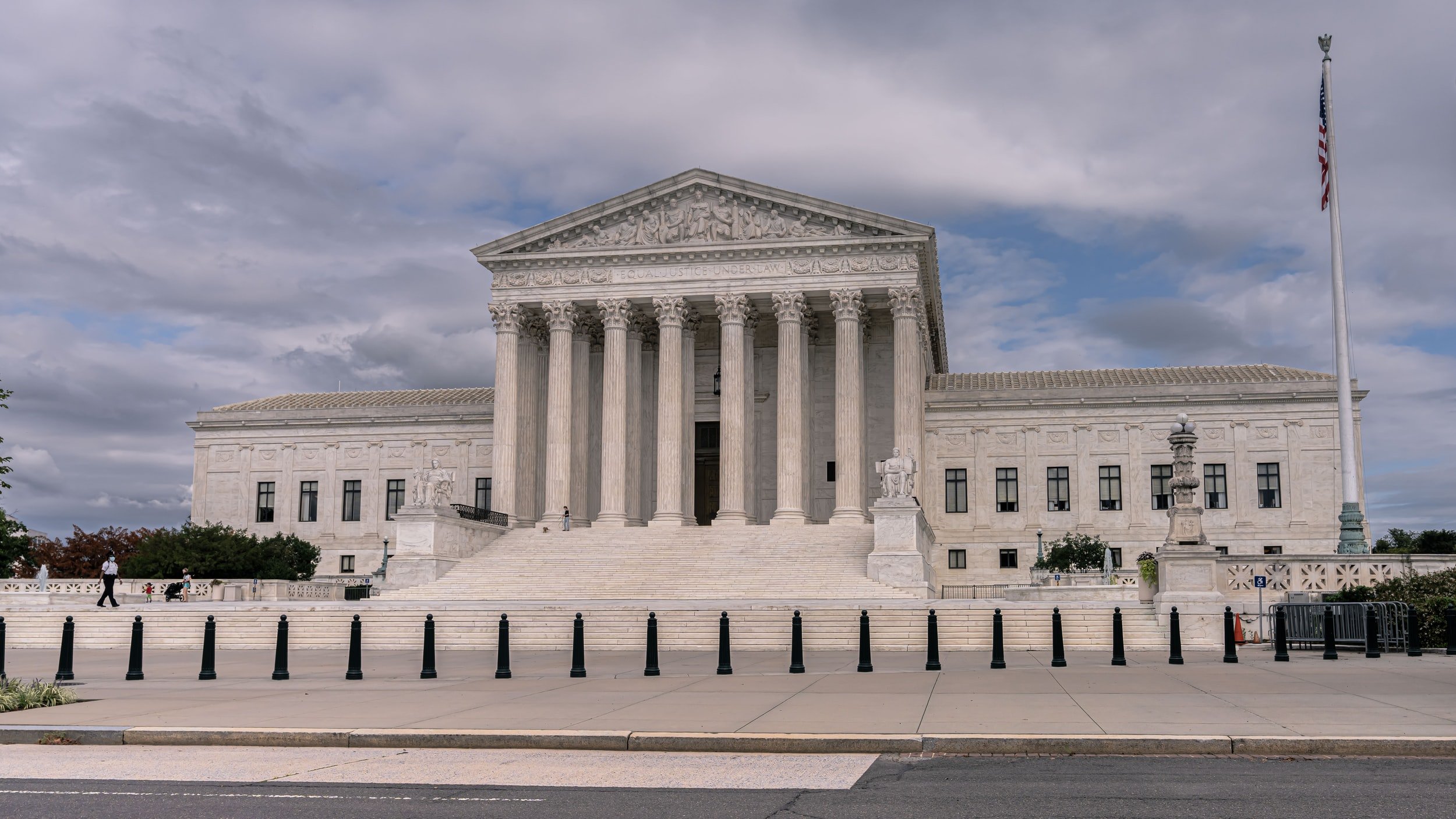
U.S. Supreme Court Blocks Texas Content Moderation Law Applicable to Social Media Companies
The United States Supreme Court issued a May 31, 2022 5-4 opinion found here that blocks a Texas law that prohibits large social media companies, from banning or removing users’ posts based on political viewpoints.
The United States Supreme Court issued a May 31, 2022 5-4 opinion found here that blocks a Texas law that prohibits large social media companies, from banning or removing users’ posts based on political viewpoints.
According to the opinion:
The law in question, HB20, regulates “social media plat- form[s]” that are “open to the public;” that “enabl[e] users to communicate with other users for the primary purpose of posting information, comments, messages, or images;” and that have at least “50 million active users in the United States in a calendar month.” App. to Application 39a–41a (App.). Section 7 of HB20 prohibits these platforms from “censor[ing]” users based on viewpoint, and §2 requires cov- ered platforms to disclose certain information about their business practices, including an “acceptable use policy” and “a biannual transparency report.” Id., at 39a–46a, 48a– 52a. These platforms must also establish procedures by which users can appeal a platform’s decision to “remove content posted by the user.” Id., at 44a.
Applicants are two trade associations that represent ma- jor social media platforms covered by the statute. They challenged the constitutionality of HB20 in the United States District Court for the Western District of Texas, con- tending, among other things, that the law is facially uncon- stitutional under the First Amendment. The court agreed, and it preliminarily enjoined the Texas attorney general from enforcing the statute. The United States Court of Appeals for the Fifth Circuit—after full briefing and oral ar- gument—stayed that preliminary injunction.
The Court granted NetChoice and the Computer & Communications Industry Association’s request to reinstate a block imposed by a federal district judge as the lawsuit goes through the court system.
The decision does not rule on the merits of the law, known as HB20, but reimposes an injunction blocking it from taking effect while federal courts decide whether it can be enforced. The Supreme Court is likely to be asked to take a look at the constitutionality of the law in question at some point in the near future.
Lanton Law is a national boutique law and government affairs firm that closely monitors legislative, regulatory and legal developments for our clients. We help stakeholders understand what’s at issue so that we can help our valued clients achieve their priorities. Contact us to learn about how either our legal or lobbying services can help you attain your goals.

Prescription Digital Therapeutics Presses Ahead for Behavioral Health
At Lanton Law we have been monitoring the both exciting and emerging field of prescription digital therapeutics. While the technologies we have been witnessing are promising, there does remain the challenge of reimbursement, since there has not yet been a statutory benefit category established for this new technology. However; behavioral health shows the most immediate promise.
At Lanton Law we have been monitoring the both exciting and emerging field of prescription digital therapeutics. While the technologies we have been witnessing are promising, there does remain the challenge of reimbursement, since there has not yet been a statutory benefit category established for this new technology. However; behavioral health shows the most immediate promise.
A recent CMS meeting illustrates this point. CMS released a document titled “Centers for Medicare & Medicaid Services (CMS) Healthcare Common Procedure Coding System (HCPCS) Application Summaries and Coding Recommendations” for the Second Biannual, 2021 HCPCS Coding Cycle. The document can be viewed here. The document describes Pear Therapeutics’ reSET-O which is a “12-week interval prescription digital therapeutic for opioid use disorder (OUD).” CMS’ examination ended with its decision effective April 1, 2022 to establish a HCPCS Code to “facilitate options for non-Medicare payers to provide access to this therapy in the home setting,” so that CMS can continue its marketplace monitoring. This on top of the AMA’s CPT Editorial Panel’s actions (seen here) to establish a new CPT code for Cognitive Behavioral Therapy Monitoring effective January 2023 shows that there will definitely be more certainty in this field in the next coming years.
Lanton Law is a national healthcare and life science boutique law and government affairs firm that closely monitors legislative, regulatory and legal developments for our clients. Our HealthIT practice can help stakeholders understand what’s at issue with topics like digital therapeutics, RTM and RPM so that we can help our valued clients reach their goals. Contact us to learn about how either our legal or lobbying services can help you attain your goals.

Massachusetts Discussing Data Privacy Protection
Senator Creem and Senator Lesser have introduced S.46 titled “An Act Establishing the Massachusetts Information Privacy Act.” The bill can be found here.
Senator Creem and Senator Lesser have introduced S.46 titled “An Act Establishing the Massachusetts Information Privacy Act.” The bill can be found here. The Act applies to Massachusetts businesses that earn $10,000 or more annual revenue through 300 or more transactions or that process or maintain the personal information of 10,000 or more unique individuals during the course of a calendar year. The bill has protections on the collection of biometric or location information and seeks to prevent companies from discriminating based on consumer personal information. The MA Information Privacy Commission would also be created by this proposal to oversee this bill’s regulatory scheme.
This bill mirrors the efforts unleashed by the landmark General Data Protection Regulation (GDPR) in Europe which has been followed by efforts in California. Massachusetts did have a predecessor to S.46 in 2019 which stalled in the legislature.
The bill is currently in the Advanced Information Technology, the Internet and Cybersecurity Committee. If you are a technology, healthcare or commerce stakeholder then this is something to keep a watch on.
Lanton Law is a national healthcare & technology law and government affairs firm. Our technology practice has been monitoring privacy developments nationwide. If you are a commerce, technology or healthcare/life science stakeholder with questions about the current landscape or if you would like to discuss how your organization’s strategic initiatives might be impacted by either Congress, regulatory agencies or legal decisions, contact us today.

Prescription Digital Therapeutics (PDTs) Legislation Introduced
The Access to Prescription Digital Therapeutics Act of 2022 has been introduced by Reps. Mike Thompson (D-CA) and David McKinley (R-WV) and Sens. Jeanne Shaheen (D-NH) and Shelly Moore Capito (R-WV).
The Access to Prescription Digital Therapeutics Act of 2022 has been introduced by Reps. Mike Thompson (D-CA) and David McKinley (R-WV) and Sens. Jeanne Shaheen (D-NH) and Shelly Moore Capito (R-WV).
“According to the bill’s release, it would expand Medicare coverage to include PDTs, which are software-based treatments designed to directly treat disease, tested for safety and efficacy in randomized clinical trials, evaluated by the U.S. Food and Drug Administration (FDA), and prescribed by health care providers. PDTs are designed and tested much like traditional prescription drugs but rather than swallowing a pill or taking an injection, patients receive cognitive therapy through software.”
The bill sponsors released a one page fact sheet about the bill and PDTs itself.
“Prescription Digital Therapeutics (PDTs) are software-based disease treatments designed to directly treat disease, tested for safety and efficacy in randomized clinical trials, evaluated by the FDA, and prescribed by healthcare providers. These therapies are designed and tested much like traditional prescription drugs with one distinction: rather than swallowing a pill or taking an injection, patients are treated with software.
The COVID-19 pandemic and public health emergency rapidly accelerated the pace of innovation to address some of the most pressing challenges in health care. New tools are being rapidly deployed and adopted, particularly in the case of digital health, which are increasingly being used, PDTs provide clinicians and patients with evidence-based remote treatment modalities to treat substance and opioid use disorders, mental health, diabetes and other diseases and conditions. However, there is no clear statutory benefit category to allow for Medicare and Medicaid coverage for PDTs.”
Lanton Law is a national healthcare and life science boutique law and government affairs firm that closely monitors legislative, regulatory and legal developments for our clients. Our HealthIT practice can help stakeholders understand what’s at issue with topics like digital therapeutics, RTM and RPM so that we can help our valued clients reach their goals. Contact us to learn about how either our legal or lobbying services can help you attain your goals.

Major Tech Legislation Passes U.S. Senate Judiciary Committee
The Senate Judiciary Committee voted 16-6 to advance the American Innovation and Choice Online Act.
The Senate Judiciary Committee voted 16-6 to advance the American Innovation and Choice Online Act. The legislation seeks to provide that certain discriminatory conduct by covered platforms shall be unlawful. Essentially this bill stops large tech platform companies from the practice of “self-preferencing” meaning these platforms will not be able to discriminate against other businesses that rely on the platform companies’ services. With momentum gaining in the Senate for passage along with similar language in the House via H.R. 3816, this bill definitely seems to be going places these days.
For a while now we have been forecasting greater policy and regulatory oversight when it comes to technology stakeholders. We believe that we will see more scrutiny this year, as technology oversight is an issue that crosses party lines. Don’t wait to form your strategic plan for 2022.
Lanton Law is a national boutique regulatory law and lobbying firm that focuses on technology and healthcare/life science. If you are an industry stakeholder with questions about the current landscape or if you would like to discuss how your organization’s strategic initiatives might be impacted by either Congress, regulatory agencies or legal decisions, contact us today.

The Platform Accountability and Transparency Act (PATA) Introduced to Ensure Social Media Platform Transparency
Senators Coons (D-DE), Kloubuchar (D-MN) and Portman (R-OH) have introduced a bi-partisan proposed bill that would require social media companies to provide vetted, independent researchers and the public with access to certain platform data.
Senators Coons (D-DE), Kloubuchar (D-MN) and Portman (R-OH) have introduced a bi-partisan proposed bill that would require social media companies to provide vetted, independent researchers and the public with access to certain platform data.
According to the bill’s press release, PATA proposes the following:
Under PATA, independent researchers would be able to submit proposals to the National Science Foundation, an independent agency designed to promote the progress of science by approving research and development proposals from researchers across the sciences. If the requests are approved, social media companies would be required to provide the necessary data subject to certain privacy protections.
Companies that failed to comply would be subject to enforcement from the Federal Trade Commission (FTC) and face the potential loss of immunity under Section 230 of the Communications Decency Act.
Additionally, the bill would give the FTC the authority to require that platforms proactively make certain information available to researchers or the public on an ongoing basis, such as a comprehensive ad library with information about user targeting and engagement.
The proposal would also protect researchers from legal liability that may arise from automatically collecting platform information if they comply with various privacy safeguards.
The bill can be viewed here.
This bill is important to watch as part of an ongoing trend of increasing policy scrutiny on the tech sector.
Lanton Law is a national boutique regulatory law and lobbying firm that focuses on technology and healthcare/life science. Our technology practice monitors relevant policy and regulatory decision makers and we counsel clients on emerging trends within this rapidly developing field.
If you are an industry stakeholder with questions about the current landscape or if you would like to discuss how your organization’s strategic initiatives might be impacted by either Congress, regulatory agencies or legal decisions, contact us today.

New Congressional Privacy Legislation Proposes Mandated Warrants to Search Americans’ Digital Devices at the Border
Senators Ron Wyden (D-OR) and Rand Paul (R-KY) have introduced the Protecting Data at the Border Act .
Senators Ron Wyden (D-OR) and Rand Paul (R-KY) have introduced the Protecting Data at the Border Act .
According to the press release “The bipartisan bill prevents law enforcement agencies from continuing to take advantage of the so-called border search “exception” in order to conduct warrantless searches of Americans’ phones and laptops.”
“The Protecting Data at the Border Act would provide statutory clarity by recognizing that the principles from Riley v. California extend to searches of digital devices at the border. In addition, this bill requires that U.S. persons know their rights before they consent to giving up online account information (like social media account names or passwords) or before they consent to give law enforcement access to their devices.”
The bill summary can be found here.
Lanton Law is a national boutique regulatory law and lobbying firm that focuses on technology and healthcare/life science. Our privacy practice monitors relevant policy and regulatory decision makers and we counsel clients on emerging trends within this rapidly developing field.
If you are an industry stakeholder with questions about the current landscape or if you would like to discuss how your organization’s strategic initiatives might be impacted by either Congress, regulatory agencies or legal decisions, contact us today.

Senator Markey (D-MA) and Representatives Castor (D-FL) and Trahan (D-MA) Urge FTC To Use Authority to Make Tech Companies More Accountable
According to Senator Markey’s press release Senator Markey and Representatives Castor and Trahan have sent a letter to the Federal Trade Commission, urging the agency to use its full authority—including its authority under Section 5 of the FTC Act—to ensure these companies comply with their new policies.
According to Senator Markey’s press release Senator Markey and Representatives Castor and Trahan have sent a letter to the Federal Trade Commission, urging the agency to use its full authority—including its authority under Section 5 of the FTC Act—to ensure these companies comply with their new policies. The Age Appropriate Design Code (AADC) took effect in the U.K. this September and requires online services available to children and teens to meet 15 key children’s privacy standards, many of which are similar to legislative proposals to update Senator Markey’s 1998 law, the Children’s Online Privacy and Protection Act (COPPA), in the United States.
It is no secret that technology stakeholders should be mindful of additional regulatory and policy scrutiny. Lanton Law is a national boutique regulatory law and lobbying firm that focuses on technology and healthcare/life science. We continue to monitor the policy and legal developments around the FTC.
If you are an industry stakeholder with questions about the current landscape or if you would like to discuss how your organization’s strategic initiatives might be impacted by either Congress, regulatory agencies or legal decisions, contact us today.

FTC Report to Congress on Privacy and Security
The Federal Trade Commission (FTC) last month issued the FTC Report to Congress on Privacy and Security.
The Federal Trade Commission (FTC) last month issued the FTC Report to Congress on Privacy and Security.
What’s in the Report?
According to the agency “This report responds to the Joint Explanatory Statement accompanying the Consolidated Appropriations Act, 2021, P.L. 116-260, directing the Federal Trade Commission (“Commission” or “FTC”) to “conduct a comprehensive internal assessment measuring the agency’s current efforts related to data privacy and security while separately identifying all resource-based needs of the FTC to improve in these areas. The agreement also urges the FTC to provide a report describing the assessment’s findings to the Committees [on Appropriations of the House and Senate] within 180 days of enactment of this Act.”
Additionally, “The report first provides an overview of the FTC’s authority related to privacy and security, highlighting certain recent efforts in those areas. Second, it discusses priorities for improving the effectiveness of our efforts to protect Americans’ privacy. Third, it identifies areas in which we could use additional resources to further ensure Americans’ privacy is protected. Finally, it discusses the need for Congressional action on the FTC’s authority.”
Lanton Law is a national boutique regulatory law and lobbying firm that focuses on healthcare/life science and technology. We continue to monitor the policy and legal developments around the FTC.
If you are an industry stakeholder with questions about the current landscape or if you would like to discuss how your organization’s strategic initiatives might be impacted by either Congress, regulatory agencies or legal decisions, contact us today.

Bipartisan Antitrust Legislation to Promote App Store Competition Introduced
Last week U.S. Senators Richard Blumenthal (D-CT), Marsha Blackburn (R-TN), and Amy Klobuchar (D-MN) introduced the Open App Markets Act.
Last week U.S. Senators Richard Blumenthal (D-CT), Marsha Blackburn (R-TN), and Amy Klobuchar (D-MN) introduced the Open App Markets Act. According to the press release, “ The Open App Markets Act would protect developers’ rights to tell consumers about lower prices and offer competitive pricing; protect sideloading of apps; open up competitive avenues for startup apps, third party app stores, and payment services; make it possible for developers to offer new experiences that take advantage of consumer device features; give consumers more control over their devices; prevent app stores from disadvantaging developers; and set safeguards to continue to protect privacy, security, and safety of consumers.”
Lanton Law is a national boutique regulatory law and lobbying firm that focuses on technology and healthcare/life sciences. If you are an industry stakeholder with questions about the current landscape or if you would like to discuss how your organization’s strategic initiatives might be impacted by either Congress, regulatory agencies or legal decisions, contact us today.

President Biden Issues Executive Order Aimed at Multiple Industries
President Biden has issued an Executive Order (EO) titled Executive Order on Promoting Competition in the American Economy.
President Biden has issued an Executive Order (EO) titled Executive Order on Promoting Competition in the American Economy. The EO advocates for promoting “competition in the American economy, which will lower prices for families, increase wages for workers, and promote innovation and even faster economic growth.” In doing so multiple sectors of the economy including labor, healthcare, transportation, agriculture, communications, technology, banking and finance have been targeted.
As our economy emerges from the pandemic, we foresee that state and federal policymakers will be taking a look to see what laws need to be strengthened or reworked for our reimagined economy.
Lanton Law is a national boutique law and lobbying firm that focuses on highly regulated industries such as healthcare, technology, and finance. If you are an industry stakeholder with questions about the current landscape or if you would like to discuss how your organization’s strategic initiatives might be impacted by either Congress, regulatory agencies or legal decisions, contact us today.

U.S. Senate Passes the Innovation and Competition Act
Earlier this month the U.S. Senate passed a rare bi-partisan bill called the United States Innovation and Competition Act, which seeks to improve America's competitive edge by investing billions of dollars in scientific and technological innovations – including artificial intelligence, computer chips and robotics.
Earlier this month the U.S. Senate passed a rare bi-partisan bill called the United States Innovation and Competition Act, which seeks to improve America's competitive edge by investing billions of dollars in scientific and technological innovations – including artificial intelligence, computer chips and robotics. The bill would boost funding for research and technology manufacturing to increase America's competitiveness, strengthen national security and grow the economy. The bill’s future is uncertain in the U.S. House of Representatives, where the House has a similar bill but it is unlikely that there will not be some kind of compromise between the House and Senate, especially where national security is concerned.
Lanton Law’s technology practice has been monitoring similar legislative and legal developments. If you are a technology or healthcare/life science stakeholder with questions about the current landscape or if you would like to discuss how your organization’s strategic initiatives might be impacted by either Congress, regulatory agencies or legal decisions, contact us today.

Data Protection Agency (DPA) Legislation Reintroduced
U.S. Senator Gillibrand (D-NY) issued a press release announcing the Data Protection Act of 2021, which would create the DPA, an independent federal agency whose goal is to protect Americans’ data, instill privacy safeguards and work to ensure that there is transparency in data sharing practices.
U.S. Senator Gillibrand (D-NY) issued a press release announcing the Data Protection Act of 2021, which would create the DPA, an independent federal agency whose goal is to protect Americans’ data, instill privacy safeguards and work to ensure that there is transparency in data sharing practices.
There have been some changes to this proposed legislation since last year’s version of the bill. These changes include:
Supervision of Data Aggregators: Grants the DPA authority to review Big Tech mergers involving a large data aggregator, or any merger that proposes the transfer of personal data of 50,000 or more individuals.
Office of Civil Rights: Establishes the DPA Office of Civil Rights to advance data justice and protect individuals from discrimination.
Enforcement Powers: Improves DPA enforcement powers to oversee the use of high-risk data practices and to penalize, examine, and propose remedies to the social, ethical, and economic impacts of data collection.
Penalties and Fines: Prohibits data aggregators from committing any unlawful, unfair, deceptive, abusive, or discriminatory data practices; and allows for penalties and fines to be levied if violated, including triple penalties for violations against children.
Defines Key Terms for Transparency: Provides Key Definitions for Privacy Harm, Data Aggregators, and High-Risk Data Practice, among other key terms.
According to the release “The DPA would be an executive agency. The director would be appointed by the president and confirmed by the Senate, serves a 5-year term, and must have knowledge of technology, protection of personal data, civil rights, and law. The agency may investigate, subpoena for testimony or documents, and issue civil investigative demands. It may prescribe rules and issue orders and guidance as is necessary to carry out federal privacy laws. The authority of state agencies and state attorneys general are preserved in the Act. The DPA would have three core missions:
1. Give Americans control and protection over their own data by authorizing the DPA to create and enforce data protection rules.
2. Maintain the most innovative, successful tech sector in the world by ensuring fair competition within the digital marketplace.
3. Prepare the American government for the digital age.”
Lanton Law’s technology practice has been monitoring privacy developments nationwide. If you are a banking/finance, technology or healthcare/life science stakeholder with questions about the current landscape or if you would like to discuss how your organization’s strategic initiatives might be impacted by either Congress, regulatory agencies or legal decisions, contact us today.

House Lawmakers Release Anti-Monopoly Agenda for “A Stronger Online Economy: Opportunity, Innovation, Choice”
According to press release, the House Committee on the Judiciary’s Antitrust Subcommittee Chairman Cicilline (D-RI) and Ranking Member Buck (R-CO) announced their antitrust bi-partisan agenda outlined below:
According to press release, the House Committee on the Judiciary’s Antitrust Subcommittee Chairman Cicilline (D-RI) and Ranking Member Buck (R-CO) announced their antitrust bi-partisan agenda outlined below:
“‘A Stronger Online Economy: Opportunity, Innovation, Choice’ consists of five bipartisan bills drafted by lawmakers on the Antitrust Subcommittee, which last year completed a 16-month investigation into the state of competition in the digital marketplace and the unregulated power wielded by Amazon, Apple, Facebook, and Google.”
The “American Innovation and Choice Online Act” to prohibit discriminatory conduct by dominant platforms, including a ban on self-preferencing and picking winners and losers online. The bill is sponsored by Chairman Cicilline and co-sponsored by U.S. Rep. Lance Gooden (TX-05).
The “Platform Competition and Opportunity Act” prohibits acquisitions of competitive threats by dominant platforms, as well as acquisitions that expand or entrench the market power of online platforms. The bill is sponsored by U.S. Rep. Hakeem Jeffries (NY-08) and co-sponsored by Ranking Member Buck.
The “Ending Platform Monopolies Act” eliminates the ability of dominant platforms to leverage their control over multiple business lines to self-preference and disadvantage competitors in ways that undermine free and fair competition. The bill is sponsored by U.S. Rep. Pramila Jayapal (WA-07) and co-sponsored by U.S. Rep. Lance Gooden (TX-05).
The “Augmenting Compatibility and Competition by Enabling Service Switching (ACCESS) Act” promotes competition online by lowering barriers to entry and switching costs for businesses and consumers through interoperability and data portability requirements. This bill is sponsored by U.S. Rep. Mary Gay Scanlon (PA-05) and co-sponsored by U.S. Rep. Burgess Owens (UT-04).
The “Merger Filing Fee Modernization Act” updates filing fees for mergers for the first time in two decades to ensure that the Department of Justice and Federal Trade Commission have the resources they need to aggressively enforce the antitrust laws. This bill is sponsored by U.S. Rep. Joe Neguse (CO-02) and co-sponsored by U.S. Rep. Victoria Spartz (IN-05).
Lanton Law has been monitoring both Congress and the FTC for our technology and healthcare clients, especially as both Congress and the FTC have taken a more aggressive tone on antitrust issues lately.
Lanton Law is a national boutique regulatory law and lobbying firm that focuses on healthcare/life science and technology. If you are an industry stakeholder with questions about the current landscape or if you would like to discuss how your organization’s strategic initiatives might be impacted by either Congress, regulatory agencies or legal decisions,contact us today.