

Comprehensive national data privacy and data security draft legislation framework released
The U.S. House Committee on Energy and Commerce has introduced a bi-partisan discussion framework on privacy.
According to the U.S. House Committee on Energy and Commerce:
“U.S. Representatives Frank Pallone, Jr., D-N.J. and Cathy McMorris Rodgers, R-Wash., Chairman and Ranking Member of the House Committee on Energy and Commerce, and U.S. Senator Roger Wicker, R-Miss., Ranking Member of the Senate Committee on Commerce, Science, and Transportation, today released a discussion draft of a comprehensive national data privacy and data security framework. The draft legislation is the first comprehensive privacy proposal to gain bipartisan, bicameral support.”
What does the American Data Privacy and Protection Act do?
Establish a strong national framework to protect consumer data privacy and security;
Grant broad protections for Americans against the discriminatory use of their data;
Require covered entities to minimize on the front end, individuals’ data they need to collect, process, and transfer so that the use of consumer data is limited to what is reasonably necessary, proportionate, and limited for specific products and services;
Require covered entities to comply with loyalty duties with respect to specific practices while ensuring consumers don’t have to pay for privacy;
Require covered entities to allow consumers to turn off targeted advertisements;
Provide enhanced data protections for children and minors, including what they might agree to with or without parental approval;
Establish regulatory parity across the internet ecosystem; and
Promote innovation and preserve the opportunity for start-ups and small businesses to grow and compete.
The discussion draft can be found here.
Lanton Law is a national healthcare & technology law and government affairs firm. Our technology practice has been monitoring privacy developments nationwide. If you are a commerce, technology or healthcare/life science stakeholder with questions about the current landscape or if you would like to discuss how your organization’s strategic initiatives might be impacted by either Congress, regulatory agencies or legal decisions, contact us today.

How to Choose a Lobbyist
Since the early 2000s, there has been a steady increase in the amount of government activity that has directly affected healthcare stakeholders. Prior to this time-period, companies could afford to focus only on differentiating their products from their competitors. Now companies are finding that during their strategic planning meetings, they must account for how state and federal government activity may impact their bottom line. In addition to having a Government Affairs staff, these same companies are starting to realize the importance of having established a relationship with a lobbyist. The question is how do you find the right lobbyist for your organization?
Since the early 2000s, there has been a steady increase in the amount of government activity that has directly affected healthcare stakeholders. Prior to this time-period, companies could afford to focus only on differentiating their products from their competitors. Now companies are finding that during their strategic planning meetings, they must account for how state and federal government activity may impact their bottom line. In addition to having a Government Affairs staff, these same companies are starting to realize the importance of having established a relationship with a lobbyist. The question is how do you find the right lobbyist for your organization?
First you want to make sure the lobbyist has experience. To be a good lobbyist there is no magic number of how many years you have worked within the political system. However; many lobbyists have worked an average of six months in the legislature as an aide to a legislator or on the other side of the spectrum, many legislators have left the legislature to work as a lobbyist. These individuals have an insider’s perspective into how the legislature works such as when a bill filing deadline date is and whether or not a bill can be introduced due to if a state is in an emergency session where the rules for introducing legislation is different from regular session.
Second the lobbyist should have a minimum number of contacts in the legislature. Whether it is in Congress or on the state level, the lobbyist should be able to have a go to legislator that can get a bill introduced quickly. However; the most successful lobbyist will not be limited to one party. Having contacts on both sides of the aisle will allow the lobbyist the opportunity to bring any bill at any time regardless of what political party has the majority.
Third the best lobbyist should be strategic. He or she should be able to know when a good time to introduce legislation is. The lobbyist should know what legislator to target as the bill sponsor. This is important because the bill sponsor will be the champion for your particular bill from start to finish. The lobbyist will need to educate the bill sponsor on the nuances of the bill so that the sponsor will be educated enough to be able to respond to technical questions during a hearing or when the sponsor is in caucus meetings; explaining to their respective party about why your bill should be voted on. The lobbyists should be able to pick and choose what committee will be best for your bill to go into, who to use as strategic allies for your legislation and be intuitive enough on when to negotiate and when not to.
Next it is important for your lobbyist to know the industry and to have foresight. You need to be comfortable knowing that your lobbyist understands your industry because if not, how can you be sure that your lobbyist is communicating the correct outcome for you? The lobbyist should be skilled enough to draft a bill that solves your problem without having to continuously ask you how something works. Additionally, while many lobbyists only focus on the legislature, the best lobbyists will think long-term to determine if a regulatory body will be involved once your bill passes. If so a lobbyist should be able to guide you through the regulatory process without leaving you to fend for yourself after a bill has passed.
Finally, as with any other professional, you need to be aware of the reputation your lobbyist has. Do they take the time to make sure their clients understand everything that is happening? Does the lobbyist prepare the client and relevant legislators ahead of time for crucial hearings? Does the lobbyist make everything easy to understand? Does the lobbyist dress appropriately for meetings and do they have the needed respect from the legislature? Does the lobbyist closely follow the bill from start to finish or are they overloaded with too many clients? These are important issues to talk with your prospective lobbyist about before entering into a contractual relationship.
While there are other nuances to the lobbying relationship, these should be enough for you to think about as your organization considers whether to engage a lobbyist. Lobbyist should no longer be considered a luxury item. The best lobbyist are quickly becoming essential parts of today’s corporate environment for the value they bring to their clients in either advancing their interests through legislation, or being available to respond to legislative targeting that has been on the rise. You know you have picked the right lobbyist when you can breathe a sigh of relief knowing that they have your back.
Lanton Law is a national boutique law and government affairs firm that closely monitors legislative, regulatory and legal developments for our clients. We help stakeholders understand what’s at issue so that we can help our valued clients achieve their priorities. Contact us to learn about how either our legal or lobbying services can help you attain your goals.
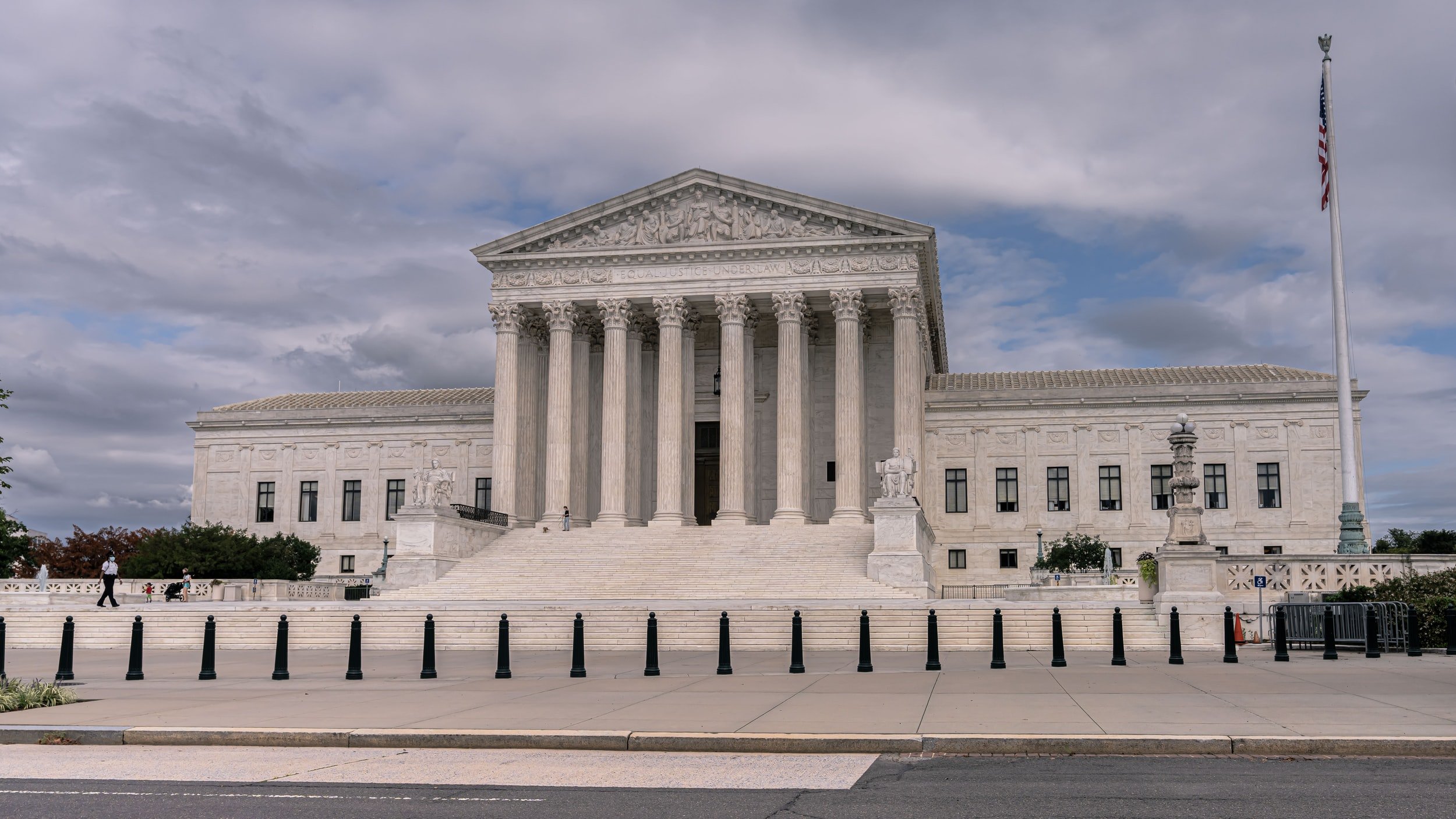
U.S. Supreme Court Blocks Texas Content Moderation Law Applicable to Social Media Companies
The United States Supreme Court issued a May 31, 2022 5-4 opinion found here that blocks a Texas law that prohibits large social media companies, from banning or removing users’ posts based on political viewpoints.
The United States Supreme Court issued a May 31, 2022 5-4 opinion found here that blocks a Texas law that prohibits large social media companies, from banning or removing users’ posts based on political viewpoints.
According to the opinion:
The law in question, HB20, regulates “social media plat- form[s]” that are “open to the public;” that “enabl[e] users to communicate with other users for the primary purpose of posting information, comments, messages, or images;” and that have at least “50 million active users in the United States in a calendar month.” App. to Application 39a–41a (App.). Section 7 of HB20 prohibits these platforms from “censor[ing]” users based on viewpoint, and §2 requires cov- ered platforms to disclose certain information about their business practices, including an “acceptable use policy” and “a biannual transparency report.” Id., at 39a–46a, 48a– 52a. These platforms must also establish procedures by which users can appeal a platform’s decision to “remove content posted by the user.” Id., at 44a.
Applicants are two trade associations that represent ma- jor social media platforms covered by the statute. They challenged the constitutionality of HB20 in the United States District Court for the Western District of Texas, con- tending, among other things, that the law is facially uncon- stitutional under the First Amendment. The court agreed, and it preliminarily enjoined the Texas attorney general from enforcing the statute. The United States Court of Appeals for the Fifth Circuit—after full briefing and oral ar- gument—stayed that preliminary injunction.
The Court granted NetChoice and the Computer & Communications Industry Association’s request to reinstate a block imposed by a federal district judge as the lawsuit goes through the court system.
The decision does not rule on the merits of the law, known as HB20, but reimposes an injunction blocking it from taking effect while federal courts decide whether it can be enforced. The Supreme Court is likely to be asked to take a look at the constitutionality of the law in question at some point in the near future.
Lanton Law is a national boutique law and government affairs firm that closely monitors legislative, regulatory and legal developments for our clients. We help stakeholders understand what’s at issue so that we can help our valued clients achieve their priorities. Contact us to learn about how either our legal or lobbying services can help you attain your goals.

Vermont Enacts New PBM Law
Vermont Gov. Phil Scott (R) signed H. 353, a bill that several issues including patient steering, reimbursement transparency, spread pricing, and other PBM practices.
Vermont Gov. Phil Scott (R) signed H. 353, a bill that several issues including patient steering, reimbursement transparency, spread pricing, and other PBM practices.
Lanton Law is a national boutique law and lobbying firm that focuses on healthcare/life sciences and technology. Our pharmacy practice has been helping pharmacies nationwide with operational issues, mergers and acquisitions, regulatory inquiries, audits, licensure, employment issues and contracting. Our lobbying efforts help pharmacies nationwide achieve improved business climates through carefully crafted legislation.
If you are an industry stakeholder with questions about the current landscape or if you would like to discuss how your organization’s strategic initiatives might be impacted by either Congress, regulatory agencies or legal decisions, contact us today.

The Pharmacy Benefit Manager Transparency Act of 2022 Introduced in Congress
The Pharmacy Benefit Manager Transparency Act of 2022 was introduced by Senate Commerce Science, and Transportation Committee Chair Maria Cantwell and Senate Judiciary Committee Ranking Member Chuck Grassley.
The Pharmacy Benefit Manager Transparency Act of 2022 was introduced by Senate Commerce Science, and Transportation Committee Chair Maria Cantwell and Senate Judiciary Committee Ranking Member Chuck Grassley.
The bill which can be viewed here, seeks to prevent unfair and deceptive acts or practices and the dissemination of false information related to pharmacy benefit management services for prescription drugs, and for other purposes.
According to the Senate Commerce Committee’s announcement the proposed bill seeks to specifically do the following:
PROHIBITS UNFAIR OR DECEPTIVE PRICING PRACTICES
The legislation would make it illegal for PBMs to engage in “spread pricing” in which they charge health plans and payers more for a prescription drug than what they reimburse to the pharmacy, and then pocket the difference – the “spread” – as profit.
The bill would also prohibit PBMs from arbitrarily, unfairly, or deceptively clawing back payments made to pharmacies, or arbitrarily, unfairly, or deceptively increasing fees or lowering reimbursements to offset reimbursement changes in federally-funded health plans.
INCENTIVIZES FAIR AND TRANSPARENT PBM PRACTICES
The bill would encourage fair and transparent PBM practices that benefit local pharmacies and consumers by making clear that a PBM would not be in violation of the Act if it:
Passes along 100 percent of any rebate to the health plan or payer; and
Provide full and complete disclosure of:
The cost, price, and reimbursement of prescription drugs to the health plans and pharmacies;
All fees,markups, and discounts the PBM charges or imposes on health plans and pharmacies; or
The aggregate remuneration fees it receives from drugmakers to health plans, payers, and any federal agency.
MANDATES TRANSPARENCY
The bill would require PBMs to file an annual report with the FTC, shining a brighter light on how they charge health plans and pharmacies for prescription drugs. Specifically, it would require PBMs to disclose:
The aggregate amount of the difference between how much each health plan paid the PBM for prescription drugs, and how much the PBM paid each pharmacy on behalf of health plans for such drugs;
The aggregate total amount of fees the PBM charged to pharmacies and the total amount of reimbursements the PBM clawed back from pharmacies;
Why the cost, copay, coinsurance, or deductible for a consumer increased, or why the reimbursement rate to a pharmacy decreased for a prescription drug; and
For PBMs that control or are affiliated with a pharmacy, a description of any differences between what they reimburse or charge affiliated and nonaffiliated pharmacies.
ENFORCEMENT
The bill would authorize the FTC and state attorneys general to enforce its mandates, including by seeking civil penalties from PBM companies for each violation, plus an additional penalty of up to $1 million.
Lanton Law is a national boutique law and lobbying firm that focuses on healthcare/life sciences and technology. Our pharmacy practice has been helping pharmacies nationwide with operational issues, mergers and acquisitions, regulatory inquiries, audits, licensure, employment issues and contracting. Our lobbying efforts help pharmacies nationwide achieve improved business climates through carefully crafted legislation.
If you are an industry stakeholder with questions about the current landscape or if you would like to discuss how your organization’s strategic initiatives might be impacted by either Congress, regulatory agencies or legal decisions, contact us today.

Lanton Law Interviews Famlee Founder & CEO Shelley Bailey
Ron Lanton of Lanton Law interviews Shelley Bailey of Famlee. They discuss fertility, entrepreneurship and the benefits of technology for the advancement of women's health.
Ron Lanton of Lanton Law interviews Shelley Bailey of Famlee. They discuss fertility, entrepreneurship and the benefits of technology for the advancement of women's health. The interview can be heard here.

Illinois Biometrics Information Privacy Act Strikes Again
Snapchat’s parent company is defending against a class-action lawsuit in the U.S. District Court for the Northern District of Illinois brought by two platform users identified as Adrian Coss and Maribel Ocampo.
The lawsuit alleges that the platform violates the Illinois Biometrics Information Privacy Act by failing to provide users with the required disclosures under the act while collecting, storing and sharing users’ unique facial features and voices.
Snapchat’s parent company is defending against a class-action lawsuit in the U.S. District Court for the Northern District of Illinois brought by two platform users identified as Adrian Coss and Maribel Ocampo.
The lawsuit alleges that the platform violates the Illinois Biometrics Information Privacy Act by failing to provide users with the required disclosures under the act while collecting, storing and sharing users’ unique facial features and voices.
The Illinois Biometric Information Privacy Act enacted in 2008 was an important first step in developing policy on biometrics. According to the law, a private entity possessing biometric information accessible to the public must have a retention schedule and policy for permanently destroying biometric information. Additionally, there are restrictions on how a private entity may collect, capture, purchase, receive through trade, or otherwise obtain a person's or a customer's biometric identifier or biometric information. Most importantly, this law requires obtaining written consent prior to collecting biometric information as the law provides a private right of action for anyone injured under the Act.
Lanton Law’s technology practice, which includes biometrics and privacy issues, has been monitoring the Illinois Biometric Information Privacy Act for some time. We have posted several blogs addressing this issue as companies continue to evolve biometrics into their business models.
Lanton Law is a national healthcare and life science boutique law and government affairs firm that closely monitors legislative, regulatory and legal developments for our clients. Our healthcare practice can help stakeholders understand what’s at issue so that we can help our valued clients reach their goals. Contact us to learn about how either our legal or lobbying services can help you attain your priorities.
Lanton Law’s publications should not be construed as legal advice on any specific facts or circumstances. The contents are intended for general information purposes only and may not be quoted or referred to in any other publication or proceeding without prior written consent of us. To request reprint permission for any of our publications, please use our “Let’s Chat” form, which can be found on our website at www.lantonlaw.com. The mailing of this publication is not intended to create, and receipt of it does not constitute, an attorney-client relationship.

U.S. Hemp Roundtable Highlights New Industry CBD Study
The U.S. Hemp Roundtable is highlighting a study conducted by Validcare “confirms prior research that orally-ingested cannabidiol (CBD) has a strong safety profile, providing data that addresses FDA’s specific safety concerns regarding CBD, with the results indicating that daily consumption across a range of typical retail products and serving sizes is not associated with elevated liver tests, low testosterone levels, or daytime drowsiness.”
The U.S. Hemp Roundtable is highlighting a study conducted by Validcare “confirms prior research that orally-ingested cannabidiol (CBD) has a strong safety profile, providing data that addresses FDA’s specific safety concerns regarding CBD, with the results indicating that daily consumption across a range of typical retail products and serving sizes is not associated with elevated liver tests, low testosterone levels, or daytime drowsiness.”
“We are excited to report that the ‘real-world data’ that FDA has been soliciting addresses the agency’s safety concerns,” stated Jonathan Miller, General Counsel to the U.S. Hemp Roundtable, the hemp industry’s national advocacy organization. “The time has come for FDA to regulate CBD and other hemp derivatives. If FDA does not act, we call on Congress to pass legislation such as HR 841, HR 6134 and S. 1698 which would require the FDA to develop regulatory pathways for the sale of hemp extracts like CBD in ingestible form.”
The FDA is the deciding factor in determining whether CBD products make it in the marketplace. This study could help push innovation in the right direction and answer the lingering safety questions and concerns that we have seen in previous FDA product rulings.
Lanton Law is a national boutique law and lobbying firm that focuses on healthcare/life sciences and technology. Specifically we have expertise in cannabis and CBD related issues. Contact us to learn about how either our legal or lobbying services can help you attain your priorities.
Lanton Law’s publications should not be construed as legal advice on any specific facts or circumstances. The contents are intended for general information purposes only and may not be quoted or referred to in any other publication or proceeding without prior written consent of us. To request reprint permission for any of our publications, please use our “Let’s Chat” form, which can be found on our website at www.lantonlaw.com. The mailing of this publication is not intended to create, and receipt of it does not constitute, an attorney-client relationship.

Lanton Law Podcast Episode 1
On Episode 1 Lanton Law speaks with STACK CEO Jonathan Ogurchak about privacy trends, healthcare efficiencies using SAAS and whether healthcare is ready for tech disruption.
On Episode 1 Lanton Law speaks with STACK CEO Jonathan Ogurchak about privacy trends, healthcare efficiencies using SAAS and whether healthcare is ready for tech disruption. Click here to listen to the podcast.

Arizona passes new law requiring insurers to cover cancer biomarker tests
Arizona has enacted HB 2144 seen here which requires health care insurers, the Arizona Health Care Cost Containment System (AHCCCS) and its contractors to provide coverage for biomarker testing. Prescribes processes and requirements for the usage and coverage of biomarker testing.
Arizona has enacted HB 2144 seen here which requires health care insurers, the Arizona Health Care Cost Containment System (AHCCCS) and its contractors to provide coverage for biomarker testing. Prescribes processes and requirements for the usage and coverage of biomarker testing.
Bills like these are needed as they improve physicians’ abilities to target cancers more accurately which could lead to improved patient outcomes and less healthcare financial waste.
Lanton Law is a national healthcare and life science boutique law and government affairs firm that closely monitors legislative, regulatory and legal developments for our clients. Our healthcare practice can help stakeholders understand what’s at issue so that we can help our valued clients reach their goals. Contact us to learn about how either our legal or lobbying services can help you attain your priorities.
Lanton Law’s publications should not be construed as legal advice on any specific facts or circumstances. The contents are intended for general information purposes only and may not be quoted or referred to in any other publication or proceeding without prior written consent of us. To request reprint permission for any of our publications, please use our “Let’s Chat” form, which can be found on our website at www.lantonlaw.com. The mailing of this publication is not intended to create, and receipt of it does not constitute, an attorney-client relationship.

UnitedHealthcare (UHC) Announces Virtual Physical Therapy Program
UHC has announced a partnership with Kaia Health on a new virtual physical therapy program. The program is aimed at shoulder or knee problems and other musculoskeletal issues.
UHC has announced a partnership with Kaia Health on a new virtual physical therapy program. The program is aimed at shoulder or knee problems and other musculoskeletal issues.
How does it work?
According to the announcement “The app uses a front-facing smartphone camera and artificial intelligence technology to analyze a user’s movement patterns while performing PT exercises. The program gives real-time tips for carrying out safe, effective exercise sessions that typically last between 10-25 minutes. If, at any point, a certified health coach is needed, one can be accessed using an in-app chat feature.
The app is part of a broader set of in-person and virtual musculoskeletal support tools available to eligible UnitedHealthcare members recovering from surgery or injury, including knee, back or shoulder problems. The programs are designed to help improve health, reduce costs and avoid often unnecessary invasive treatments, including imaging, surgery or opioid prescriptions.”
We continue to see emerging innovation within healthcare around digital healthcare and digital therapeutics. Opportunities abound for those looking for new ways to care for patients.
Lanton Law is an innovative firm at the center of tomorrow’s legal, policy and market trends. We continue to monitor the developments of emerging sectors such as digital healthcare and give counsel to stakeholders accordingly. Contact Lanton Law to discuss your lobbying and legal strategies.
Lanton Law’s publications should not be construed as legal advice on any specific facts or circumstances. The contents are intended for general information purposes only and may not be quoted or referred to in any other publication or proceeding without prior written consent of us. To request reprint permission for any of our publications, please use our “Let’s Chat” form, which can be found on our website at www.lantonlaw.com. The mailing of this publication is not intended to create, and receipt of it does not constitute, an attorney-client relationship.

Biden Administration to Invest $3.1 Billion to Manufacture Electric Car Batteries
The U.S. Department of Energy (DOE) has announced “$3.1 billion in funding from President Biden’s Bipartisan Infrastructure Law to make more batteries and components in America, bolster domestic supply chains, create good-paying jobs, and help lower costs for families.
The U.S. Department of Energy (DOE) has announced “$3.1 billion in funding from President Biden’s Bipartisan Infrastructure Law to make more batteries and components in America, bolster domestic supply chains, create good-paying jobs, and help lower costs for families. The infrastructure investments will support the creation of new, retrofitted, and expanded commercial facilities as well as manufacturing demonstrations and battery recycling. DOE is also announcing a separate $60 million to support second-life applications for batteries once used to power EVs, as well as new processes for recycling materials back into the battery supply chain. Both funding opportunities are key components of the Administration’s whole-of-government supply chain strategy to strengthen America’s energy independence to reduce our reliance on competing nations and support the President’s goal to have electric vehicles make up half of all vehicles sales in America by 2030.”
Clean energy continues its push forward as the U.S. explores alternatives to fossil fuels. As the debate around climate change starts to take shape, many manufacturing companies have already started thinking about green energy as a next step in their evolution plans.
Lanton Law is a national boutique law and government affairs firm that closely monitors legislative, regulatory and legal developments for our clients. We help stakeholders understand what’s at issue so that we can help our valued clients achieve their priorities. Contact us to learn about how either our legal or lobbying services can help you attain your goals.

FDA Releases Draft Guidance To Encourage Enhancing Clinical Trial Diversity
The FDA has just released draft guidance in the Biden Administration’s effort to encourage the industry to enhance clinical trial diversity.
The FDA has just released draft guidance in the Biden Administration’s effort to encourage the industry to enhance clinical trial diversity.
The purpose of this guidance is to provide recommendations to sponsors developing medical products2 on the approach for developing a Race and Ethnicity Diversity Plan (henceforth referred to as the “Plan”) to enroll representative numbers of participants from underrepresented racial and ethnic populations in the United States, such as Black or African American, Hispanic/Latino, Indigenous and Native American, Asian, Native Hawaiian and Other Pacific Islanders, and other persons of color, in clinical trials.3 Individuals from these populations are frequently underrepresented in biomedical research despite having a disproportionate disease burden for certain diseases relative to their proportional representation in the general population.
Adequate representation of these populations in clinical trials and studies supporting regulatory submissions helps ensure that the data generated in the development program reflect the racial and ethnic diversity of the population expected to use the medical product if approved, and may potentially identify effects on safety or efficacy outcomes that may be associated with, or occur more frequently within these populations.
The draft guidance can be found here.
Lanton Law is a national healthcare and life science boutiquelaw andgovernment affairs firm that closely monitors legislative, regulatory and legal developments for our clients. Our life sciences practice can help stakeholders understand what’s at issue so that we can help our valued clients reach their goals.Contact us to learn about how either ourlegal orlobbying services can help you attain your goals.

CFPB Will Invoke Dormant Authority to Scrutinize Nonbank Companies
The Consumer Financial Protection Bureau (CFPB) issued an announcement that it is “invoking a largely unused legal provision to examine nonbank financial companies that pose risks to consumers. The CFPB believes that utilizing this dormant authority will help protect consumers and level the playing field between banks and nonbanks. The CFPB is also seeking public comments on a procedural rule to make this process more transparent.”
The Consumer Financial Protection Bureau (CFPB) issued an announcement that it is “invoking a largely unused legal provision to examine nonbank financial companies that pose risks to consumers. The CFPB believes that utilizing this dormant authority will help protect consumers and level the playing field between banks and nonbanks. The CFPB is also seeking public comments on a procedural rule to make this process more transparent.”
Additionally, “Under the Dodd-Frank Wall Street Reform and Consumer Protection Act of 2010, the CFPB has authority to use traditional law enforcement to stop companies from engaging in conduct that pose risk to consumers; this can involve adversarial litigation. However, the law also gives the CFPB authority to conduct supervisory examinations to review the books and records of regulated entities. CFPB examiners typically provide a report to entities with problems that need to be addressed, and responsible institutions typically take prompt corrective action.”
Fintech has been an area that has been ahead of regulatory changes, but as we have been forecasting to industry stakeholders this may be about to change. It is imperative that you have a strategic plan going forward.
Lanton Law is a national boutique regulatory law and lobbying firm that focuses on technology and healthcare/life science. If you are an industry stakeholder with questions about the current landscape or if you would like to discuss how your organization’s strategic initiatives might be impacted by either Congress, regulatory agencies or legal decisions, contact us today.

Massachusetts Attorney General Agrees to Optum Atrius Health Merger
Massachusetts Attorney General Healey has agreed to Optum’s Atrius Health acquisition for a price of $236 million. With this Optum has taken another step in its acquisition of Massachusetts’ largest independent physician organization.
Massachusetts Attorney General Healey has agreed to Optum’s Atrius Health acquisition for a price of $236 million. With this Optum has taken another step in its acquisition of Massachusetts’ largest independent physician organization.
The Massachusetts Health Policy Commission has also been reviewing this transaction. The Commission’s preliminary review on the transaction can be found here.
Lanton Law is a national boutique regulatory law and lobbying firm that focuses on healthcare, technology and clean energy. Our mergers and acquisitions practice focuses on helping stakeholders acquire targets as well as helping clients transfer assets.
If you are an industry stakeholder with questions about the current landscape or if you would like to discuss how your organization’s strategic initiatives might be impacted by either Congress, regulatory agencies or legal decisions, contact us today.

Lanton Law Talks with Pharmacy Times about Pending Opioid Litigation
In an interview with Pharmacy Times, Ron Lanton, JD, principal at Lanton Law, discussed the recent Johnson & Johnson legal settlement in Texas to resolve opioid claims. Lanton said this decision could be significant but working with prescribers is an essential step to shifting the opioid epidemic.
To access the video and the entire text of the interview click here.
In an interview with Pharmacy Times, Ron Lanton, JD, principal at Lanton Law, discussed the recent Johnson & Johnson legal settlement in Texas to resolve opioid claims. Lanton said this decision could be significant but working with prescribers is an essential step to shifting the opioid epidemic.
To access the video and the entire text of the interview click here.

Lanton Law Micro Webinar on the Corporate Practice of Medicine
We have a new micro webinar on the corporate practice of medicine.
We have a new micro webinar on the corporate practice of medicine. Click here to view the presentation.

Lanton Law Micro Webinar on the Upcoming FTC Comment Period on PBMs
Check out our micro webinar on the upcoming FTC comment and period on pharmacy benefit managers.
We have a micro webinar on the upcoming FTC comment period on pharmacy benefit managers. Click here to view the micro webinar.

FDA Releases Draft Cybersecurity Guidance
The FDA has just released a new cybersecurity draft titled “Cybersecurity in Medical Devices: Quality System Considerations and Content of Premarket Submissions; Draft Guidance for Industry and Food and Drug Administration Staff; Availability.”
The FDA has just released a new cybersecurity draft titled “Cybersecurity in Medical Devices: Quality System Considerations and Content of Premarket Submissions; Draft Guidance for Industry and Food and Drug Administration Staff; Availability.” The draft guidance can be viewed here. Comments are due July 7, 2022.
What is the FDA proposing?
In 2018, the FDA proposed updates to the final guidance, ‘‘Content of Premarket Submissions for Management of Cybersecurity in Medical Devices,’’ and issued a draft guidance of the same name.”
This draft guidance replaces the aforementioned 2018 guidance and is “intended to further emphasize the importance of ensuring that devices are designed securely, are designed to be capable of mitigating emerging cybersecurity risks throughout the Total Product Life Cycle, and to clearly outline FDA’s recommendations for premarket submission content to address cybersecurity concerns.”
Why is the FDA doing this?
According to the draft guidance as “more medical devices are becoming interconnected, cybersecurity threats have become more numerous, more frequent, more severe, and more clinically impactful. As a result, ensuring medical device safety and effectiveness includes adequate medical device cybersecurity, as well as its security as part of the larger system.”
How Lanton Law can help
Society’s reliance on technology has become even more vital with the effects of COVID-19. With all of the hacking and malware attacks we have witnessed against various data stakeholders, we foresee cybersecurity as a major legal & policy area that will continue to be expanded.
Lanton Law is a national boutique law and lobbying firm that focuses on technology and healthcare. If you are a tech or healthIT industry stakeholder with questions about the current landscape or if you would like to discuss how your organization’s strategic initiatives might be impacted by either Congress, regulatory agencies or legal decisions, contact us today.

Pharmacy Focus: Oncology Edition - A Conversation About Biden's Cancer Moonshot Program
In the first episode of Pharmacy Focus: Oncology Edition, the Times spoke with Ron Lanton, JD, principal at Lanton Law. Although it is still too early to know how the program differs from private-sector efforts to improve cancer treatments, Lanton said the program has some interesting goals and approaches.
In the first episode of Pharmacy Focus: Oncology Edition, the Times spoke with Ron Lanton, JD, principal at Lanton Law. Although it is still too early to know how the program differs from private-sector efforts to improve cancer treatments, Lanton said the program has some interesting goals and approaches.
The podcast can be heard here.