

Lanton Law Speaks with Pharmaceutical Executive on Navigating NIH Funding Cuts, Diversity Bans, and Tariff Challenges
Lanton Law spoke with Pharmaceutical Executive on NIH Funding cuts. The interview is titled “Navigating NIH Funding Cuts, Diversity Bans, and Tariff Challenges: Legal and Industry Implications for Medical Research”
Lanton Law spoke with Pharmaceutical Executive on NIH Funding cuts. The interview is titled “Navigating NIH Funding Cuts, Diversity Bans, and Tariff Challenges: Legal and Industry Implications for Medical Research”
The interview can be seen here.
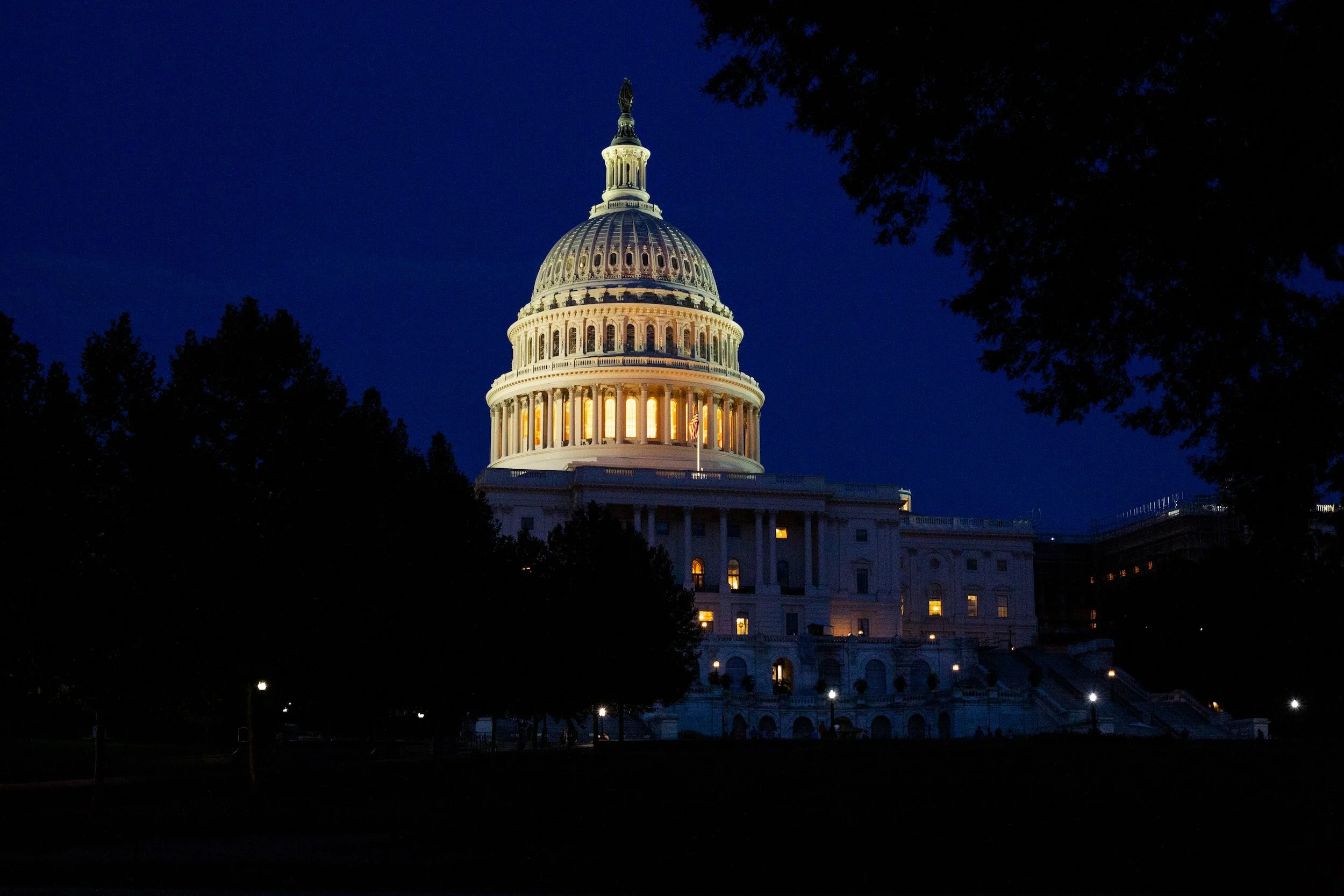
Pharmacy Congressional Bills to Watch
Two pro-pharmacy bills continue to make their way through Congress.
Two pro-pharmacy bills continue to make their way through Congress.
S.1038 titled Drug Price Transparency in Medicaid Act of 2023 sponsored by Senator Welch (D-VT) requires pass-through pricing models, and prohibits spread-pricing, for payment arrangements with pharmacy benefit managers under Medicaid. The bill also extends funding for retail pharmacy surveys and requires additional information with respect to price concessions and survey participation to be made publicly available.
S2052 titled Protect Patient Access to Pharmacies Act proposes to enforce any willing pharmacy requirements and establish safeguards to ensure patient access to pharmacies in Medicare Part D.
Lanton Law is a national boutique law and lobbying firm that focuses on healthcare/life sciences and technology. Our pharmacy practice has been helping pharmacies nationwide with operational issues, mergers and acquisitions, regulatory inquiries, audits, licensure, employment issues and contracting. Our lobbying efforts help pharmacies nationwide achieve improved business climates through carefully crafted legislation as well as counseling clients on responding to relevant proposed rules.
If you are an industry stakeholder with questions about the current landscape or if you would like to discuss how your organization’s strategic initiatives might be impacted by either Congress, regulatory agencies or legal decisions, contact us today.

Congressional Bill Advocating for Biosimilars and Generics Introduced
U.S. Senators John Cornyn (R-TX) and Richard Blumenthal (D-CT) have introduced the Affordable Prescriptions for Patients Act. The bill seen here seeks to lower drug prices by preventing bad actors’ anti-competitive use of patents to block generic and biosimilar competition from coming to market. The bill addresses two important issues such as product hopping and the patent dance.
U.S. Senators John Cornyn (R-TX) and Richard Blumenthal (D-CT) have introduced the Affordable Prescriptions for Patients Act. The bill seen here seeks to lower drug prices by preventing bad actors’ anti-competitive use of patents to block generic and biosimilar competition from coming to market. The bill addresses two important issues such as product hopping and the patent dance.
Product hopping: As far as product hopping, “the bill puts an end to this practice. It prohibits branded drug manufacturers from engaging in anticompetitive product hopping and facilitates entry to the market for generics and biosimilars, driving down drug costs.”
Patent dance: “This bill places a reasonable limit on the number of patents a manufacturer can contest, preventing a “patent thicket.” This will help deter branded manufacturers of biologics from gaming the system to increase the number of patents they assert, while preserving the incentives provided by the patent system to encourage the core innovation that produces new biologic treatments in the first place.”
Lanton Law is a national boutique law and government affairs firm that closely monitors legislative, regulatory and legal developments in the healthcare and life science spaces. Contact us to learn about how either our legal or lobbying services can help you attain your goals.

American Data Privacy and Protection Act Introduced
In late June 2022 H.R. 8152 was introduced which seeks to provide consumers with foundational data privacy rights, create strong oversight mechanisms, and establish meaningful enforcement.
In late June 2022 H.R. 8152 was introduced which seeks to provide consumers with foundational data privacy rights, create strong oversight mechanisms, and establish meaningful enforcement.
What are some of the important aspects of the bill?
According to the Congressional Research Service the bill proposes the following:
Covered Entities. It would apply to most entities, including nonprofits and common carriers. Some entities, such as those defined as large data holders that meet certain thresholds or service providers that use data on behalf of other covered entities, would face different or additional requirements.
Covered Data. It would apply to information that “identifies or is linked or reasonably linkable” to an individual.
Duties of Loyalty. It would impose several duties on covered entities, including requirements to abide by data minimization principles and special protections for certain types of data, such as geolocation information, biometric information, and nonconsensual intimate images.
Transparency. It would require covered entities to disclose, among other things, the type of data they collect, what they use it for, how long they retain it, and whether they make the data accessible to the People’s Republic of China, Russia, Iran, or North Korea.
Consumer Control and Consent. It would give consumers various rights over covered data, including the right to access, correct, and delete their data held by a particular covered entity. It would require covered entities to get a consumer’s affirmative, express consent before using their “sensitive covered data” (defined by a list of sixteen different categories of data). It would further require covered entities to give consumers an opportunity to object before the entity transfers their data to a third party or targets advertising toward them.
Youth Protections. It would create additional data protections for individuals under the age of 17, including a prohibition on targeted advertising, and it would establish a Youth Privacy and Marketing Division at the Federal Trade Commission (FTC).
Third-Party Collecting Entities. It would create specific obligations for third-party collecting entities, which are entities whose main source of revenue comes from processing or transferring data that it does not directly collect from consumers (e.g., data brokers). These entities would have to comply with FTC auditing regulations and, if they collect data above the threshold amount of individuals or devices, would have to register with the FTC.
Civil Rights and Algorithms. It would prohibit most covered entities from using covered data in a way that discriminates on the basis of protected characteristics (such as race, gender, or sexual orientation). It would also require large data holders to conduct algorithm impact assessments. These assessments would need to describe the entity’s steps to mitigate potential harms resulting from its algorithms, among other requirements. Large data holders would be required to submit these assessments to the FTC and make them available to Congress on request.
Data Security: It would require covered entities to adopt data security practices and procedures that are reasonable in light of their size and activities. It would authorize the FTC to issue regulations elaborating on these data security requirements.
Small- and Medium-size Businesses: It would also relieve small- and medium-size businesses from complying with several requirements; for instance, these businesses may respond to a consumer’s request to correct their data by deleting the data, rather than correcting it.
Enforcement. It would be enforceable by the FTC, under that agency’s existing enforcement authorities, and by state attorneys general in civil actions.
Private right of action. It would create a delayed private right of action starting four years after the law’s enactment. Injured individuals would be able to sue covered entities in federal court for damages, injunctions, litigation costs, and attorneys’ fees. Individuals would have to notify the FTC or their state attorney general before bringing suit. Before bringing a suit for injunctive relief or a suit against a small- or medium-size business, individuals would be required to give the violator an opportunity to address the violation.
Preemption. It would generally preempt any state laws that are “covered by the provisions” of the ADPPA or its regulations, although it would expressly preserve sixteen different categories of state laws, including consumer protection laws of general applicability and data breach notification laws. It would also preserve several specific state laws, such as Illinois’ Biometric Information Privacy Act and Genetic Information Privacy Act and California’s private right of action for victims of data breaches.
Section by section specifics can be found here.
We are going to see more privacy proposals on the state and federal level.
Lanton Law is a national healthcare & technology law and government affairs firm. Our technology practice has been monitoring privacy developments nationwide. If you are a commerce, technology or healthcare/life science stakeholder with questions about the current landscape or if you would like to discuss how your organization’s strategic initiatives might be impacted by either Congress, regulatory agencies or legal decisions, contact us today.

New Congressional CBD Bill Introduced to Give Policy Clarity for CBD Products
Congress has introduced the CBD Product Safety and Standardization Act “that will establish federal standards for CBD food and beverage products to protect consumers and provide marketplace stability for farmers, producers, and retailers.”
Congress has introduced the bi-partisan CBD Product Safety and Standardization Act “that will establish federal standards for CBD food and beverage products to protect consumers and provide marketplace stability for farmers, producers, and retailers.” The bill is sponsored by U.S. Representatives Rice (NY-04), Griffith (VA-09), Craig (MN-02), and Crenshaw (TX-02).
According to the bill’s press release:
“While the 2018 Farm Bill removed hemp-derived cannabidiol (CBD) from the Controlled Substances Act, it did not make changes to existing Food and Drug Administration (FDA) law or regulatory policies governing its use in FDA-regulated products. Since then, the market for CBD products has exploded, and CBD is ubiquitously available to consumers in oils, cosmetics, supplements, and foods, and it is even marketed in products for pets. The discrepancy between the Controlled Substances Act and FDA law has created a regulatory gray area in which CBD is widely available but unregulated – and considered illegal – by FDA.
The bipartisan CBD Product Safety and Standardization Act would allow FDA to regulate CBD as it would any other food ingredient and subject these products to enforceable safeguards to ensure accountability. It also charges the agency with establishing CBD content limits and packaging and labeling requirements and determining in which categories of food CBD is appropriate for use. This bill will help distinguish responsible players from bad actors that ignore federal requirements for quality, manufacturing, labeling, and claims, and it will bring safety and clarity to the market.”
Lanton Law is a national boutique law and lobbying firm that focuses on healthcare/life sciences and technology. Specifically we have expertise in cannabis and CBD related issues.
If you are an industry stakeholder with questions about the current landscape or if you would like to discuss how your organization’s strategic initiatives might be impacted by either Congress, regulatory agencies or legal decisions, contact us today.

Congressional Cannabis Caucus Advocates for Medical Marijuana Access to Veterans
On December 1, 2021 the Congressional Cannabis Caucus composed a letter to the Secretary of Veterans Affairs regarding the Caucus’ advocacy for medical marijuana access for veterans.
The letter stated “As bipartisan Co-Chairs of the Congressional Cannabis Caucus, we are pleased to learn the Department of Veterans Affairs (VA) is considering a change in policy to allow for access to medical cannabis for VA patients. We implore your agency to act swiftly and implement this change as soon as possible.”
On December 1, 2021 the Congressional Cannabis Caucus composed a letter to the Secretary of Veterans Affairs regarding the Caucus’ advocacy for medical marijuana access for veterans.
The letter stated “As bipartisan Co-Chairs of the Congressional Cannabis Caucus, we are pleased to learn the Department of Veterans Affairs (VA) is considering a change in policy to allow for access to medical cannabis for VA patients. We implore your agency to act swiftly and implement this change as soon as possible.”
The letter provides useful statistics and suggests benefits against certain disease states with the utilization of cannabis.
As time goes on we are seeing more opportunities for policy cooperation where cannabis is concerned, which means more marketplace opportunities for interested stakeholders.
Lanton Law is a national boutique law and lobbying firm that focuses on healthcare/life sciences and technology. Specifically we have expertise in cannabis and CBD related issues.
If you are an industry stakeholder with questions about the current landscape or if you would like to discuss how your organization’s strategic initiatives might be impacted by either Congress, regulatory agencies or legal decisions, contact us today.

Bipartisan Antitrust Legislation to Promote App Store Competition Introduced
Last week U.S. Senators Richard Blumenthal (D-CT), Marsha Blackburn (R-TN), and Amy Klobuchar (D-MN) introduced the Open App Markets Act.
Last week U.S. Senators Richard Blumenthal (D-CT), Marsha Blackburn (R-TN), and Amy Klobuchar (D-MN) introduced the Open App Markets Act. According to the press release, “ The Open App Markets Act would protect developers’ rights to tell consumers about lower prices and offer competitive pricing; protect sideloading of apps; open up competitive avenues for startup apps, third party app stores, and payment services; make it possible for developers to offer new experiences that take advantage of consumer device features; give consumers more control over their devices; prevent app stores from disadvantaging developers; and set safeguards to continue to protect privacy, security, and safety of consumers.”
Lanton Law is a national boutique regulatory law and lobbying firm that focuses on technology and healthcare/life sciences. If you are an industry stakeholder with questions about the current landscape or if you would like to discuss how your organization’s strategic initiatives might be impacted by either Congress, regulatory agencies or legal decisions, contact us today.

U.S. Senate Passes the Innovation and Competition Act
Earlier this month the U.S. Senate passed a rare bi-partisan bill called the United States Innovation and Competition Act, which seeks to improve America's competitive edge by investing billions of dollars in scientific and technological innovations – including artificial intelligence, computer chips and robotics.
Earlier this month the U.S. Senate passed a rare bi-partisan bill called the United States Innovation and Competition Act, which seeks to improve America's competitive edge by investing billions of dollars in scientific and technological innovations – including artificial intelligence, computer chips and robotics. The bill would boost funding for research and technology manufacturing to increase America's competitiveness, strengthen national security and grow the economy. The bill’s future is uncertain in the U.S. House of Representatives, where the House has a similar bill but it is unlikely that there will not be some kind of compromise between the House and Senate, especially where national security is concerned.
Lanton Law’s technology practice has been monitoring similar legislative and legal developments. If you are a technology or healthcare/life science stakeholder with questions about the current landscape or if you would like to discuss how your organization’s strategic initiatives might be impacted by either Congress, regulatory agencies or legal decisions, contact us today.

Data Protection Agency (DPA) Legislation Reintroduced
U.S. Senator Gillibrand (D-NY) issued a press release announcing the Data Protection Act of 2021, which would create the DPA, an independent federal agency whose goal is to protect Americans’ data, instill privacy safeguards and work to ensure that there is transparency in data sharing practices.
U.S. Senator Gillibrand (D-NY) issued a press release announcing the Data Protection Act of 2021, which would create the DPA, an independent federal agency whose goal is to protect Americans’ data, instill privacy safeguards and work to ensure that there is transparency in data sharing practices.
There have been some changes to this proposed legislation since last year’s version of the bill. These changes include:
Supervision of Data Aggregators: Grants the DPA authority to review Big Tech mergers involving a large data aggregator, or any merger that proposes the transfer of personal data of 50,000 or more individuals.
Office of Civil Rights: Establishes the DPA Office of Civil Rights to advance data justice and protect individuals from discrimination.
Enforcement Powers: Improves DPA enforcement powers to oversee the use of high-risk data practices and to penalize, examine, and propose remedies to the social, ethical, and economic impacts of data collection.
Penalties and Fines: Prohibits data aggregators from committing any unlawful, unfair, deceptive, abusive, or discriminatory data practices; and allows for penalties and fines to be levied if violated, including triple penalties for violations against children.
Defines Key Terms for Transparency: Provides Key Definitions for Privacy Harm, Data Aggregators, and High-Risk Data Practice, among other key terms.
According to the release “The DPA would be an executive agency. The director would be appointed by the president and confirmed by the Senate, serves a 5-year term, and must have knowledge of technology, protection of personal data, civil rights, and law. The agency may investigate, subpoena for testimony or documents, and issue civil investigative demands. It may prescribe rules and issue orders and guidance as is necessary to carry out federal privacy laws. The authority of state agencies and state attorneys general are preserved in the Act. The DPA would have three core missions:
1. Give Americans control and protection over their own data by authorizing the DPA to create and enforce data protection rules.
2. Maintain the most innovative, successful tech sector in the world by ensuring fair competition within the digital marketplace.
3. Prepare the American government for the digital age.”
Lanton Law’s technology practice has been monitoring privacy developments nationwide. If you are a banking/finance, technology or healthcare/life science stakeholder with questions about the current landscape or if you would like to discuss how your organization’s strategic initiatives might be impacted by either Congress, regulatory agencies or legal decisions, contact us today.

House Lawmakers Release Anti-Monopoly Agenda for “A Stronger Online Economy: Opportunity, Innovation, Choice”
According to press release, the House Committee on the Judiciary’s Antitrust Subcommittee Chairman Cicilline (D-RI) and Ranking Member Buck (R-CO) announced their antitrust bi-partisan agenda outlined below:
According to press release, the House Committee on the Judiciary’s Antitrust Subcommittee Chairman Cicilline (D-RI) and Ranking Member Buck (R-CO) announced their antitrust bi-partisan agenda outlined below:
“‘A Stronger Online Economy: Opportunity, Innovation, Choice’ consists of five bipartisan bills drafted by lawmakers on the Antitrust Subcommittee, which last year completed a 16-month investigation into the state of competition in the digital marketplace and the unregulated power wielded by Amazon, Apple, Facebook, and Google.”
The “American Innovation and Choice Online Act” to prohibit discriminatory conduct by dominant platforms, including a ban on self-preferencing and picking winners and losers online. The bill is sponsored by Chairman Cicilline and co-sponsored by U.S. Rep. Lance Gooden (TX-05).
The “Platform Competition and Opportunity Act” prohibits acquisitions of competitive threats by dominant platforms, as well as acquisitions that expand or entrench the market power of online platforms. The bill is sponsored by U.S. Rep. Hakeem Jeffries (NY-08) and co-sponsored by Ranking Member Buck.
The “Ending Platform Monopolies Act” eliminates the ability of dominant platforms to leverage their control over multiple business lines to self-preference and disadvantage competitors in ways that undermine free and fair competition. The bill is sponsored by U.S. Rep. Pramila Jayapal (WA-07) and co-sponsored by U.S. Rep. Lance Gooden (TX-05).
The “Augmenting Compatibility and Competition by Enabling Service Switching (ACCESS) Act” promotes competition online by lowering barriers to entry and switching costs for businesses and consumers through interoperability and data portability requirements. This bill is sponsored by U.S. Rep. Mary Gay Scanlon (PA-05) and co-sponsored by U.S. Rep. Burgess Owens (UT-04).
The “Merger Filing Fee Modernization Act” updates filing fees for mergers for the first time in two decades to ensure that the Department of Justice and Federal Trade Commission have the resources they need to aggressively enforce the antitrust laws. This bill is sponsored by U.S. Rep. Joe Neguse (CO-02) and co-sponsored by U.S. Rep. Victoria Spartz (IN-05).
Lanton Law has been monitoring both Congress and the FTC for our technology and healthcare clients, especially as both Congress and the FTC have taken a more aggressive tone on antitrust issues lately.
Lanton Law is a national boutique regulatory law and lobbying firm that focuses on healthcare/life science and technology. If you are an industry stakeholder with questions about the current landscape or if you would like to discuss how your organization’s strategic initiatives might be impacted by either Congress, regulatory agencies or legal decisions,contact us today.

Bipartisan Congressional Legislation Introduced Seeking Shared Savings Demo Project to Increase Biological/Biosimilar Medicare Access
U.S. Senators Cornyn (R-TX) and Bennet (D-CO) have introduced the Increasing Access to Biosimilars Act also known as S. 1427. The bill seeks to establish a demonstration project to increase access to biosimilar biological products under the Medicare program.
U.S. Senators Cornyn (R-TX) and Bennet (D-CO) have introduced the Increasing Access to Biosimilars Act also known as S. 1427. The bill seeks to establish a demonstration project to increase access to biosimilar biological products under the Medicare program.
According to Senator Cornyn’s press release “this legislation would direct HHS to establish a shared savings demonstration project to increase access to biosimilars in the Medicare program. This would encourage physicians to prescribe less-expensive biosimilars increasing patient access to more affordable, life-saving drugs and lowering patient out-of-pocket costs.
Under the demonstration, Medicare would provide an additional payment to providers for using lower-cost biosimilar products that reflects the savings created in contrast to administering the higher-cost reference biological product. Additionally, Medicare can use a portion of those savings to reduce the beneficiary’s coinsurance payment.”
Lanton Law is a national boutique law and lobbying firm that focuses on healthcare/life science and technology. If you are an industry stakeholder with questions about the current landscape or if you would like to discuss how your organization’s strategic initiatives might be impacted by either Congress, regulatory agencies or legal decisions, contact us today.

Biden Administration Files Motion Supporting Canadian Drug Imports
The Biden Administration has filed a motion in federal district court for the District of Columbia. The motion seeks to dismiss a lawsuit that aims to prevent prescription drug imports from Canada.
The Biden Administration has filed a motion in federal district court for the District of Columbia. The motion seeks to dismiss a lawsuit that aims to prevent prescription drug imports from Canada. This motion is aimed at prior enacted state legislation from both Florida and New Mexico, as both states have commenced the process of applying for Canadian imports. The Administration argues in its brief that the party opponent’s (Pharmaceutical Research & Manufacturers of America PhRMA) claim is not prudentially ripe.
Importation is an issue that Lanton Law has been monitoring for several years. As the drug pricing debate continues across Congress and state legislatures, we fully anticipate importation to continue to be a front and center policy issue.
Lanton Law is a national boutique regulatory law and lobbying firm that focuses on healthcare/life science and technology. If you are an industry stakeholder with questions about the current landscape or if you would like to discuss how your organization’s strategic initiatives might be impacted by either Congress, regulatory agencies or legal decisions, contact us today.

New Congressional Bi-Partisan Privacy Proposal Introduced
A new bi-partisan privacy bill has been introduced by Senators Wyden (D-OR) and Paul (R-KY) titled “The Fourth Amendment is Not For Sale Act.” The bill proposes to close a legal loophole and prevent law enforcement and intelligence agencies from obtaining subscriber or customer records in exchange for anything of value, and to address communications and records in the possession of intermediary internet service providers. Currently, this information can be bought and sold without judicial oversight.
A new bi-partisan privacy bill has been introduced by Senators Wyden (D-OR) and Paul (R-KY) titled “The Fourth Amendment is Not For Sale Act.” The bill proposes to close a legal loophole and prevent law enforcement and intelligence agencies from obtaining subscriber or customer records in exchange for anything of value, and to address communications and records in the possession of intermediary internet service providers. Currently, this information can be exchanged without judicial oversight.
According to the press release, some highlights of the proposal include:
Requires the government to get a court order to compel data brokers to disclose data — the same kind of court order needed to compel data from tech and phone companies.
Stops law enforcement and intelligence agencies buying data on people in the U.S. and about Americans abroad, if the data was obtained from a user’s account or device, or via deception, hacking, violations of a contract, privacy policy, or terms of service. As such, this bill prevents the government buying data from Clearview.AI.
Extends existing privacy laws to infrastructure firms that own data cables & cell towers.
Closes loopholes that would permit the intelligence community to buy or otherwise acquire metadata about Americans’ international calls, texts and emails to family and friends abroad, without any FISA Court review.
Ensures that intelligence agencies acquiring data on Americans do so within the framework of the Foreign Intelligence Surveillance Act and that when acquiring Americans’ location data, web browsing records and search history, intelligence agencies obtain probable cause orders. This language is similar to language that was in the 2020 Wyden-Daines amendment to legislation to reform Section 215.
Takes away the Attorney General’s authority to grant civil immunity to providers and other third parties for assistance with surveillance not required or permitted by statute. Providers retain immunity for surveillance assistance ordered by a court.
Lanton Law is a national boutique law and lobbying firm that focuses on technology and healthcare. If you are an industry stakeholder with questions about the current landscape or if you would like to discuss how your organization’s strategic initiatives might be impacted by either Congress, regulatory agencies or legal decisions, contact us today.

SAFE Banking Act introduced Into the U.S. Senate
U.S. Senators Merkley (D-OR) and Daines (R-MT) have introduced the Secure and Fair Enforcement (SAFE) Banking Act, to ensure that legal cannabis operators have access to banking services. The bill can be viewed here.
U.S. Senators Merkley (D-OR) and Daines (R-MT) have introduced the Secure and Fair Enforcement (SAFE) Banking Act, to ensure that legal cannabis operators have access to banking services. The bill can be viewed here.
According to the press release, the proposed bill prevents federal banking regulators from the following:
Prohibiting, penalizing or discouraging a bank from providing financial services to a legitimate state-sanctioned and regulated cannabis business, or an associated business (such as an lawyer or landlord providing services to a legal cannabis business);
Terminating or limiting a bank’s federal deposit insurance solely because the bank is providing services to a state-sanctioned cannabis business or associated business;
Recommending or incentivizing a bank to halt or downgrade providing any kind of banking services to these businesses; or
Taking any action on a loan to an owner or operator of a cannabis-related business.
Furthermore, the press release states that bill also:
Creates a safe harbor from criminal prosecution and liability and asset forfeiture for banks and their officers and employees who provide financial services to legitimate, state-sanctioned cannabis businesses, while maintaining banks’ right to choose not to offer those services. The bill also provides protections for hemp and hemp-derived CBD related businesses.
Requires banks to comply with current Financial Crimes Enforcement Network (FinCEN) guidance, while at the same time allowing FinCEN guidance to be streamlined over time as states and the federal government adapt to legalized medicinal and recreational cannabis policies.
The House version has already been filed for this Congressional session. Additional background on this bill and issue can be found on Congressman Perlmutter’s website.
Lanton Law is a national boutique law and lobbying firm that focuses on healthcare/life sciences and technology. Specifically our cannabis practice helps all supply chain entities from growers, financiers, suppliers, dispensers to ancillary services.
If you are an industry stakeholder with questions about the current landscape or if you would like to discuss how your organization’s strategic initiatives might be impacted by either Congress, regulatory agencies or legal decisions, contact us today.

Biosimilar Legislation Passes Senate
S. 164 titled the Advancing Education on Biosimilars Act of 2021 sponsored by Senator Hassan (D-NH) has passed the Senate on March 3, 2021. The proposed bill seeks to educate health care providers and the public on biosimilar biological products.
S. 164 titled the Advancing Education on Biosimilars Act of 2021 sponsored by Senator Hassan (D-NH) has passed the Senate on March 3, 2021. The proposed bill seeks to educate health care providers and the public on biosimilar biological products.
Specifically, the bill states that the Secretary may maintain and operate an internet website to provide educational materials for health care providers, patients, and caregivers, regarding the meaning of the terms, and the standards for review and licensing of, biological products, including biosimilar biological products and interchangeable biosimilar biological products.
Lanton Law is a national boutique law and lobbying firm that focuses on healthcare/life science and technology. If you are an industry stakeholder with questions about the current landscape or if you would like to discuss how your organization’s strategic initiatives might be impacted by either Congress, regulatory agencies or legal decisions, contact us today.

New Congressional Cannabis/Marijuana Bill Introduced
Senators Dianne Feinstein (D-Calif.), Chuck Grassley (R-Iowa) and Brian Schatz (D-Hawaii) have introduced the Cannabidiol and Marijuana Research Expansion Act.
Senators Dianne Feinstein (D-Calif.), Chuck Grassley (R-Iowa) and Brian Schatz (D-Hawaii) have introduced the Cannabidiol and Marijuana Research Expansion Act. This proposed legislation seeks to improve the process for conducting valid medical research on marihuana, and to streamline the development of safe and effective FDA-approved medicines. The bill is cosponsored by Senators Dick Durbin (D-Ill.), Amy Klobuchar (D-Minn.), Thom Tillis (R-N.C.), Tim Kaine (D-Va.), Joni Ernst (R-Iowa), Jon Tester (D-Mont.) and Lisa Murkowski (R- Alaska). A one page summary of the proposal can be found here.
Lanton Law is a national boutique law and lobbying firm that focuses on healthcare/life sciences and technology. Specifically our cannabis practice helps all supply chain entities from growers, financiers, suppliers, dispensers to ancillary services.
If you are an industry stakeholder with questions about the current landscape or if you would like to discuss how your organization’s strategic initiatives might be impacted by either Congress, regulatory agencies or legal decisions,contact us today.

Senator Hawley Proposes New Congressional Legislation Targeting Behavioral Ads
U.S. Senator Josh Hawley (R-MO) has recently announced his new legislation titled the Behavioral Advertising Decisions Are Downgrading Services (BAD ADS) Act. This bill proposes to remove Section 230 immunity from Big Tech companies that display manipulative, behavioral ads or provide data to be used for them. Behavioral ads are defined in the legislation.
U.S. Senator Josh Hawley (R-MO) has recently announced his new legislation titled the Behavioral Advertising Decisions Are Downgrading Services (BAD ADS) Act. This bill proposes to remove Section 230 immunity from Big Tech companies that display manipulative, behavioral ads or provide data to be used for them. Behavioral ads are defined in the legislation.
It is unclear as to how this ties directly to Section 230 immunity and is different from other Congressional bills that create a nexus between Section 230 and its protections to content policies on websites. This bill would not apply to contextual ads such as advertising that is directed to a user based on:
‘‘(aa) the content of the website, online service, online application, or mobile application to which the user is connected;
‘‘(bb) the location of the user, as of the time at which the advertising is directed to the user; or
‘‘(cc) the search terms that the user applied to arrive at the website, service, or application to which the user is connected
Regardless of whether this or other legislation gets enacted this year, Section 230 comes under increasing scrutiny by policymakers. It’s a question of when for technology regulation, so if you are a technology stakeholder it is better to be prepared.
Lanton Law is a national boutique law and government affairs firm that focuses on technology and healthcare. If you are an industry stakeholder with questions about the current landscape or if you would like to discuss how your organization’s strategic initiatives might be impacted by either Congress, regulatory agencies or legal decisions, contact us today.

Big Tech Company Executives Pressed On Capitol Hill On Their Market Influence
On July 29th four of the biggest tech companies, CEOs testified in front of Congress. Jeff Bezos of Amazon, Tim Cook of Apple, Mark Zuckerberg of Facebook, and Sundar Pichai of Google all took questions from the U.S House Judiciary Subcommittee on Antitrust, Commercial, and Administrative Law.
On July 29th four of the biggest tech companies CEOs testified in front of Congress. Jeff Bezos of Amazon, Tim Cook of Apple, Mark Zuckerberg of Facebook, and Sundar Pichai of Google all took questions from the U.S House Judiciary Subcommittee on Antitrust, Commercial, and Administrative Law. The hearing which can be viewed here was titled “Online Platforms and Market power, Part 6: Examining the Dominance of Amazon, Apple, Facebook, and Google.”
Sadly, there was a lot of political posturing on both sides of the political aisle and not a lot of policy. The main takeaway is that there is still no clear bipartisan antitrust agenda.
Democrats presented evidence regarding antitrust concerns. It seemed they had pointed questions regarding certain deals such as Amazon's purchase of Ring to control that sector of the market and Facebook's alleged threats against Instagram before its purchase of the company.
Republicans focused on perceived anti-conservative bias in tech instead of addressing company size and market power. Their questions focused on whether the tech companies will participate in "electioneering" for Joe Biden and grilled Facebook about Twitter's shutdown of Trump Jr.'s account.
This has been a year-long investigation by this Subcommittee with this testimony capping the investigation. Subcommittee members are still in the process of sending follow-up questions to the CEOs and finalizing their conclusions over the next few weeks. Once they are done the Subcommittee will file a report of its findings.
This process has been highly politicized, and many tech stakeholders are wondering whether any significant policymaking will get done by the end of the year. While there is reason to be skeptical, there is a highly charged election about to take place, meaning it wouldn’t surprise us if a small step towards technology regulation was accomplished. The bigger question is what happens to tech policy at the start of 2021?
We continue to see an increase in federal and state policymaking when it comes to technology companies. The threat of looming technology legislation will undoubtedly lead to increased regulation. It’s better to be prepared now by knowing the landscape and preparing your strategic options in order to navigate the increased scrutiny.
Lanton Law is a national boutique law and government affairs firm that focuses on technology and healthcare. If you are an industry stakeholder with questions about the current landscape or if you would like to discuss how your organization’s strategic initiatives might be impacted by either Congress, regulatory agencies or legal decisions, contact us today.

Tech Companies to Testify At House Judiciary Antitrust Subcommittee on July 27th
The House Judiciary Antitrust Subcommittee has scheduled a July 27, 2020 hearing for the CEO’s of Amazon, Apple, Google and Facebook (Big Tech) to testify regarding the Committee’s ongoing investigation of digital marketplace competition. The hearing is titled “Online Platforms and Market Power, Part 6: Examining the Dominance of Amazon, Facebook, Google and Apple.”
The House Judiciary Antitrust Subcommittee has scheduled a July 27, 2020 hearing for the CEO’s of Amazon, Apple, Google and Facebook (Big Tech) to testify regarding the Committee’s ongoing investigation of digital marketplace competition. The hearing is titled “Online Platforms and Market Power, Part 6: Examining the Dominance of Amazon, Facebook, Google and Apple.”
The Committee’s press release has a joint statement from House Judiciary Committee Chairman Nadler (D-NY) and Antitrust Subcommittee Chairman Cicilline (D-RI) which states “Since last June, the Subcommittee has been investigating the dominance of a small number of digital platforms and the adequacy of existing antitrust laws and enforcement. Given the central role these corporations play in the lives of the American people, it is critical that their CEOs are forthcoming. As we have said from the start, their testimony is essential for us to complete this investigation.”
The Committee’s investigation launched its antitrust investigation last June. The Committee’s efforts are bipartisan and the Committee is attempting to address whether Congressional oversight is needed to pass tighter antitrust laws to ensure a more balanced marketplace. The Committee’s investigation will focus on documenting where competition is lacking in digital markets; exploring whether large companies are suppressing competition; and determining whether Congress and regulators need to do more to address Big Tech's dominance. If Congress decides that legislation is needed, it could lead to the first major policy revisions of U.S. antitrust law in decades.
Additional policy threats to technology companies remain besides Congress. In a mix of business and political reasons for determining whether a new class of start ups is being stifled by Big Tech, the Federal Trade Commission (FTC) and the Department of Justice (DOJ) last year have announced joint efforts to investigate Big Tech. The FTC will have responsibility for investigating Amazon and Facebook while the DOJ will investigate Google and Facebook. It is looking as though some kind of regulatory action is coming by year end. Not to mention Big Tech has been receiving a lot of antitrust scrutiny from overseas.
It is no secret that oversight over technology stakeholders is near. It’s best to look at your risks to determine whether you have the tools to protect your business and be nimble enough to navigate the changing policy currents.
Lanton Law is a national boutique law and government affairs firm that focuses on technology and healthcare. If you are an industry stakeholder with questions about the current landscape or if you would like to discuss how your organization’s strategic initiatives might be impacted by either Congress, regulatory agencies or legal decisions, contact us today.

Pharmacy Times Interviews Lanton Law On How COVID-19 May Lead to the Expansion of Practice Laws for Pharmacists Across the Country
Alana Hippensteele; Editor, MA of Pharmacy Times interviewed Ron Lanton to discuss how COVID-19 may lead to expansion of practice laws for pharmacists across the country.
Alana Hippensteele; Editor, MA of Pharmacy Times interviewed Ron Lanton to discuss how COVID-19 may lead to expansion of practice laws for pharmacists across the country. Click here to access the interview.
Below Is a summary of the interview from Pharmacy Times:
Pharmacy Times spoke with Ron Lanton III, Esq, a regulatory and government affairs professional, about how the coronavirus disease 2019 (COVID-19) could lead to more expanded practice laws for pharmacists across the country.
Lanton noted that actions such as clinical laboratory improvement amendment (CLIA) waivers and additional steps by the Centers for Medicare and Medicaid Services (CMS) and Department of Health and Human Services (HHS) have been encouraging and have allowed pharmacists to be more involved in the pandemic response while beginning to get paid for these services.
“I think that was one of those tools that just wasn’t there before because of where we are, and now it’s there,” Lanton said. “It’s been very encouraging to have HHS and CMS there trying to make sure that this happens for pharmacy.”
Lanton added that although pharmacists have been discussing their value for a long time, the pandemic has pushed that knowledge into the forefront of patients’ and other health care professionals’ minds.
He encouraged pharmacists to follow news from CMS closely, because new policies and announcements are coming out almost daily. The ongoing stimulus packages passed by Congress may also offer a chance for pharmacists to push the field forward, by lobbying for provider status, personal protective equipment, and direct and indirect remuneration fee relief as part of the packages.