
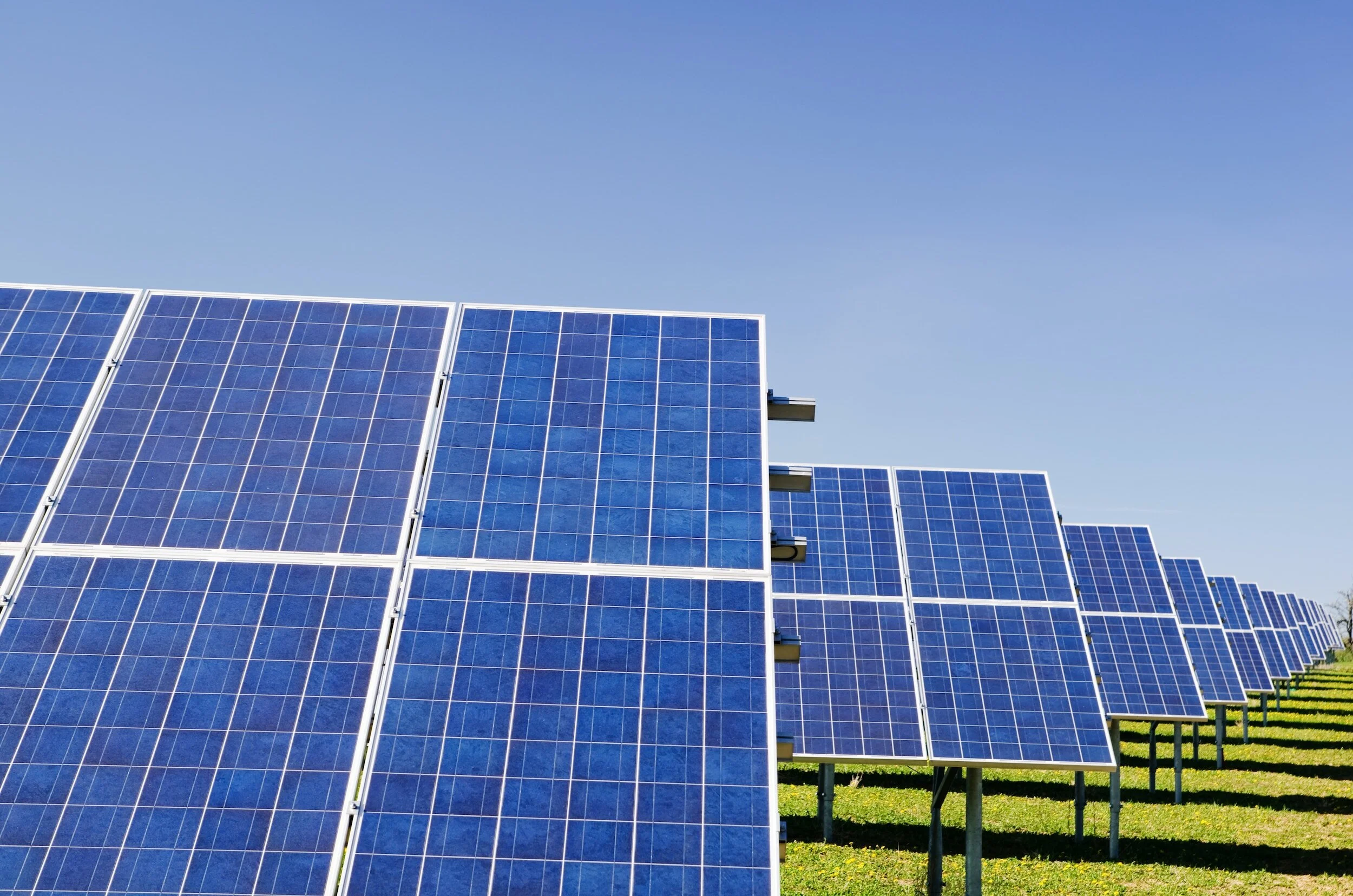
What are the clean energy elements discussed within the Inflation Reduction Act (IRA)?
What are the clean energy elements discussed within the Inflation Reduction Act (IRA)? The IRA invests $369 billion in clean energy and energy efficiency programs. This investment is designed to reduce the United States' reliance on foreign oil and bring down energy prices.
The IRA invests $369 billion in clean energy and energy efficiency programs. This investment is designed to reduce the United States' reliance on foreign oil and bring down energy prices. The clean energy sections of the IRA include:
Extending and expanding the Production Tax Credit (PTC) and Investment Tax Credit (ITC) for renewable energy. These tax credits make it more affordable for businesses to invest in renewable energy projects.
Investing in clean energy research and development. This investment will help to accelerate the development of new clean energy technologies.
Creating a new Clean Electricity Performance Program. This program will reward utilities for generating electricity from clean sources.
Investing in energy efficiency programs. This investment will help to reduce energy consumption and save consumers money on their energy bills.
The IRA is expected to create millions of new jobs in the clean energy sector. The law is also expected to reduce the federal budget deficit and increase economic growth.
Here are some of the key takeaways from the clean energy sections of the IRA:
The IRA is the largest piece of legislation ever to address climate change.
The IRA is expected to create millions of new jobs and reduce the federal budget deficit.
The IRA is still in its early stages of implementation, but it is expected to make a positive contribution to reducing inflation and growing the economy.
Here are some specific examples of how the IRA is expected to help the clean energy sector:
The extension and expansion of the PTC and ITC are expected to spur investment in solar, wind, and other renewable energy projects.
The investment in clean energy research and development is expected to help to accelerate the development of new clean energy technologies, such as carbon capture and storage.
The Clean Electricity Performance Program is expected to reward utilities for generating electricity from clean sources, such as solar and wind.
The investment in energy efficiency programs is expected to help to reduce energy consumption and save consumers money on their energy bills.
The IRA is a significant piece of legislation that is expected to have a major impact on the clean energy sector. The law is still in its early stages of implementation, but it is expected to make a positive contribution to reducing emissions and growing the economy.
Lanton Law is a national boutique law and government affairs firm that closely monitors legislative, regulatory and legal developments in the clean energy space. Contact us to learn about how either our legal or lobbying services can help you attain your goals.

What's in the Bipartisan Infrastructure Deal?
The Bipartisan Infrastructure Deal is a $1.2 trillion investment in the nation's infrastructure, including roads, bridges, public transit, broadband internet, clean water, and power grids.
There are many people that may have heard about the Bipartisan Infrastructure Deal, but don’t really know a summary of the new law’s details. Below is a quick “cheat sheet” on the recently enacted law.
The Bipartisan Infrastructure Deal is a $1.2 trillion investment in the nation's infrastructure, including roads, bridges, public transit, broadband internet, clean water, and power grids.
The legislation was passed by Congress on November 5, 2021, and signed into law by President Biden on November 15, 2021.
The Bipartisan Infrastructure Deal is the largest investment in infrastructure in the United States since the Interstate Highway System was built in the 1950s.
The legislation is expected to create millions of jobs and boost the economy.
Here are some of the specific investments that are included in the Bipartisan Infrastructure Deal:
$110 billion to repair and rebuild roads and bridges.
$65 billion to expand access to clean drinking water.
$65 billion to help ensure that every American has access to reliable high-speed internet.
$39 billion to modernize public transit.
$25 billion to upgrade airports.
$17 billion to improve port infrastructure.
$66 billion to invest in passenger rail.
$7.5 billion to build a national network of electric vehicle chargers.
$65 billion to upgrade the power grid.
$50 billion to protect against climate change and extreme weather events.
$1 billion to deliver the largest investment in tackling legacy pollution in American history.
Lanton Law is a national boutique law and government affairs firm that closely monitors legislative, regulatory and legal developments in the clean energy space. Contact us to learn about how either our legal or lobbying services can help you attain your goals.

President Biden Invokes Defense Production Act to Help Issues Related to EV Battery Materials
President Biden has invoked the Defense Production Act as a means to increase mineral production that is used to manufacture electric vehicle batteries.
President Biden has invoked the Defense Production Act as a means to increase mineral production that is used to manufacture electric vehicle batteries. The document titled “Memorandum on Presidential Determination Pursuant to Section 303 of the Defense Production Act of 1950” seen here, seeks to:
“To promote the national defense, the United States must secure a reliable and sustainable supply of such strategic and critical materials. The United States shall, to the extent consistent with the promotion of the national defense, secure the supply of such materials through environmentally responsible domestic mining and processing; recycling and reuse; and recovery from unconventional and secondary sources, such as mine waste.”
As the world transitions to clean energy, the minerals targeted by this Order will be lithium, nickel, cobalt, graphite, and manganese for large capacity batteries.
The transition to clean energy is being felt now. With soaring energy prices due to the war in Ukraine we foresee plenty of change happening with supply chain security.
Lanton Law is a national boutique law and government affairs firm that closely monitors legislative, regulatory and legal developments for our clients. We help stakeholders understand what’s at issue so that we can help our valued clients achieve their priorities. Contact us to learn about how either our legal or lobbying services can help you attain your goals.

New York Powers Ahead with Clean Energy Standard
New York State is on an aggressive path towards zero-carbon emissions along with pursuing ambitious goals to fight climate change.
New York State is on an aggressive path towards zero-carbon emissions along with pursuing ambitious goals to fight climate change.
Recently, Governor Cuomo announced plans via a press release that the “New York State Public Service Commission approved an expansion of the landmark Clean Energy Standard to refocus New York's existing regulatory and procurement structure on achieving the goals laid out in New York's nation-leading Climate Leadership and Community Protection Act, or CLCPA. The CLCPA established a 70 percent renewable electricity by 2030 mandate, setting the State on an ambitious trajectory to a zero-emission power sector by 2040. The expanded Clean Energy Standard gives the state the authority to issue a Request for Proposals for the renewable power generation sources needed to implement this plan.”
According to the release, goals of the New York Public Service Commission (PSC) are as follows:
• Implements key provisions in the CLCPA related to securing 70 percent renewable energy by 2030, including defining renewable energy technology eligibility and the amount of renewable energy needed to meet New York's goal, identifies annual procurement targets for the Tier 1 large- scale renewable energy program adopted under the CES, and recommends changes to the existing Tier 1 procurement processes;
• Sets targets for offshore wind renewable energy intended to meet the requirement of securing nine gigawatts of offshore wind by 2035;
• Creates a new methodology for extending Tier 1 renewable energy eligibility to renewable energy facilities that undergo repowering;
• Creates a competitive five-year Tier 2 program under the CES to preserve existing renewable baseline generation to support the 70 x 30 goal;
• Creates a new Tier 4 large-scale renewable program to specifically value environmental attributes associated with renewable energy delivered into New York City that will be in addition to annual Tier 1 procurement targets; and
• Creates tangible approaches to ensure that the State's renewable energy programs provide substantial benefits for disadvantaged communities, including low to moderate income customers as called for under the
CLCPA, and builds upon its workforce development policies to specifically promote good jobs, including prevailing wage requirements.
Lanton Law is a national boutique law and lobbying firm that focuses on clean energy, technology and healthcare. Contact us today to learn about your organization’s options to prepare for additional regulatory oversight within the energy sector.

How to Choose a Lobbyist
Now more than ever it is important to choose the right lobbyist.
Now more than ever it is important to choose the right lobbyist. Since the early 2000s, there has been a steady increase in the amount of government activity that has directly affected stakeholders.
Prior to this time-period, companies could afford to focus only on differentiating their products from their competitors. Now companies are finding that during their strategic planning meetings, they must account for how state and federal government activity may impact their bottom line. In addition to having a Government Affairs staff, these same companies are starting to realize the importance of having established a relationship with a lobbyist. The question is how to choose a lobbyist that is right for your organization?
First you want to make sure the lobbyist has experience. To be a good lobbyist there is no magic number of how many years you have worked within the political system. However; many lobbyists have worked an average of six months in the legislature as an aide to a legislator or on the other side of the spectrum, many legislators have left the legislature to work as a lobbyist. These individuals have an insider’s perspective into how the legislature works such as when a bill filing deadline date is and whether or not a bill can be introduced due to if a state is in an emergency session where the rules for introducing legislation is different from regular session.
Second the lobbyist should have a minimum number of contacts in the legislature. Whether it is in Congress or on the state level, the lobbyist should be able to have a go to legislator that can get a bill introduced quickly. However; the most successful lobbyist will not be limited to one party. Having contacts on both sides of the aisle will allow the lobbyist the opportunity to bring any bill at any time regardless of what political party has the majority.
Third the best lobbyist should be strategic. He or she should be able to know when a good time to introduce legislation is. The lobbyist should know what legislator to target as the bill sponsor. This is important because the bill sponsor will be the champion for your particular bill from start to finish.
The lobbyist will need to educate the bill sponsor on the nuances of the bill so that the sponsor will be educated enough to be able to respond to technical questions during a hearing or when the sponsor is in caucus meetings; explaining to their respective party about why your bill should be voted on. The lobbyists should be able to pick and choose what committee will be best for your bill to go into, who to use as strategic allies for your legislation and be intuitive enough on when to negotiate and when not to.
Next it is important for your lobbyist to know the industry and to have foresight. You need to be comfortable knowing that your lobbyist understands your industry because if not, how can you be sure that your lobbyist is communicating the correct outcome for you?
The lobbyist should be skilled enough to draft a bill that solves your problem without having to continuously ask you how something works. Additionally, while many lobbyists only focus on the legislature, the best lobbyists will think long-term to determine if a regulatory body will be involved once your bill passes. If so a lobbyist should be able to guide you through the regulatory process without leaving you to fend for yourself after a bill has passed.
Finally, as with any other professional, you need to be aware of the reputation your lobbyist has. Do they take the time to make sure their clients understand everything that is happening? Does the lobbyist prepare the client and relevant legislators ahead of time for crucial hearings? Does the lobbyist make everything easy to understand? Does the lobbyist dress appropriately for meetings and do they have the needed respect from the legislature? Does the lobbyist closely follow the bill from start to finish or are they overloaded with too many clients? These are important issues to talk with your prospective lobbyist about before entering into a contractual relationship.
While there are other nuances to the lobbying relationship, these should be enough for you to think about as your organization considers whether to engage a lobbyist. A lobbyist should no longer be considered a luxury item. The best lobbyist are quickly becoming essential parts of today’s corporate environment for the value they bring to their clients in either advancing their interests through legislation, or being available to respond to legislative targeting that has been on the rise. You know you have picked the right lobbyist when you can breathe a sigh of relief knowing that they have your back.
Contact us today for more information regarding lobbying.

Will 2021 Witness the Creation of More State Green Banks?
With the incoming Biden Administration, the President elect has announced his new environmental plan “To Build a Modern, Sustainable Infrastructure and Equitable Clean Energy Future.” Among the various policy points discussed in the plan, one interesting initiative describes the development of “innovative financing mechanisms that leverage private sector dollars to maximize investment in the clean energy revolution.” This last sentence reminds me of what happened in Connecticut with regards to their Green Bank.
With the incoming Biden Administration, the President elect has announced his new environmental plan “To Build a Modern, Sustainable Infrastructure and Equitable Clean Energy Future.” Among the various policy points discussed in the plan, one interesting initiative describes the development of “innovative financing mechanisms that leverage private sector dollars to maximize investment in the clean energy revolution.” This last sentence reminds me of what happened in Connecticut with regards to their Green Bank.
The Connecticut Green Bank is the first green bank in the country. According to the Bank’s website “Established by the Connecticut General Assembly on July 1, 2011 as a part of Public Act 11-80, Connecticut Green Bank supports the Governor’s and Legislature’s energy strategy to achieve cleaner, less expensive, and more reliable sources of energy while creating jobs and supporting local economic development. The Connecticut Green Bank evolved from the Connecticut Clean Energy Fund (CCEF) and the Clean Energy Finance and Investment Authority (CEFIA), which was given a broader mandate in 2011 to become the Connecticut Green Bank.
Our mission is to confront climate change and provide all of society a healthier and more prosperous future by increasing and accelerating the flow of private capital into markets that energize the green economy.
Our green bank model upended the government subsidy-driven approach to clean energy by working with private-sector investors to create low-cost, long-term sustainable financing to maximize the use of public funds. We continue to innovate, educate and activate to accelerate the growth of green energy measures in the residential (single and multifamily), commercial, industrial, institutional and infrastructure sectors.”
With the incoming Administration’s intent to push into green energy and region’s like New England that have so many industries relying on a stable environment, it will not be surprising to see states create green banks like Connecticut’s in order to jumpstart local economies.
At Lanton Law we understand the complexities of how green energy plays into business strategies. Contact us to learn about how either ourlegal orlobbying services can help you attain your goals.