
Kendall Square remains one of the world’s leading life sciences centers. The market for laboratory space surrounding it, however, looks very different from just a few years ago. For biotechnology and life sciences companies, the shift creates an opportunity to reconsider not simply where they operate, but whether their next lease fits their business plans.
The market has shifted, and tenants have more choices
CBRE reported Greater Boston laboratory vacancy of 28.7% in the second quarter of 2026, with availability at 32.8%. Cambridge recorded nearly 194,000 square feet of positive absorption in the quarter, but substantial available space and softer rents continue to give many prospective tenants negotiating options. Different research firms calculate availability using different inventories and methods; the chart below uses Colliers figures and should not be read as CBRE’s series.
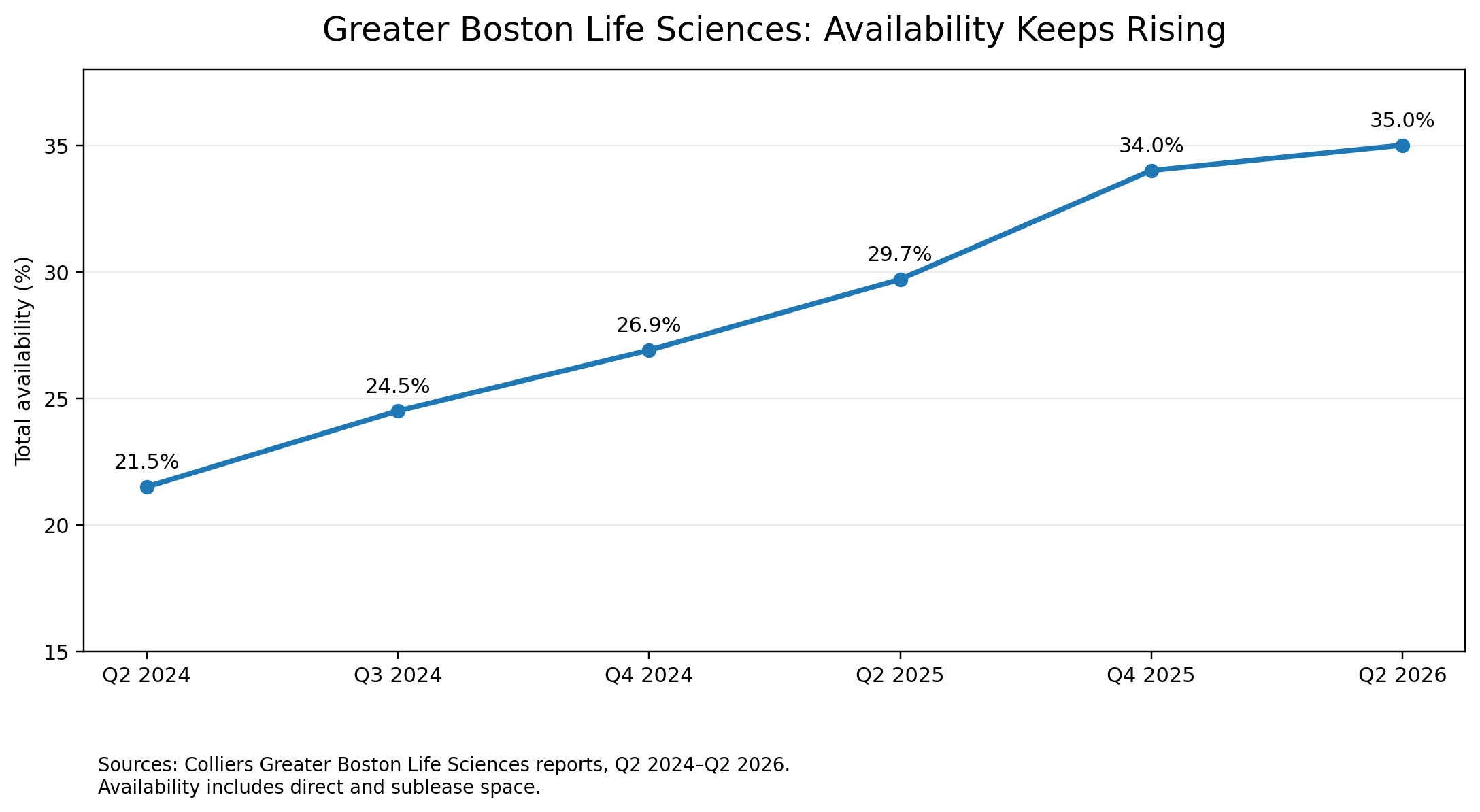
A company entering a new lease, renewing existing space or considering expansion may have more choices than during the market’s rapid expansion. The resulting leverage should extend beyond rental rate. Laboratories require specialized power, ventilation, equipment and other infrastructure. A rent concession has limited value if the company must fund substantial improvements or cannot occupy the facility when needed.
A lower rent does not necessarily mean a better lease
Before selecting a facility, companies should establish whether the building can support the intended research, clinical or manufacturing use. That means examining permitted uses, hazardous-material restrictions, building systems, responsibility for specialized improvements and the point at which rent begins if construction or delivery is delayed.
Tenant-improvement allowances, construction milestones and obligations to maintain or replace specialized systems all deserve careful attention. If a landlord contributes to the initial buildout, the lease should also make clear which equipment belongs to the tenant and what must be removed or restored when the lease ends.
Kendall Square matters, but companies have alternatives
The advantages of proximity to MIT, major hospitals, researchers and investors remain important. Yet Cambridge is no longer the only location worth evaluating. Depending on the business, Somerville, Boston, Watertown, Waltham, Lexington or Worcester may offer different combinations of costs, workforce access, infrastructure, incentives and room to expand.
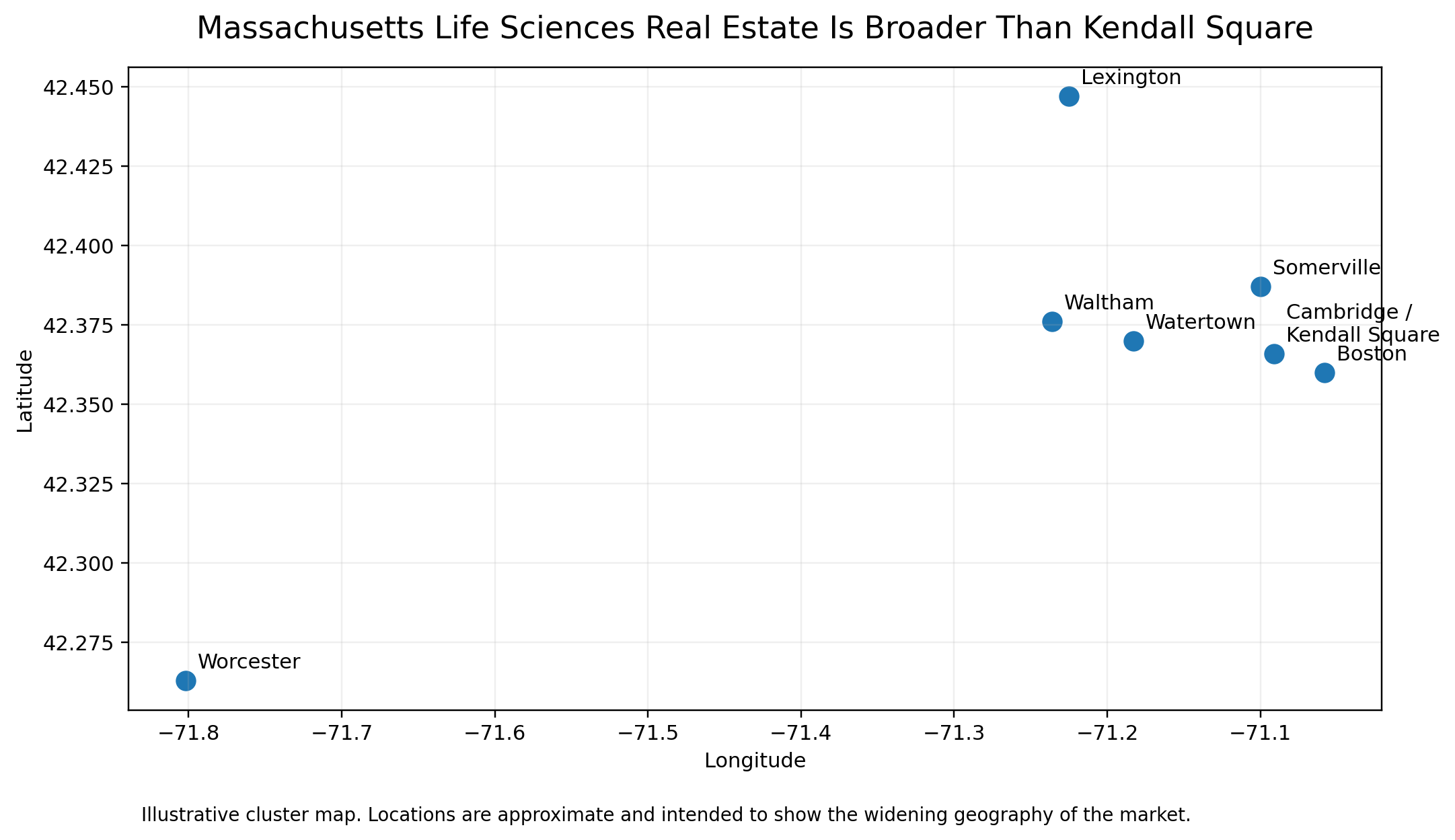
Location is ultimately a business decision, but it can carry legal consequences. Zoning, permitted laboratory use, environmental requirements and local approvals should be assessed before a company commits to a property or bases its financing assumptions on a particular occupancy date.
Your lease needs to accommodate what happens next
A biotechnology company’s space requirements can change quickly. It may raise capital, add a development program, enter a partnership, downsize, acquire another business or become an acquisition target. A lease negotiated only for today’s footprint can become an obstacle to tomorrow’s transaction.
Expansion and contraction options, renewal terms, assignment rights, sublease restrictions and change-of-control provisions deserve attention at the outset. For example, a company pursuing an acquisition may discover that a proposed transaction triggers a landlord-consent requirement. A company conserving capital may find that it cannot sublease space it no longer needs. The relevant flexibility is easier to negotiate before the lease is signed.
Capital is returning, but real estate decisions still require discipline
The Massachusetts market presents a mixed picture. MassBio reported approximately $3.45 billion in venture capital raised by Massachusetts-headquartered biopharma companies in the first half of 2026, a 25% increase from the same period a year earlier. At the same time, biopharma employment fell 3.1% in 2025. Improving financing does not necessarily translate into immediate demand for large, long-term laboratory leases.
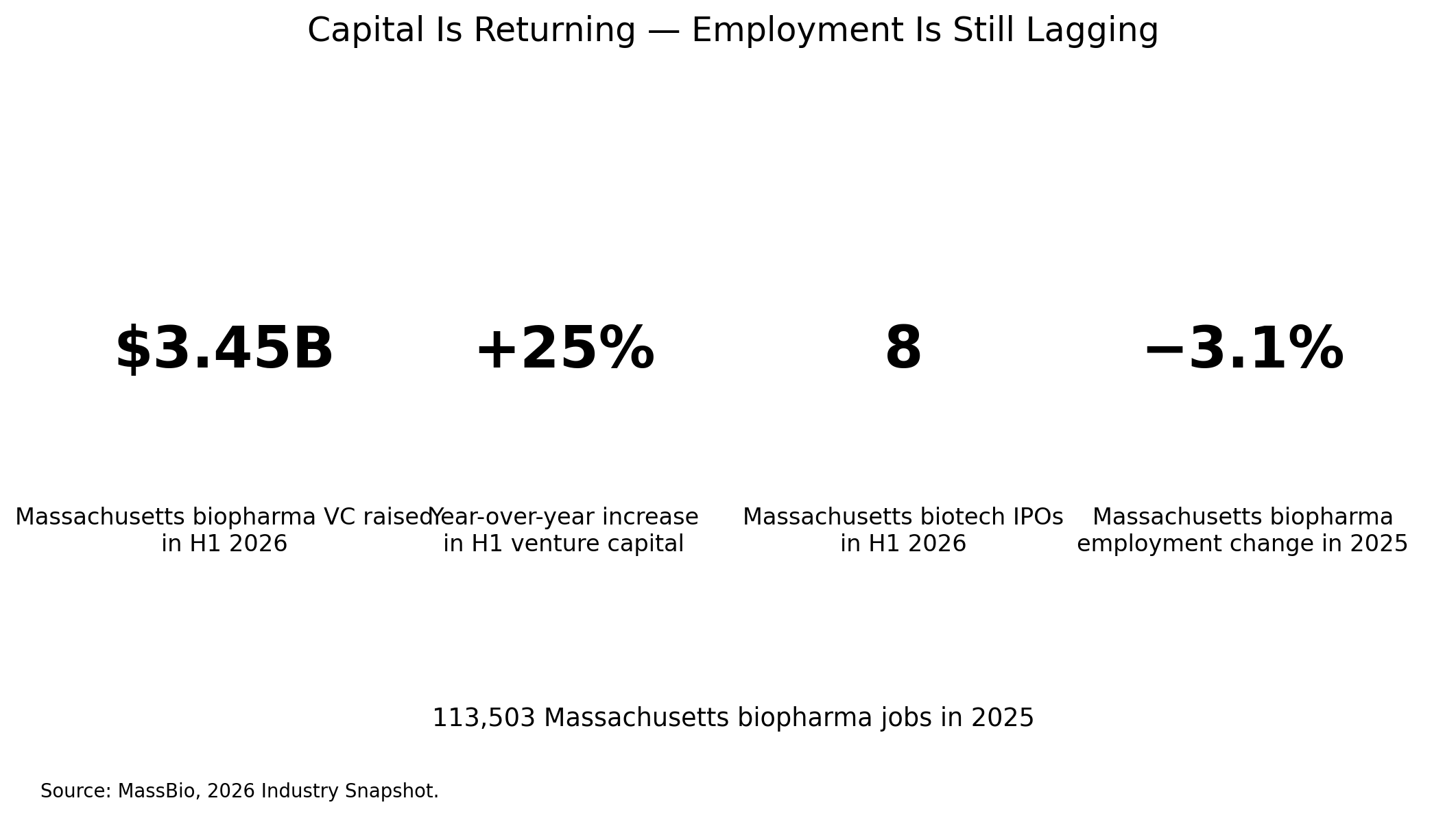
For a growing company, that combination reinforces the need to evaluate occupancy costs against cash runway, anticipated milestones and the possibility of changes in staffing or research priorities. For an investor reviewing a portfolio company, lease obligations can also affect the economics of financing, restructuring or a sale.
Where legal review can protect the business
Life sciences leases call for more than a review of standard commercial terms. Before a company commits to a facility, legal counsel can help the business evaluate:
Tenant-improvement allowances, buildout responsibility and remedies for construction or delivery delays.
Permitted uses, zoning, hazardous materials and operational requirements for research or other regulated activities.
Expansion, contraction, renewal, assignment and subleasing provisions.
Ownership and removal of specialized equipment, decommissioning and restoration obligations.
Change-of-control provisions that may affect financings, acquisitions or reorganizations.
These issues are interconnected. A company may obtain favorable rent only to assume restoration costs that become significant when it exits. A strong tenant-improvement package may be less useful if a lease limits the company’s ability to expand or transfer space during a corporate transaction.
Putting the current market to work
Greater Boston’s market gives life sciences companies an opportunity to negotiate lease terms with greater attention to their actual operating and financial needs. The objective should not be to secure the lowest rental rate. It should be to enter an agreement that supports the company’s scientific work and leaves room to respond to changes in financing, growth and corporate strategy.
Lanton, Lanton & Sosa Law works with life sciences companies, investors and other businesses on commercial real estate transactions, including lease negotiations, contractual risk and the corporate and regulatory issues that can accompany laboratory expansion and relocation.
Selected sources
CBRE, Boston Metro Life Science Figures, Q2 2026.
Colliers, Greater Boston Life Sciences reports, Q2 2024–Q2 2026.
MassBio, 2026 Industry Snapshot.
City of Cambridge, Zoning Ordinance.
This publication is provided for general informational purposes only and does not constitute legal advice.