

Trump’s Pharmaceutical Tariffs: A New Operating Era for Healthcare
The Trump administration's recent trade and healthcare policies are poised to introduce significant uncertainty into the U.S. healthcare industry. Two pivotal executive actions—the initiation of a Section 232 national security investigation into pharmaceutical imports and the signing of the executive order titled “Lowering Drug Prices by Once Again Putting Americans First”—highlight the administration's approach.
The Trump administration's recent trade and healthcare policies are poised to introduce significant uncertainty into the U.S. healthcare industry. Two pivotal executive actions—the initiation of a Section 232 national security investigation into pharmaceutical imports and the signing of the executive order titled “Lowering Drug Prices by Once Again Putting Americans First”—highlight the administration's approach.
On April 1, 2025, the Department of Commerce commenced a Section 232 investigation to assess the national security implications of importing pharmaceuticals and their ingredients. This encompasses finished drug products, active pharmaceutical ingredients (APIs), and key starting materials. The investigation aims to determine whether reliance on foreign sources compromises national security, potentially leading to the imposition of tariffs ranging from 10% to 25% on these imports.
Simultaneously, President Trump signed the executive order “Lowering Drug Prices by Once Again Putting Americans First” on April 15, 2025. This order seeks to reduce prescription drug costs by enhancing Medicare drug price negotiations, reinstating discounted insulin programs, and increasing transparency in hospital drug acquisition costs.
While these measures aim to bolster domestic manufacturing and reduce drug prices, they introduce several uncertainties:
Supply Chain Disruptions: Tariffs on imported pharmaceuticals could disrupt existing supply chains, leading to potential shortages and increased costs for healthcare providers and patients.
Regulatory Ambiguity: The executive order lacks detailed implementation plans, leaving stakeholders uncertain about how the policies will be enforced and their practical implications.
Market Volatility: The potential for tariffs and changes in drug pricing regulations may lead to market instability, affecting investment decisions within the pharmaceutical industry.
In this evolving landscape, healthcare entities must navigate the complexities of new trade policies and regulatory reforms. Lanton Law offers expertise in crafting targeted messaging and engaging with policymakers to advocate for client interests. Our team is equipped to assist clients in understanding and responding to these changes effectively. Contact us to learn more.

Executive Action Targets High Drug Costs: What the Industry Needs to Know
On April 15, 2025, President Trump signed the executive order titled “Lowering Drug Prices by Once Again Putting Americans First,” signaling a significant shift in U.S. pharmaceutical policy. This directive aims to reduce prescription drug costs through a multifaceted approach, impacting various aspects of the healthcare industry.
On April 15, 2025, President Trump signed the executive order titled “Lowering Drug Prices by Once Again Putting Americans First,” signaling a significant shift in U.S. pharmaceutical policy. This directive aims to reduce prescription drug costs through a multifaceted approach, impacting various aspects of the healthcare industry.
Key Provisions:
Medicare Drug Price Negotiation: The order directs the Department of Health and Human Services (HHS) to enhance the Medicare Drug Price Negotiation Program. This includes prioritizing high-cost drugs and improving transparency to achieve greater savings for beneficiaries.
Alignment of Payment Structures: It proposes aligning Medicare payments for certain prescription drugs with the actual acquisition costs incurred by hospitals, potentially lowering prices by up to 35%. Additionally, the order seeks to standardize payments for treatments like cancer therapies, regardless of the care setting, which could reduce costs by as much as 60%.
Discounted Medications for Low-Income Patients: The executive order reinstates programs to provide insulin and injectable epinephrine at significantly reduced prices for low-income individuals and the uninsured, aiming to make these life-saving medications more accessible.
Facilitation of Drug Importation: It instructs the FDA to streamline the approval process for state-run drug importation programs, potentially allowing states to source medications from countries like Canada to reduce costs.
Acceleration of Generic Drug Approvals: The order calls for the FDA to expedite the approval of generic and biosimilar drugs, fostering competition and potentially leading to lower drug prices.
Implications for the Healthcare Industry:
While the executive order outlines ambitious goals, the industry is looking for additional details. The potential for new tariffs on imported pharmaceuticals, coupled with changes in Medicare payment structures, could disrupt supply chains and affect pricing strategies. Healthcare providers, pharmaceutical companies, and policymakers must navigate these changes carefully to mitigate risks and capitalize on opportunities.
How Lanton Strategies Can Assist:
In this evolving policy landscape, Lanton Strategies offers strategic consulting and lobbying services to help clients understand and influence the implications of the executive order. Our expertise in healthcare policy and regulatory affairs positions us to provide targeted messaging and advocacy efforts, ensuring our clients' interests are represented before the Administration and Congress. Contact us to learn more about how we can help you navigate this period of change.

Section 232 Targets Drug Imports: What It Means for Pharma and Healthcare
On April 1, 2025, the U.S. Department of Commerce initiated a Section 232 national security investigation into the importation of pharmaceuticals and pharmaceutical ingredients. This inquiry aims to assess whether the reliance on foreign sources for essential medical products poses a threat to national security. The scope includes finished drug products, active pharmaceutical ingredients (APIs), key starting materials, and related derivatives.
On April 1, 2025, the U.S. Department of Commerce initiated a Section 232 national security investigation into the importation of pharmaceuticals and pharmaceutical ingredients. This inquiry aims to assess whether the reliance on foreign sources for essential medical products poses a threat to national security. The scope includes finished drug products, active pharmaceutical ingredients (APIs), key starting materials, and related derivatives.
The Department of Commerce is soliciting public comments to inform this investigation. Stakeholders are encouraged to provide input on various factors, including:
The current and projected demand for pharmaceuticals and their ingredients in the U.S.
The capacity of domestic production to meet this demand.
The role and risks associated with foreign supply chains.
The impact of foreign government subsidies and trade practices on U.S. industry competitiveness.
The feasibility of expanding domestic manufacturing to reduce import reliance.
Comments must be submitted by May 7, 2025, through the Federal Rulemaking Portal at www.regulations.gov, referencing Docket ID BIS-2025-0022. Submissions containing business confidential information should be clearly marked and accompanied by a non-confidential version.
For further details, please refer to the official notice in the Federal Register: Notice of Request for Public Comments on Section 232 National Security Investigation of Imports of Pharmaceuticals and Pharmaceutical Ingredients.
There are plenty of questions and speculation about what this means for specific supply chain participants. Contact Lanton Strategies to learn about how we can help you respond to these comments as well as help you speak with either Congress or the Administration to get your voice heard.

The UK’s AI Regulation Bill: A Strategic Reboot for Trust and Innovation
The reintroduction of the Artificial Intelligence (Regulation) Bill [HL] by Lord Holmes of Richmond in March 2025 seen here marks a pivotal moment in the UK’s AI legislative journey—one that reflects both a pragmatic reassessment of regulatory gaps and a desire to reestablish public trust in AI.
The reintroduction of the Artificial Intelligence (Regulation) Bill [HL] by Lord Holmes of Richmond in March 2025 seen here marks a pivotal moment in the UK’s AI legislative journey—one that reflects both a pragmatic reassessment of regulatory gaps and a desire to reestablish public trust in AI.
At its core, this Private Members’ Bill proposes the creation of a centralized AI Authority—a move that industry and legal experts alike recognize as long overdue. Unlike the government’s earlier “pro-innovation” strategy, which leaned heavily on voluntary commitments, Lord Holmes’ bill brings needed structure and enforceability. It’s a shift that positions the UK to balance innovation with ethical safeguards, much like efforts underway in the EU and U.S.
The bill highlights key regulatory pillars: safety, transparency, accountability, fairness, and contestability meant to govern the development, deployment, and monitoring of AI systems across sectors, from healthcare and finance to defense and education.
Two provisions in particular deserve emphasis. First, the requirement for designated AI officers within organizations introduces a tangible compliance mechanism—ensuring there’s real human oversight in algorithmic decision-making. Second, the inclusion of regulatory sandboxes is a clear nod to innovation, giving developers a safe and supervised space to test new technologies before widespread release.
Notably, the bill also calls for disclosure of training data and IP usage, a provision that resonates with concerns from creative and scientific communities around data provenance and rights protections. And perhaps most crucially for public trust, it mandates ongoing public engagement, anchoring AI governance in democratic accountability.
While the bill still faces the typical uphill climb of any Private Members’ Bill, it serves as a blueprint for a more balanced, enforceable approach to AI regulation in the UK. For legal practitioners, AI developers, and policymakers, this reintroduction is more than legislative housekeeping—it’s a strategic reset.
At Lanton Strategies, we believe that regulatory clarity is not a barrier to innovation—it’s the very foundation for sustainable growth in the AI era. Lanton Strategies is an international government affairs consulting firm that specializes in healthcare and technology. Contact us today to learn more about how we can help you.

Lanton Law Speaks with Pharmaceutical Executive on Navigating NIH Funding Cuts, Diversity Bans, and Tariff Challenges
Lanton Law spoke with Pharmaceutical Executive on NIH Funding cuts. The interview is titled “Navigating NIH Funding Cuts, Diversity Bans, and Tariff Challenges: Legal and Industry Implications for Medical Research”
Lanton Law spoke with Pharmaceutical Executive on NIH Funding cuts. The interview is titled “Navigating NIH Funding Cuts, Diversity Bans, and Tariff Challenges: Legal and Industry Implications for Medical Research”
The interview can be seen here.

Lanton Law Quoted in Pharmacy Times Interview on Drug Pricing Reforms Amid the Repeal of Executive Order 14087
Lanton Law was quoted in the Pharmacy Times Article titled "Reversal of Executive Order (EO) 14087 Raises Questions About Future Drug Pricing Reforms.” We discuss the EO and how pharmacists are impacted. The article can be viewed here.
Lanton Law was quoted in the Pharmacy Times Article titled "Reversal of Executive Order (EO) 14087 Raises Questions About Future Drug Pricing Reforms.” We discuss the EO and how pharmacists are impacted. The article can be viewed here.

New Presidential Executive Order on Artificial Intelligence Released
According to the White House, the President has signed a January 23, 2025 Executive Order (EO) on artificial intelligence.
According to the White House, the President has signed a January 23, 2025 Executive Order (EO) on artificial intelligence. According to the White House release the EO does the following:
This Executive Order establishes the commitment of the United States to sustain and enhance America’s dominance in AI to promote human flourishing, economic competitiveness, and national security.
American development of AI systems must be free from ideological bias or engineered social agendas. With the right government policies, the United States can solidify its position as the leader in AI and secure a brighter future for all Americans.
The order directs the development of an AI Action Plan to sustain and enhance America’s AI dominance, led by the Assistant to the President for Science & Technology, the White House AI & Crypto Czar, and the National Security Advisor
It further directs the White House to revise and reissue OMB AI memoranda to departments and agencies on the Federal Government’s acquisition and governance of AI to ensure that harmful barriers to America’s AI leadership are eliminated.
Lanton Law is a national boutiquelaw andgovernment affairs firm that closely monitors legislative, regulatory and legal developments in the healthcare and technology spaces.Contact us to learn about how either ourlegal orlobbying services can help you attain your goals.

Effects of the Federal Trade Commission's Repeal of Non-Compete Agreements on the Pharma Industry
In an interview with Associate Editor Donald Tracy, MA, Ron Lanton III, Esq., Partner, Lanton Law offers his thoughts on the recent Federal Trade Commission (FTC) repeal of non-compete agreements, and how it could effect the #pharma industry.
In an interview with Associate Editor Donald Tracy, MA, Ron Lanton III, Esq., Partner, Lanton Law offers his thoughts on the recent Federal Trade Commission (FTC) repeal of non-compete agreements, and how it could effect the #pharma industry.
The interview can be viewedhere.

U.K. Launches It's Strategic Vision for Global Leadership and Ethical Innovation Using AI
At Lanton Law and our sister company Lanton Strategies International, we are watching multiple developments worldwide on the usage of AI. Most recently, our attention has focused on the events in the United Kingdom.
At Lanton Law and our sister company Lanton Strategies International, we are watching multiple developments worldwide on the usage of AI. Most recently, our attention has focused on the events in the United Kingdom.
With the UK Prime Minister Sir Keir Starmer’s speech on the U.K.’s AI strategy, the Prime Minister has put forward a bold vision to position the United Kingdom as a global leader in artificial intelligence. With a focus on fostering innovation, ethical leadership, and practical application, the government is leveraging AI to drive economic growth, modernize public services, and secure its position in the competitive global AI landscape.
The AI Opportunities Action Plan serves as the cornerstone of this vision, laying out a comprehensive framework for integrating AI into the UK economy. The government has attracted significant private-sector investment, including a commitment of £14 billion from leading tech firms, and aims to create over 13,000 jobs. AI Growth Zones are a pivotal part of the strategy, designed to streamline planning for research and development hubs that will foster collaboration across academia, industry, and government.
Modernizing public services is another critical objective. AI tools like Parlex are already being developed to streamline decision-making processes within the public sector. By reducing administrative burdens, civil servants can focus on improving service delivery for citizens.
On the global stage, the UK is carving a niche in ethical AI leadership, hosting the inaugural AI Safety Summit in November 2023. The resulting Bletchley Declaration emphasizes international cooperation on the safe development and use of AI, aligning with the UK’s commitment to balancing innovation with responsibility.
Despite these efforts, challenges remain. Competing with AI superpowers like the US and China requires pragmatic goal-setting and leveraging the UK’s strengths in education and professional services. By focusing on fintech, ethical AI, and sustainable innovation, the UK can strategically navigate the competitive AI environment.
In summary, Prime Minister Starmer’s AI stance reflects a forward-thinking approach that combines ambition with practicality, ensuring the UK remains a key player in shaping the future of AI.
For additional questions on this and any other policy or regulatory matters where AI is concerned, contact us for details.

FTC, DOJ and HHS Extend RFI on Private Equity Control in Health Care Markets
The Federal Trade Commission, the Department of Justice’s (DOJ) Antitrust Division, and the U.S. Department of Health and Human Services (HHS) are extending the deadline by 30 days for the public to comment on a tri-agency Request for Information (RFI) examining private-equity and other corporations’ increasing control over health care markets. The new deadline is now June 5, 2024.
The Federal Trade Commission, the Department of Justice’s (DOJ) Antitrust Division, and the U.S. Department of Health and Human Services (HHS) are extending the deadline by 30 days for the public to comment on a tri-agency Request for Information (RFI) examining private-equity and other corporations’ increasing control over health care markets. The new deadline is now June 5, 2024.
At Lanton Law not only do we understand the issues, but we provide you with timely solutions to help you make informed decisions about either an acquisition target or ways to maximize value. We counsel clients by performing corporate due diligence, provide strategic advice for growth and business strategies as well as structuring and executing M&A transactions.
Contact us today to learn more

Lanton Law Will Speak at New York Bar's Food Drug & Cosmetic Section's Annual Meeting
We are proud to announce that Lanton Law will be presenting at the NY State Bar Association's Spring Meeting. We are excited about our presentation titled Drug Pricing Wars: "Trends, Politics and Policies." To register and hear the other great presentations click the link below. To register click here
We are proud to announce that Lanton Law will be presenting at the NY State Bar Association's Spring Meeting. We are excited about our presentation titled Drug Pricing Wars: "Trends, Politics and Policies." To register and hear the other great presentations click the link below. To register click here
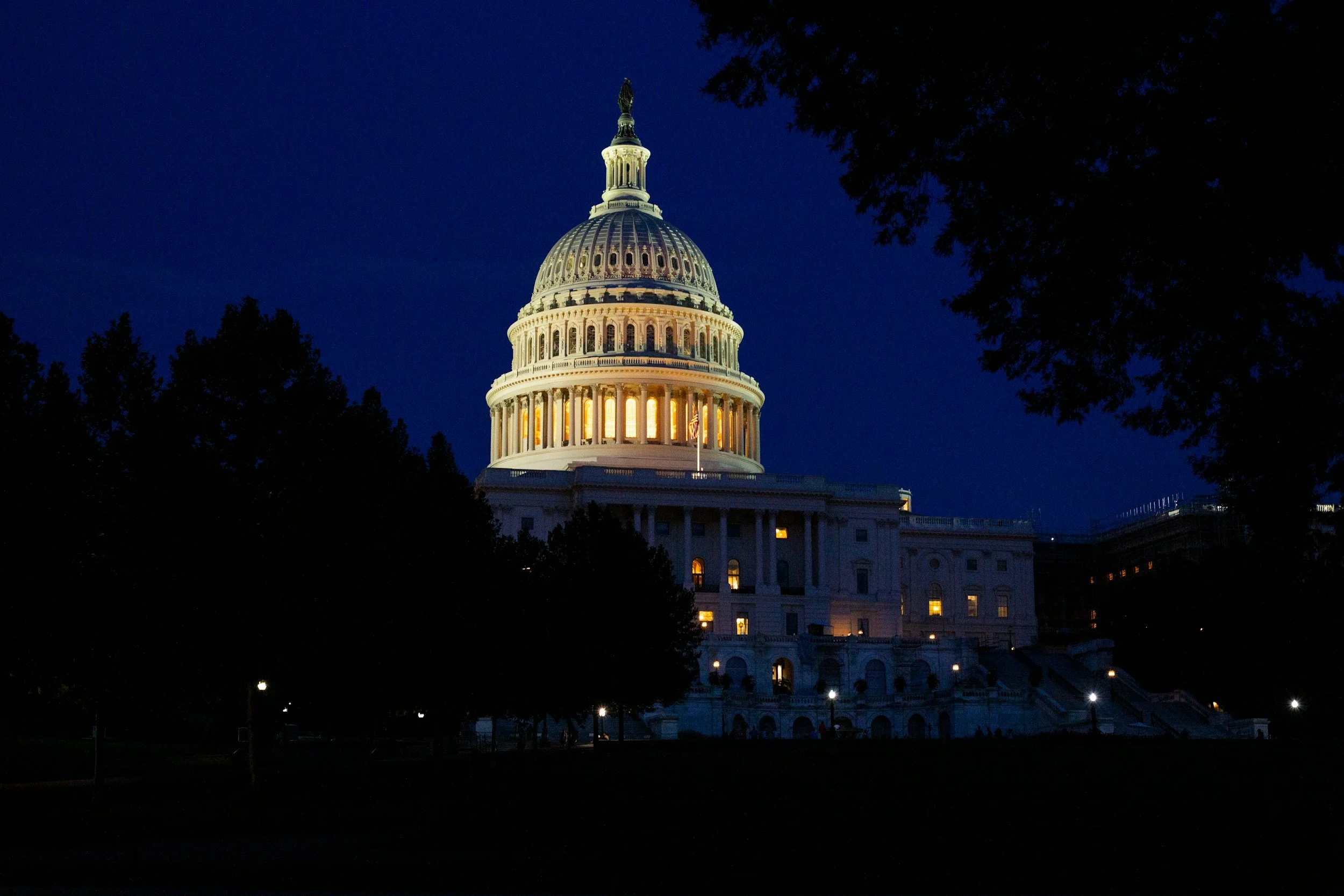
Federal Privacy Rights Legislaton Introduced into Congress
House Committee on Energy and Commerce Chair Cathy McMorris Rodgers (R-WA) and Senate Committee on Commerce, Science and Transportation Chair Maria Cantwell (D-WA) have introduced the American Privacy Rights Act.
House Committee on Energy and Commerce Chair Cathy McMorris Rodgers (R-WA) and Senate Committee on Commerce, Science and Transportation Chair Maria Cantwell (D-WA) have introduced the American Privacy Rights Act.
According to the legislator’s press release, this proposal seeks to establish national data privacy rights and protections for Americans, eliminates the existing patchwork of state comprehensive data privacy laws, and establishes robust enforcement mechanisms to hold violators accountable, including a private right of action for individuals.
Furthermore, the release describes other provisions of the proposed legislation:
Establishes Foundational Uniform National Data Privacy Rights for Americans
Gives Americans the Ability to Enforce Their Data Privacy Rights
Protects Americans’ Civil Rights
Holds Companies Accountable and Establishes Strong Data Security Obligations
Focuses on the Business of Data, Not Mainstreet Business
The draft can be seen here.
Lanton Law's experience in privacy and data protection enables these companies to navigate the complex legal and regulatory landscape effectively. By partnering with us, tech and healthcare organizations can develop robust strategies, ensuring compliance, safeguarding personal data, and maintaining trust among your consumers.
Contact us to learn more.

CMS Makes An Impactful Change Regarding Biosimilars
Within its final calendar year 2025 Medicare Advantage and Part D final rule seen here, the Centers for Medicare and Medicaid Servces (CMS) is allowing Part D sponsors the ability to make midyear substitutions of biosimilars for their reference products on their formularies.
Within its final calendar year 2025 Medicare Advantage and Part D final rule seen here, the Centers for Medicare and Medicaid Servces (CMS) is allowing Part D sponsors the ability to make midyear substitutions of biosimilars for their reference products on their formularies.
Specifically:
All biosimilars may be substituted as formulary maintenance changes: Part D sponsors may treat formulary substitutions of all biosimilars for their reference products as “maintenance changes” that would not require explicit prior approval by CMS. This option has previously been available only for interchangeable biological products. Part D sponsors previously had to obtain explicit approval prior to substituting biosimilars other than interchangeable biological products, and these substitutions applied only to enrollees who began therapy after the effective date of the change — delaying enrollees’ access to cheaper options. Treating all biosimilar substitutions as maintenance changes means that midyear formulary substitutions of biosimilars for their reference products would apply to all enrollees (including those already taking the reference product prior to the effective date of the change) following a 30-day advance notice to affected enrollees.
New interchangeable biological products may be immediately substituted: We are finalizing additional flexibility for interchangeable biological products not on the market at the time that Part D sponsors submit their initial formulary for CMS approval. Part D sponsors meeting certain requirements have the additional option to immediately substitute a new interchangeable biological product for a reference product and provide notice of the change to affected enrollees after making such change.
Biosimilar policy continues to evolve. It’s important to be in the know to plan accordingly.
Lanton Law is a national boutique law and lobbying firm that focuses on healthcare/life sciences and technology.
If you are an industry stakeholder with questions about the current landscape or if you would like to discuss how your organization’s strategic initiatives might be impacted by either Congress, regulatory agencies or legal decisions, contact us today.

U.S. Senate Finance Committee Hearing on AI in Health Care Shows AI Policy is Forthcoming
The U.S. Senate Finance Committee held a February 8, 2024 hearing titled “Artificial Intelligence and Health Care: Promise and Pitfalls.”
The U.S. Senate Finance Committee held a February 8, 2024 hearing titled “Artificial Intelligence and Health Care: Promise and Pitfalls.”
The following witnesses testified at the hearing:
Peter Shen, Head of Digital & Automation for North America, Siemens Healthineers, Washington, DC
Mark Sendak, MD, MPP, Co-Lead, Health AI Partnership, Durham, NC
Michelle M. Mello, JD, Ph.D., Professor of Health Policy and of Law, Stanford University, Stanford, CA
Ziad Obermeyer, MD, Associate Professor and Blue Cross of California Distinguished Professor, University of California – Berkeley, Berkeley, CA
Katherine Baicker, Ph.D., Provost, University of Chicago, Chicago, IL
Senator Wyden (D-OR) made a few statements on AI. The Senator emphasized the importance of ensuring that AI in healthcare is used to improve patient outcomes and lower costs, rather than being driven by profit.. He also highlighted the need to address concerns regarding privacy, data security, and bias in AI algorithms.
Artificial Intelligence is clearly an emerging innovative field that is both exciting and risky. For tech and healthcare stakeholders, the possibilities can be endless when examining potential legal and regulatory pitfalls.
Lanton Law is a national boutique law and government affairs firm that closely monitors legislative, regulatory and legal developments in the healthcare and technology spaces. Contact us to learn about how either our legal or lobbying services can help you attain your goals.

California Passes First-in-Nation Law to Reduce Medication Errors, Address Pharmacy Staffing Concerns
Lanton Law speaks with Pharmacy Times on California's new Stop Dangerous Pharmacies Act (AB 1286). This new law aims to address understaffed chain pharmacies and reduce medication errors. Key aspects of the law included giving pharmacists more autonomy over staffing decisions, requiring reporting of unsafe conditions, and establishing a confidential medication error reporting system.
Lanton Law speaks with Pharmacy Times on California's new Stop Dangerous Pharmacies Act (AB 1286). This new law aims to address understaffed chain pharmacies and reduce medication errors. Key aspects of the law included giving pharmacists more autonomy over staffing decisions, requiring reporting of unsafe conditions, and establishing a confidential medication error reporting system. Listen here for the interview.

Pharmaceutical Commerce Speaks with Lanton Law about New Drug Pricing Models
Pharmaceutical Commerce interviews Ron Lanton; Partner at Lanton Law on newly emerging pricing models such as the cost plus drug model.
Pharmaceutical Commerce interviews Ron Lanton; Partner at Lanton Law on newly emerging pricing models such as the cost plus drug model. Ron gives his insight on what impacts these emerging models will have on the pharmaceutical industry. The interview can be seen here.

New York Proposes New Cybersecurity Regulations for State Hospitals
On November 13, the Governor unveiled new cyber regulations for state hospitals. The Governor’s FY24 budget includes $500 million in funding that health care facilities may apply to upgrade their systems in order to comply.
On November 13, the Governor unveiled new cyber regulations for state hospitals. The Governor’s FY24 budget includes $500 million in funding that health care facilities may apply to upgrade their systems in order to comply.
According to the release which can be read here states:
“The proposed regulations aim to strengthen the protections on hospital networks and systems that are critical to providing patient care, as a complement to the Health Insurance Portability and Accountability Act (HIPAA) Security Rule that focuses on protecting patient data and health records. Under the proposed provisions, hospitals will be required to establish a cybersecurity program and take proven steps to assess internal and external cybersecurity risks, use defensive techniques and infrastructure, implement measures to protect their information systems from unauthorized access or other malicious acts, and take actions to prevent cybersecurity events before they happen.”
Lanton Law with offices in Boston and Washington D.C. is a national boutique law and government affairs firm that closely monitors legislative, regulatory and legal developments in the healthcare and technology spaces.
Contact us to learn about how either our legal or lobbying services can help you attain your goals.

Mass General Brigham partners with Best Buy to improve acute care at home via tech
Mass General Brigham has announced an innovative partnership with Best Buy.
Mass General Brigham has announced an innovative partnership with Best Buy. According to the press release:
“Together, they will develop solutions to support the transformational movement of shifting healthcare to patients’ homes by improving how quality and safe care are provided with technology and clinical expertise. Their first priority is to scale and support Mass General Brigham’s Home Hospital. This technology-enabled clinical delivery model will expand access to Massachusetts residents choosing to receive acute-level hospital care in the comfort of their home. This collaboration will also help address one of the biggest challenges the healthcare industry faces today — workforce shortages.”
They also addressed the future of care at home:
“While workforce shortages plague the healthcare industry and threaten the ability of healthcare systems, the Home Hospital experience has shown an increase in employee satisfaction through innovative hybrid practice options and a reduction of clinician burnout. As part of this relationship, Best Buy Health and Mass General Brigham will engage with and make significant investments in the community to enable the next generation of the Healthcare at Home workforce. To do this they will create equitable, academic opportunities for individuals interested in pursuing nursing, paramedic and digital technology careers by offering scholarships to students choosing the at-home setting of care as their desired professional environment. They will also work to bring care in the home to the forefront of curriculum within these industries to further support the growing home healthcare model.”
Their full press release can be found here.
Lanton Law with offices in Boston and Washington D.C. is a national boutique law and government affairs firm that closely monitors legislative, regulatory and legal developments in the healthcare and life science spaces.
Contact us to learn about how either our legal or lobbying services can help you attain your goals.

U.S. Government Issues First Ever Artificial Intelligence (AI) Executive Order Via the Biden Administration
On October 30, 2023, President Biden issued an Executive Order on Safe, Secure, and Trustworthy Artificial Intelligence (AI). The Order sets out a comprehensive approach to ensuring that AI is developed and used in a way that is aligned with American values and interests. This is a major development since this is the first action of its kind by the U.S. government addressing safety, civil rights, equity and research issues.
On October 30, 2023, President Biden issued an Executive Order on Safe, Secure, and Trustworthy Artificial Intelligence (AI). The Order sets out a comprehensive approach to ensuring that AI is developed and used in a way that is aligned with American values and interests. This is a major development since this is the first action of its kind by the U.S. government addressing safety, civil rights, equity and research issues.
The Order includes a number of key provisions, including:
Establishing a National AI Advisory Council: The Council will be composed of experts from academia, industry, and civil society, and will advise the President on AI policy and strategy.
Directing the development of AI Risk Mitigation Guidelines: The National Institute of Standards and Technology (NIST) will develop guidelines for mitigating the risks associated with AI, such as bias and discrimination.
Promoting AI Research and Development: The Order directs the federal government to invest in AI research and development, with a focus on areas such as safety, security, and reliability.
Protecting Civil Rights and Liberties: The Order directs the federal government to ensure that AI is used in a way that protects civil rights and liberties, such as privacy and freedom of expression.
Promoting International Cooperation on AI: The Order directs the federal government to work with international partners to develop and promote responsible AI practices.
The Order also establishes a number of specific tasks for federal agencies, such as developing AI ethics principles, conducting risk assessments of AI systems, and ensuring that AI is used in a fair and equitable manner.
The Executive Order on Safe, Secure, and Trustworthy AI is a significant step forward in the United States' efforts to ensure that AI is developed and used in a responsible and ethical manner. The Order sets out a comprehensive approach to addressing the risks and challenges associated with AI, and it will help to ensure that AI is used in a way that benefits all Americans.
Artificial Intelligence is clearly an emerging innovative field that is both exciting and risky. For tech and healthcare stakeholders, the possibilities can be endless when examining potential legal and regulatory pitfalls.
Lanton Law is a national boutique law and government affairs firm that closely monitors legislative, regulatory and legal developments in the healthcare and technology spaces. Contact us to learn about how either our legal or lobbying services can help you attain your goals.

Lanton Law Speaks With Pharmacy Times About Provider Status
Below is the description from Pharmacy Times about our discussion with them on pharmacy provider status. You can listen to the interview here.
Below is the description from Pharmacy Times about our discussion with them on pharmacy provider status. You can listen to the interview here.
In this episode of Pharmacy Focus: Policy Edition, we delve into the intricacies of provider status for pharmacists, including challenges that have hindered pharmacists from attaining this recognition, the recent legislative strides, and the far-reaching implications for the field. Our guest, Ron Lanton III, Esq from Lanton Law, lends his expertise to shed light on the financial impacts and effective advocacy strategies.
Key Topics
Unpacking the concept of provider status for pharmacists and its significance
Recent legislative advancements that have propelled the provider status movement forward
Implications of achieving provider status: expanded clinical roles, reimbursement opportunities, and patient care improvements
Financial considerations for pharmacists and the broader healthcare landscape
Strategies for effective advocacy to accelerate provider status adoption