
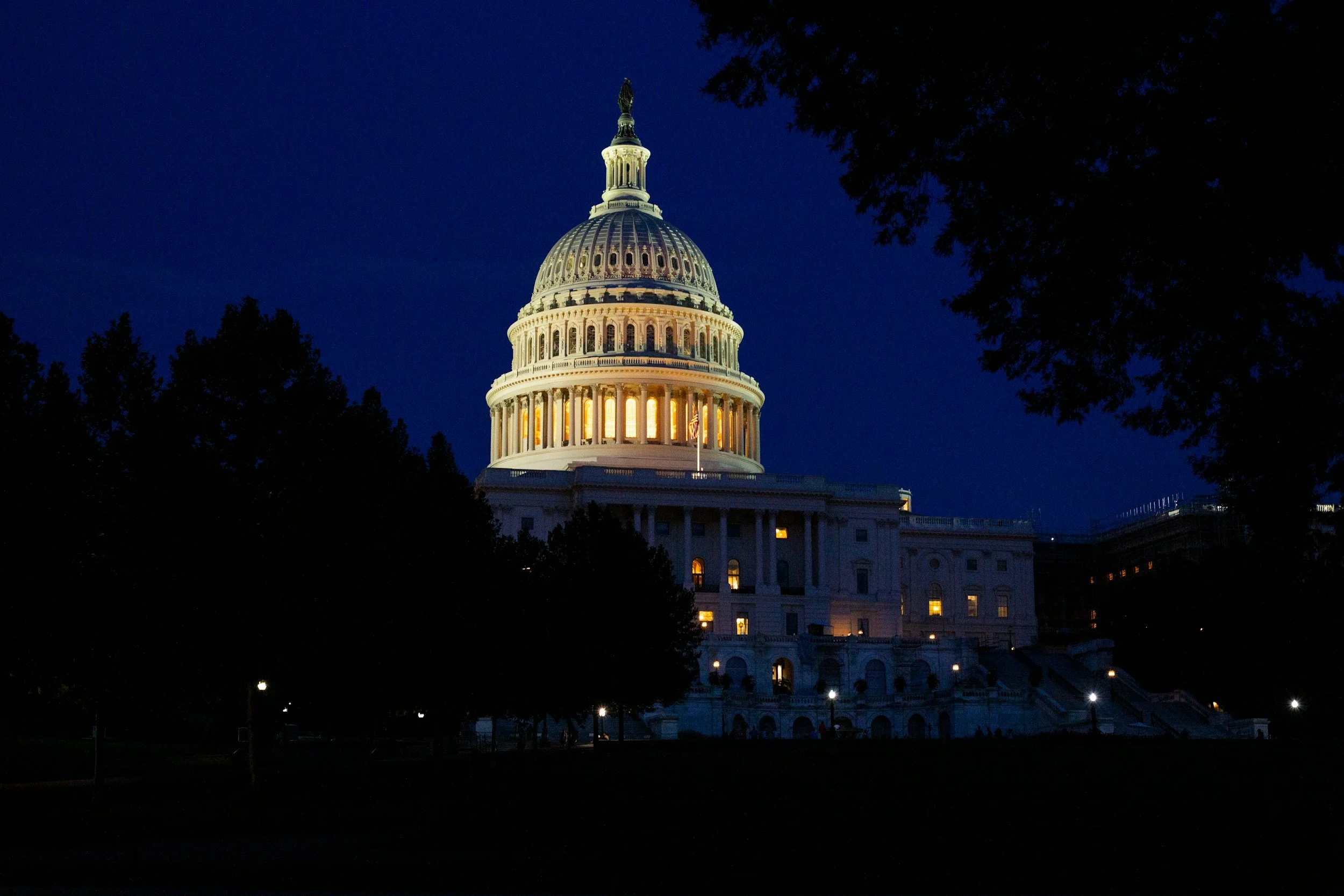
Federal Privacy Rights Legislaton Introduced into Congress
House Committee on Energy and Commerce Chair Cathy McMorris Rodgers (R-WA) and Senate Committee on Commerce, Science and Transportation Chair Maria Cantwell (D-WA) have introduced the American Privacy Rights Act.
House Committee on Energy and Commerce Chair Cathy McMorris Rodgers (R-WA) and Senate Committee on Commerce, Science and Transportation Chair Maria Cantwell (D-WA) have introduced the American Privacy Rights Act.
According to the legislator’s press release, this proposal seeks to establish national data privacy rights and protections for Americans, eliminates the existing patchwork of state comprehensive data privacy laws, and establishes robust enforcement mechanisms to hold violators accountable, including a private right of action for individuals.
Furthermore, the release describes other provisions of the proposed legislation:
Establishes Foundational Uniform National Data Privacy Rights for Americans
Gives Americans the Ability to Enforce Their Data Privacy Rights
Protects Americans’ Civil Rights
Holds Companies Accountable and Establishes Strong Data Security Obligations
Focuses on the Business of Data, Not Mainstreet Business
The draft can be seen here.
Lanton Law's experience in privacy and data protection enables these companies to navigate the complex legal and regulatory landscape effectively. By partnering with us, tech and healthcare organizations can develop robust strategies, ensuring compliance, safeguarding personal data, and maintaining trust among your consumers.
Contact us to learn more.

American Data Privacy and Protection Act Introduced
In late June 2022 H.R. 8152 was introduced which seeks to provide consumers with foundational data privacy rights, create strong oversight mechanisms, and establish meaningful enforcement.
In late June 2022 H.R. 8152 was introduced which seeks to provide consumers with foundational data privacy rights, create strong oversight mechanisms, and establish meaningful enforcement.
What are some of the important aspects of the bill?
According to the Congressional Research Service the bill proposes the following:
Covered Entities. It would apply to most entities, including nonprofits and common carriers. Some entities, such as those defined as large data holders that meet certain thresholds or service providers that use data on behalf of other covered entities, would face different or additional requirements.
Covered Data. It would apply to information that “identifies or is linked or reasonably linkable” to an individual.
Duties of Loyalty. It would impose several duties on covered entities, including requirements to abide by data minimization principles and special protections for certain types of data, such as geolocation information, biometric information, and nonconsensual intimate images.
Transparency. It would require covered entities to disclose, among other things, the type of data they collect, what they use it for, how long they retain it, and whether they make the data accessible to the People’s Republic of China, Russia, Iran, or North Korea.
Consumer Control and Consent. It would give consumers various rights over covered data, including the right to access, correct, and delete their data held by a particular covered entity. It would require covered entities to get a consumer’s affirmative, express consent before using their “sensitive covered data” (defined by a list of sixteen different categories of data). It would further require covered entities to give consumers an opportunity to object before the entity transfers their data to a third party or targets advertising toward them.
Youth Protections. It would create additional data protections for individuals under the age of 17, including a prohibition on targeted advertising, and it would establish a Youth Privacy and Marketing Division at the Federal Trade Commission (FTC).
Third-Party Collecting Entities. It would create specific obligations for third-party collecting entities, which are entities whose main source of revenue comes from processing or transferring data that it does not directly collect from consumers (e.g., data brokers). These entities would have to comply with FTC auditing regulations and, if they collect data above the threshold amount of individuals or devices, would have to register with the FTC.
Civil Rights and Algorithms. It would prohibit most covered entities from using covered data in a way that discriminates on the basis of protected characteristics (such as race, gender, or sexual orientation). It would also require large data holders to conduct algorithm impact assessments. These assessments would need to describe the entity’s steps to mitigate potential harms resulting from its algorithms, among other requirements. Large data holders would be required to submit these assessments to the FTC and make them available to Congress on request.
Data Security: It would require covered entities to adopt data security practices and procedures that are reasonable in light of their size and activities. It would authorize the FTC to issue regulations elaborating on these data security requirements.
Small- and Medium-size Businesses: It would also relieve small- and medium-size businesses from complying with several requirements; for instance, these businesses may respond to a consumer’s request to correct their data by deleting the data, rather than correcting it.
Enforcement. It would be enforceable by the FTC, under that agency’s existing enforcement authorities, and by state attorneys general in civil actions.
Private right of action. It would create a delayed private right of action starting four years after the law’s enactment. Injured individuals would be able to sue covered entities in federal court for damages, injunctions, litigation costs, and attorneys’ fees. Individuals would have to notify the FTC or their state attorney general before bringing suit. Before bringing a suit for injunctive relief or a suit against a small- or medium-size business, individuals would be required to give the violator an opportunity to address the violation.
Preemption. It would generally preempt any state laws that are “covered by the provisions” of the ADPPA or its regulations, although it would expressly preserve sixteen different categories of state laws, including consumer protection laws of general applicability and data breach notification laws. It would also preserve several specific state laws, such as Illinois’ Biometric Information Privacy Act and Genetic Information Privacy Act and California’s private right of action for victims of data breaches.
Section by section specifics can be found here.
We are going to see more privacy proposals on the state and federal level.
Lanton Law is a national healthcare & technology law and government affairs firm. Our technology practice has been monitoring privacy developments nationwide. If you are a commerce, technology or healthcare/life science stakeholder with questions about the current landscape or if you would like to discuss how your organization’s strategic initiatives might be impacted by either Congress, regulatory agencies or legal decisions, contact us today.

California Privacy Regulator Releases Draft Regulations
The California Privacy Protection Agency, the regulator established by the California Privacy Rights Act in November 2020 has posted draft regulations for its upcoming June 8 Board meeting. The draft CPRA regulations can be viewed here.
The California Privacy Protection Agency, the regulator established by the California Privacy Rights Act in November 2020 has posted draft regulations for its upcoming June 8 Board meeting. The draft CPRA regulations can be viewed here.
The draft regulations do need work to clarify several issues. The draft does address privacy notice requirements, as well as how companies must notify its contractors and vendors to delete personal information as well as how to respond to opt out preference signals. The rules are forecasted to take effect on January 1, 2023.
Lanton Law is a national healthcare & technology law and government affairs firm. Our technology practice has been monitoring privacy developments nationwide. If you are a commerce, technology or healthcare/life science stakeholder with questions about the current landscape or if you would like to discuss how your organization’s strategic initiatives might be impacted by either Congress, regulatory agencies or legal decisions, contact us today.

Massachusetts Discussing Data Privacy Protection
Senator Creem and Senator Lesser have introduced S.46 titled “An Act Establishing the Massachusetts Information Privacy Act.” The bill can be found here.
Senator Creem and Senator Lesser have introduced S.46 titled “An Act Establishing the Massachusetts Information Privacy Act.” The bill can be found here. The Act applies to Massachusetts businesses that earn $10,000 or more annual revenue through 300 or more transactions or that process or maintain the personal information of 10,000 or more unique individuals during the course of a calendar year. The bill has protections on the collection of biometric or location information and seeks to prevent companies from discriminating based on consumer personal information. The MA Information Privacy Commission would also be created by this proposal to oversee this bill’s regulatory scheme.
This bill mirrors the efforts unleashed by the landmark General Data Protection Regulation (GDPR) in Europe which has been followed by efforts in California. Massachusetts did have a predecessor to S.46 in 2019 which stalled in the legislature.
The bill is currently in the Advanced Information Technology, the Internet and Cybersecurity Committee. If you are a technology, healthcare or commerce stakeholder then this is something to keep a watch on.
Lanton Law is a national healthcare & technology law and government affairs firm. Our technology practice has been monitoring privacy developments nationwide. If you are a commerce, technology or healthcare/life science stakeholder with questions about the current landscape or if you would like to discuss how your organization’s strategic initiatives might be impacted by either Congress, regulatory agencies or legal decisions, contact us today.

New Bi-Partisan Privacy Bill Introduced
The Social Media Privacy Protection and Consumer Rights Act of 2021 has been reintroduced and is being led by Senators Kennedy (R-LA), Klobuchar (D-MN), Manchin (D-WV and Burr (R-NC). The proposal seeks to improve the transparency of online platforms, strengthen consumers’ options when a data breach occurs and ensure companies comply with privacy policies that protect consumers.
The Social Media Privacy Protection and Consumer Rights Act of 2021 has been reintroduced and is being led by Senators Kennedy (R-LA), Klobuchar (D-MN), Manchin (D-WV and Burr (R-NC). The proposal seeks to improve the transparency of online platforms, strengthen consumers’ options when a data breach occurs and ensure companies comply with privacy policies that protect consumers.
According to the bill’s press release the proposal seeks the following:
Give consumers the right to opt out and keep their information private by disabling data tracking and collection,
Provide users greater access to and control over their data,
Require terms of service agreements to be in plain language,
Ensure users have the ability to see what information about them has already been collected and shared,
Mandate that users be notified of a breach of their information within 72 hours,
Offer remedies for users when a breach occurs, and
Require that online platforms have a privacy program in place.
Lanton Law’s technology practice has been monitoring privacy developments nationwide. If you are an industry stakeholder with questions about the current landscape or if you would like to discuss how your organization’s strategic initiatives might be impacted by either Congress, regulatory agencies or legal decisions, contact us today.

Illinois Biometric Information Privacy Act (BIPA) Lawsuit Causes Facebook to Pay Settlement
On February 26, 2021 in the United States District Court Northern District of California, the Court found that Facebook was ordered to pay $650 million. This issue derived from the underlying lawsuit alleging whether the collection of an individual's biometric data in violation of the Illinois Biometric Information Privacy Act is sufficient to establish Article III standing. As a result of this dispute, the company’s automatic facial recognition tagging features are now an opt-in feature instead of being an opt-out choice.
On February 26, 2021 in the United States District Court Northern District of California, the Court found that Facebook was ordered to pay $650 million. This issue derived from the underlying lawsuit alleging whether the collection of an individual's biometric data in violation of the Illinois Biometric Information Privacy Act is sufficient to establish Article III standing. As a result of this dispute, the company’s automatic facial recognition tagging features are now an opt-in feature instead of being an opt-out choice.
The Illinois Biometric Information Privacy Act enacted in 2008 was an important first step in developing policy on biometrics. According to the law, a private entity possessing biometric information accessible to the public must have a retention schedule and policy for permanently destroying biometric information. Additionally, there are restrictions on how a private entity may collect, capture, purchase, receive through trade, or otherwise obtain a person's or a customer's biometric identifier or biometric information. Most importantly, this law requires obtaining written consent prior to collecting biometric information as the law provides a private right of action for anyone injured under the Act.
Lanton Law’s technology practice which includes biometrics and privacy issues, has been monitoring the Illinois Biometric Information Privacy Act for some time. We have posted several blogs addressing this issue as companies continue to evolve biometrics into the business models. As 2021 unfolds we confidently believe that legislative and regulatory oversight will increase leading to more litigation that fine tunes points left unanswered about this emerging field.
We at Lanton Law can help. Our legal and policy tools can help offer your organization a clear path forward to navigate what will be changing policies for technology stakeholders. Contact us today to discuss your options.