

Policy Alert: What the £31bn Tech Deal Suspension Means for US and UK Innovation
With the Trump administration’s sudden suspension of the £31bn "Tech Prosperity Deal," the future of transatlantic innovation faces immediate and critical uncertainty.
With the Trump administration’s sudden suspension of the £31bn "Tech Prosperity Deal," the future of transatlantic innovation faces immediate and critical uncertainty. As reported, this landmark agreement—intended to bolster cooperation in AI, quantum computing, and civil nuclear energy—has been paused due to frustrations over non-tariff trade barriers and digital services taxes.
This development highlights the volatility of international trade agreements and the transactional nature of the current regulatory environment. To understand the full scope of the cooperation and specific provisions that are now at risk, I encourage stakeholders to review the details of the of the Memorandum of Understanding regarding the “Tech Prosperity Deal” click here.
The suspension places pledged investment from major tech players on ice and creates significant headwinds for innovation hubs in both nations. For stakeholders, this is a stark reminder that policy and prosperity are inextricably linked.
At Lanton Law and Lanton Strategies, we specialize in helping Transatlantic organizations navigate these complex government affairs and legal challenges. When the geopolitical landscape shifts, your strategy must adapt immediately.
Don't let diplomatic friction stall your innovation pipeline. Contact us today for strategic consulting on how this suspension impacts your business. Let’s discuss how we can help you pivot and thrive despite these headwinds.

The UK’s AI Regulation Bill: A Strategic Reboot for Trust and Innovation
The reintroduction of the Artificial Intelligence (Regulation) Bill [HL] by Lord Holmes of Richmond in March 2025 seen here marks a pivotal moment in the UK’s AI legislative journey—one that reflects both a pragmatic reassessment of regulatory gaps and a desire to reestablish public trust in AI.
The reintroduction of the Artificial Intelligence (Regulation) Bill [HL] by Lord Holmes of Richmond in March 2025 seen here marks a pivotal moment in the UK’s AI legislative journey—one that reflects both a pragmatic reassessment of regulatory gaps and a desire to reestablish public trust in AI.
At its core, this Private Members’ Bill proposes the creation of a centralized AI Authority—a move that industry and legal experts alike recognize as long overdue. Unlike the government’s earlier “pro-innovation” strategy, which leaned heavily on voluntary commitments, Lord Holmes’ bill brings needed structure and enforceability. It’s a shift that positions the UK to balance innovation with ethical safeguards, much like efforts underway in the EU and U.S.
The bill highlights key regulatory pillars: safety, transparency, accountability, fairness, and contestability meant to govern the development, deployment, and monitoring of AI systems across sectors, from healthcare and finance to defense and education.
Two provisions in particular deserve emphasis. First, the requirement for designated AI officers within organizations introduces a tangible compliance mechanism—ensuring there’s real human oversight in algorithmic decision-making. Second, the inclusion of regulatory sandboxes is a clear nod to innovation, giving developers a safe and supervised space to test new technologies before widespread release.
Notably, the bill also calls for disclosure of training data and IP usage, a provision that resonates with concerns from creative and scientific communities around data provenance and rights protections. And perhaps most crucially for public trust, it mandates ongoing public engagement, anchoring AI governance in democratic accountability.
While the bill still faces the typical uphill climb of any Private Members’ Bill, it serves as a blueprint for a more balanced, enforceable approach to AI regulation in the UK. For legal practitioners, AI developers, and policymakers, this reintroduction is more than legislative housekeeping—it’s a strategic reset.
At Lanton Strategies, we believe that regulatory clarity is not a barrier to innovation—it’s the very foundation for sustainable growth in the AI era. Lanton Strategies is an international government affairs consulting firm that specializes in healthcare and technology. Contact us today to learn more about how we can help you.

New Presidential Executive Order on Artificial Intelligence Released
According to the White House, the President has signed a January 23, 2025 Executive Order (EO) on artificial intelligence.
According to the White House, the President has signed a January 23, 2025 Executive Order (EO) on artificial intelligence. According to the White House release the EO does the following:
This Executive Order establishes the commitment of the United States to sustain and enhance America’s dominance in AI to promote human flourishing, economic competitiveness, and national security.
American development of AI systems must be free from ideological bias or engineered social agendas. With the right government policies, the United States can solidify its position as the leader in AI and secure a brighter future for all Americans.
The order directs the development of an AI Action Plan to sustain and enhance America’s AI dominance, led by the Assistant to the President for Science & Technology, the White House AI & Crypto Czar, and the National Security Advisor
It further directs the White House to revise and reissue OMB AI memoranda to departments and agencies on the Federal Government’s acquisition and governance of AI to ensure that harmful barriers to America’s AI leadership are eliminated.
Lanton Law is a national boutiquelaw andgovernment affairs firm that closely monitors legislative, regulatory and legal developments in the healthcare and technology spaces.Contact us to learn about how either ourlegal orlobbying services can help you attain your goals.

U.K. Launches It's Strategic Vision for Global Leadership and Ethical Innovation Using AI
At Lanton Law and our sister company Lanton Strategies International, we are watching multiple developments worldwide on the usage of AI. Most recently, our attention has focused on the events in the United Kingdom.
At Lanton Law and our sister company Lanton Strategies International, we are watching multiple developments worldwide on the usage of AI. Most recently, our attention has focused on the events in the United Kingdom.
With the UK Prime Minister Sir Keir Starmer’s speech on the U.K.’s AI strategy, the Prime Minister has put forward a bold vision to position the United Kingdom as a global leader in artificial intelligence. With a focus on fostering innovation, ethical leadership, and practical application, the government is leveraging AI to drive economic growth, modernize public services, and secure its position in the competitive global AI landscape.
The AI Opportunities Action Plan serves as the cornerstone of this vision, laying out a comprehensive framework for integrating AI into the UK economy. The government has attracted significant private-sector investment, including a commitment of £14 billion from leading tech firms, and aims to create over 13,000 jobs. AI Growth Zones are a pivotal part of the strategy, designed to streamline planning for research and development hubs that will foster collaboration across academia, industry, and government.
Modernizing public services is another critical objective. AI tools like Parlex are already being developed to streamline decision-making processes within the public sector. By reducing administrative burdens, civil servants can focus on improving service delivery for citizens.
On the global stage, the UK is carving a niche in ethical AI leadership, hosting the inaugural AI Safety Summit in November 2023. The resulting Bletchley Declaration emphasizes international cooperation on the safe development and use of AI, aligning with the UK’s commitment to balancing innovation with responsibility.
Despite these efforts, challenges remain. Competing with AI superpowers like the US and China requires pragmatic goal-setting and leveraging the UK’s strengths in education and professional services. By focusing on fintech, ethical AI, and sustainable innovation, the UK can strategically navigate the competitive AI environment.
In summary, Prime Minister Starmer’s AI stance reflects a forward-thinking approach that combines ambition with practicality, ensuring the UK remains a key player in shaping the future of AI.
For additional questions on this and any other policy or regulatory matters where AI is concerned, contact us for details.

U.S. Senate Finance Committee Hearing on AI in Health Care Shows AI Policy is Forthcoming
The U.S. Senate Finance Committee held a February 8, 2024 hearing titled “Artificial Intelligence and Health Care: Promise and Pitfalls.”
The U.S. Senate Finance Committee held a February 8, 2024 hearing titled “Artificial Intelligence and Health Care: Promise and Pitfalls.”
The following witnesses testified at the hearing:
Peter Shen, Head of Digital & Automation for North America, Siemens Healthineers, Washington, DC
Mark Sendak, MD, MPP, Co-Lead, Health AI Partnership, Durham, NC
Michelle M. Mello, JD, Ph.D., Professor of Health Policy and of Law, Stanford University, Stanford, CA
Ziad Obermeyer, MD, Associate Professor and Blue Cross of California Distinguished Professor, University of California – Berkeley, Berkeley, CA
Katherine Baicker, Ph.D., Provost, University of Chicago, Chicago, IL
Senator Wyden (D-OR) made a few statements on AI. The Senator emphasized the importance of ensuring that AI in healthcare is used to improve patient outcomes and lower costs, rather than being driven by profit.. He also highlighted the need to address concerns regarding privacy, data security, and bias in AI algorithms.
Artificial Intelligence is clearly an emerging innovative field that is both exciting and risky. For tech and healthcare stakeholders, the possibilities can be endless when examining potential legal and regulatory pitfalls.
Lanton Law is a national boutique law and government affairs firm that closely monitors legislative, regulatory and legal developments in the healthcare and technology spaces. Contact us to learn about how either our legal or lobbying services can help you attain your goals.

U.S. Government Issues First Ever Artificial Intelligence (AI) Executive Order Via the Biden Administration
On October 30, 2023, President Biden issued an Executive Order on Safe, Secure, and Trustworthy Artificial Intelligence (AI). The Order sets out a comprehensive approach to ensuring that AI is developed and used in a way that is aligned with American values and interests. This is a major development since this is the first action of its kind by the U.S. government addressing safety, civil rights, equity and research issues.
On October 30, 2023, President Biden issued an Executive Order on Safe, Secure, and Trustworthy Artificial Intelligence (AI). The Order sets out a comprehensive approach to ensuring that AI is developed and used in a way that is aligned with American values and interests. This is a major development since this is the first action of its kind by the U.S. government addressing safety, civil rights, equity and research issues.
The Order includes a number of key provisions, including:
Establishing a National AI Advisory Council: The Council will be composed of experts from academia, industry, and civil society, and will advise the President on AI policy and strategy.
Directing the development of AI Risk Mitigation Guidelines: The National Institute of Standards and Technology (NIST) will develop guidelines for mitigating the risks associated with AI, such as bias and discrimination.
Promoting AI Research and Development: The Order directs the federal government to invest in AI research and development, with a focus on areas such as safety, security, and reliability.
Protecting Civil Rights and Liberties: The Order directs the federal government to ensure that AI is used in a way that protects civil rights and liberties, such as privacy and freedom of expression.
Promoting International Cooperation on AI: The Order directs the federal government to work with international partners to develop and promote responsible AI practices.
The Order also establishes a number of specific tasks for federal agencies, such as developing AI ethics principles, conducting risk assessments of AI systems, and ensuring that AI is used in a fair and equitable manner.
The Executive Order on Safe, Secure, and Trustworthy AI is a significant step forward in the United States' efforts to ensure that AI is developed and used in a responsible and ethical manner. The Order sets out a comprehensive approach to addressing the risks and challenges associated with AI, and it will help to ensure that AI is used in a way that benefits all Americans.
Artificial Intelligence is clearly an emerging innovative field that is both exciting and risky. For tech and healthcare stakeholders, the possibilities can be endless when examining potential legal and regulatory pitfalls.
Lanton Law is a national boutique law and government affairs firm that closely monitors legislative, regulatory and legal developments in the healthcare and technology spaces. Contact us to learn about how either our legal or lobbying services can help you attain your goals.
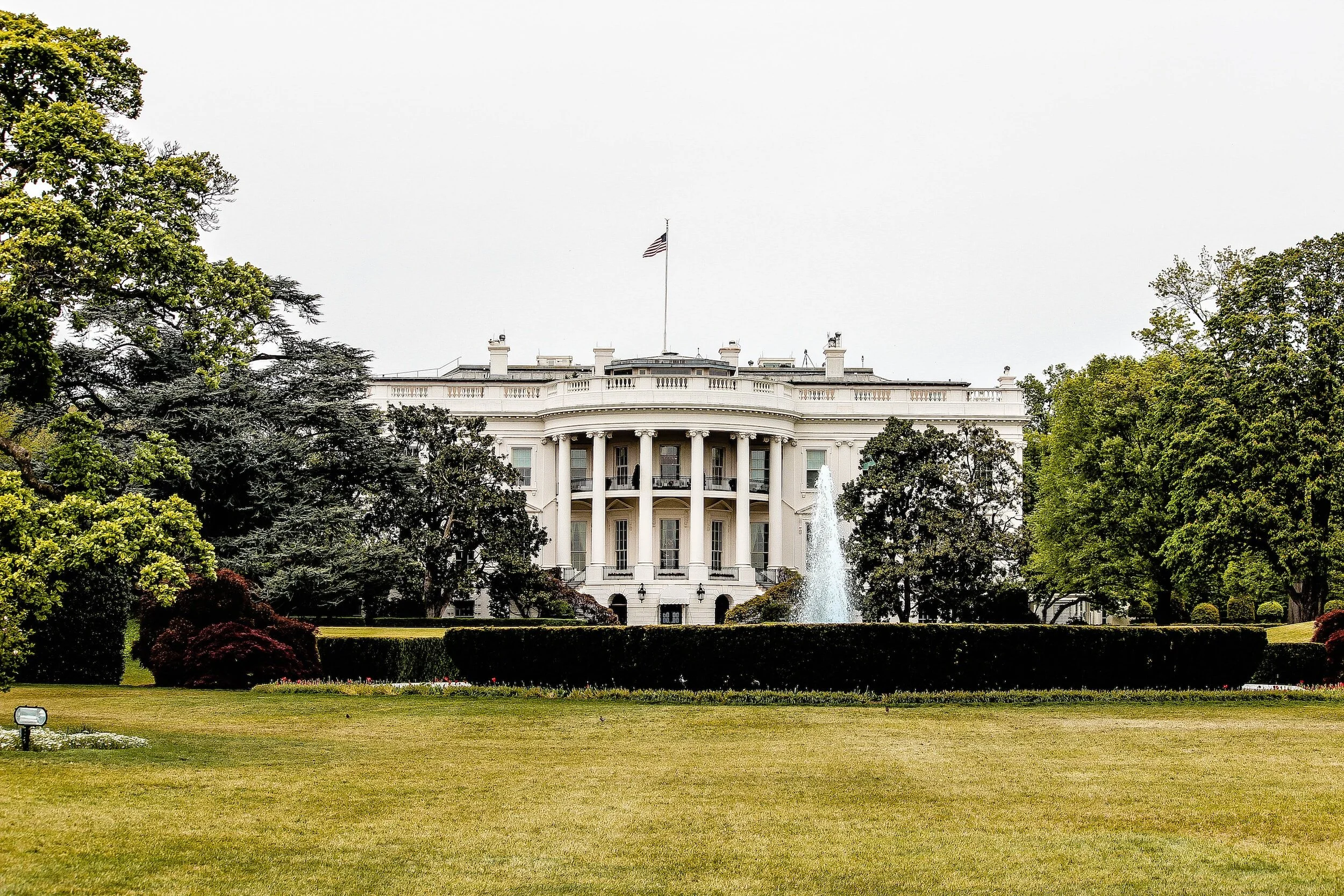
President Biden Signs Executive Order to Regulate U.S. Investments in Sensitive Technologies in Countries of Concern
President Biden signed an executive order on August 9, 2023, that will regulate certain U.S. investments in countries of concern in entities engaged in activities involving sensitive technologies critical to national security. The order specifically targets investments in semiconductors and microelectronics, quantum information technologies, and artificial intelligence.
President Biden signed an executive order on August 9, 2023, that will regulate certain U.S. investments in countries of concern in entities engaged in activities involving sensitive technologies critical to national security. The order specifically targets investments in semiconductors and microelectronics, quantum information technologies, and artificial intelligence.
The order identifies the People's Republic of China (PRC) as a country of concern and requires the Secretary of the Treasury develop a program to regulate U.S. investments in these sensitive technologies in countries of concern. The program will prohibit certain investments in entities that engage in specific activities related to these technology areas that pose the most acute national security risks, and require notification for other sensitive investments.
The order is designed to prevent foreign countries of concern from exploiting U.S. investment in these sensitive technologies to develop military, intelligence, surveillance, and cyber-enabled capabilities that risk U.S. national security.
If you are a technology company and you are concerned about how to navigate an evolving regulatory environment, contact Lanton Law today. We stay up-to-date on the latest technology policy and legal trends and can help you implement new business strategies.

H.R. 3831: The AI Disclosure Act of 2023 Explained
H.R. 3831, the AI Disclosure Act of 2023, is a bill that would require companies that use artificial intelligence (AI) to disclose certain information about their use of AI. This information would include the purpose of the AI system, the data that the AI system is trained on, the algorithms that the AI system uses, and the potential risks and benefits of the AI system. The bill would also create a new agency within the Federal Trade Commission (FTC) to oversee the implementation of the law.
H.R. 3831, the AI Disclosure Act of 2023, is a bill that would require companies that use artificial intelligence (AI) to disclose certain information about their use of AI. This information would include the purpose of the AI system, the data that the AI system is trained on, the algorithms that the AI system uses, and the potential risks and benefits of the AI system. The bill would also create a new agency within the Federal Trade Commission (FTC) to oversee the implementation of the law.
This bill is important because it would increase transparency and accountability in the use of AI. By requiring companies to disclose information about their use of AI, the bill would help consumers to understand how AI is being used and to make informed decisions about whether to use AI-powered products and services.
It is still too early to say whether H.R. 3831 will become law. However, the bill has generated a lot of interest and debate, and it is likely to continue to be a topic of discussion in the coming months.
If you are a stakeholder in the AI industry, you should be aware of H.R. 3831 and its potential implications for your business. Lanton Law’s technology section can help you to understand the bill and to help you develop a strategy to comply with looming regulatory oversight.
Contact Lanton Law today to learn more about how we can help you with your AI legal and policy needs.

Tech Firms Sign White House AI Pledge Over Concerns of Potential AI Risks
This week the Biden Administration secured voluntary commitments from seven leading artificial intelligence (AI) companies, including Amazon, Anthropic, Google, Inflection, Meta, Microsoft, and OpenAI, to promote the safe, secure, and transparent development of AI technology.
This week the Biden Administration secured voluntary commitments from seven leading artificial intelligence (AI) companies, including Amazon, Anthropic, Google, Inflection, Meta, Microsoft, and OpenAI, to promote the safe, secure, and transparent development of AI technology. These commitments focus on three fundamental principles: safety, security, and trust. The companies pledge to conduct internal and external security testing of their AI systems before release, share information on managing AI risks with various stakeholders, and invest in cybersecurity measures. They also commit to ensuring users can identify AI-generated content, publicly report on AI capabilities and limitations, prioritize research on societal risks like bias and discrimination, and develop AI systems to address significant challenges such as cancer prevention and climate change.
The Biden Administration will continue its efforts to establish an international framework for AI governance and has already consulted with numerous countries on the voluntary commitments. The administration aims to ensure AI development is conducted safely and responsibly to protect Americans from harm and discrimination. Prior actions include convening industry leaders to discuss AI risks, signing an Executive Order to address bias in technology, and investing in AI research and development institutes across the country. The administration is also preparing policy guidance for federal agencies to ensure AI systems prioritize the protection of citizens' rights and safety.
Artificial Intelligence is clearly an emerging field that is both exciting and risky. For tech and healthcare stakeholders, the possibilities can be endless when examining potential legal and regulatory pitfalls.
Lanton Law is a national boutique law and government affairs firm that closely monitors legislative, regulatory and legal developments in the healthcare and technology spaces. Contact us to learn about how either our legal or lobbying services can help you attain your goals.

U.S. Senate Passes the Innovation and Competition Act
Earlier this month the U.S. Senate passed a rare bi-partisan bill called the United States Innovation and Competition Act, which seeks to improve America's competitive edge by investing billions of dollars in scientific and technological innovations – including artificial intelligence, computer chips and robotics.
Earlier this month the U.S. Senate passed a rare bi-partisan bill called the United States Innovation and Competition Act, which seeks to improve America's competitive edge by investing billions of dollars in scientific and technological innovations – including artificial intelligence, computer chips and robotics. The bill would boost funding for research and technology manufacturing to increase America's competitiveness, strengthen national security and grow the economy. The bill’s future is uncertain in the U.S. House of Representatives, where the House has a similar bill but it is unlikely that there will not be some kind of compromise between the House and Senate, especially where national security is concerned.
Lanton Law’s technology practice has been monitoring similar legislative and legal developments. If you are a technology or healthcare/life science stakeholder with questions about the current landscape or if you would like to discuss how your organization’s strategic initiatives might be impacted by either Congress, regulatory agencies or legal decisions, contact us today.

New Congressional Bi-Partisan Privacy Proposal Introduced
A new bi-partisan privacy bill has been introduced by Senators Wyden (D-OR) and Paul (R-KY) titled “The Fourth Amendment is Not For Sale Act.” The bill proposes to close a legal loophole and prevent law enforcement and intelligence agencies from obtaining subscriber or customer records in exchange for anything of value, and to address communications and records in the possession of intermediary internet service providers. Currently, this information can be bought and sold without judicial oversight.
A new bi-partisan privacy bill has been introduced by Senators Wyden (D-OR) and Paul (R-KY) titled “The Fourth Amendment is Not For Sale Act.” The bill proposes to close a legal loophole and prevent law enforcement and intelligence agencies from obtaining subscriber or customer records in exchange for anything of value, and to address communications and records in the possession of intermediary internet service providers. Currently, this information can be exchanged without judicial oversight.
According to the press release, some highlights of the proposal include:
Requires the government to get a court order to compel data brokers to disclose data — the same kind of court order needed to compel data from tech and phone companies.
Stops law enforcement and intelligence agencies buying data on people in the U.S. and about Americans abroad, if the data was obtained from a user’s account or device, or via deception, hacking, violations of a contract, privacy policy, or terms of service. As such, this bill prevents the government buying data from Clearview.AI.
Extends existing privacy laws to infrastructure firms that own data cables & cell towers.
Closes loopholes that would permit the intelligence community to buy or otherwise acquire metadata about Americans’ international calls, texts and emails to family and friends abroad, without any FISA Court review.
Ensures that intelligence agencies acquiring data on Americans do so within the framework of the Foreign Intelligence Surveillance Act and that when acquiring Americans’ location data, web browsing records and search history, intelligence agencies obtain probable cause orders. This language is similar to language that was in the 2020 Wyden-Daines amendment to legislation to reform Section 215.
Takes away the Attorney General’s authority to grant civil immunity to providers and other third parties for assistance with surveillance not required or permitted by statute. Providers retain immunity for surveillance assistance ordered by a court.
Lanton Law is a national boutique law and lobbying firm that focuses on technology and healthcare. If you are an industry stakeholder with questions about the current landscape or if you would like to discuss how your organization’s strategic initiatives might be impacted by either Congress, regulatory agencies or legal decisions, contact us today.