
President Biden Signs Executive Order to Regulate U.S. Investments in Sensitive Technologies in Countries of Concern
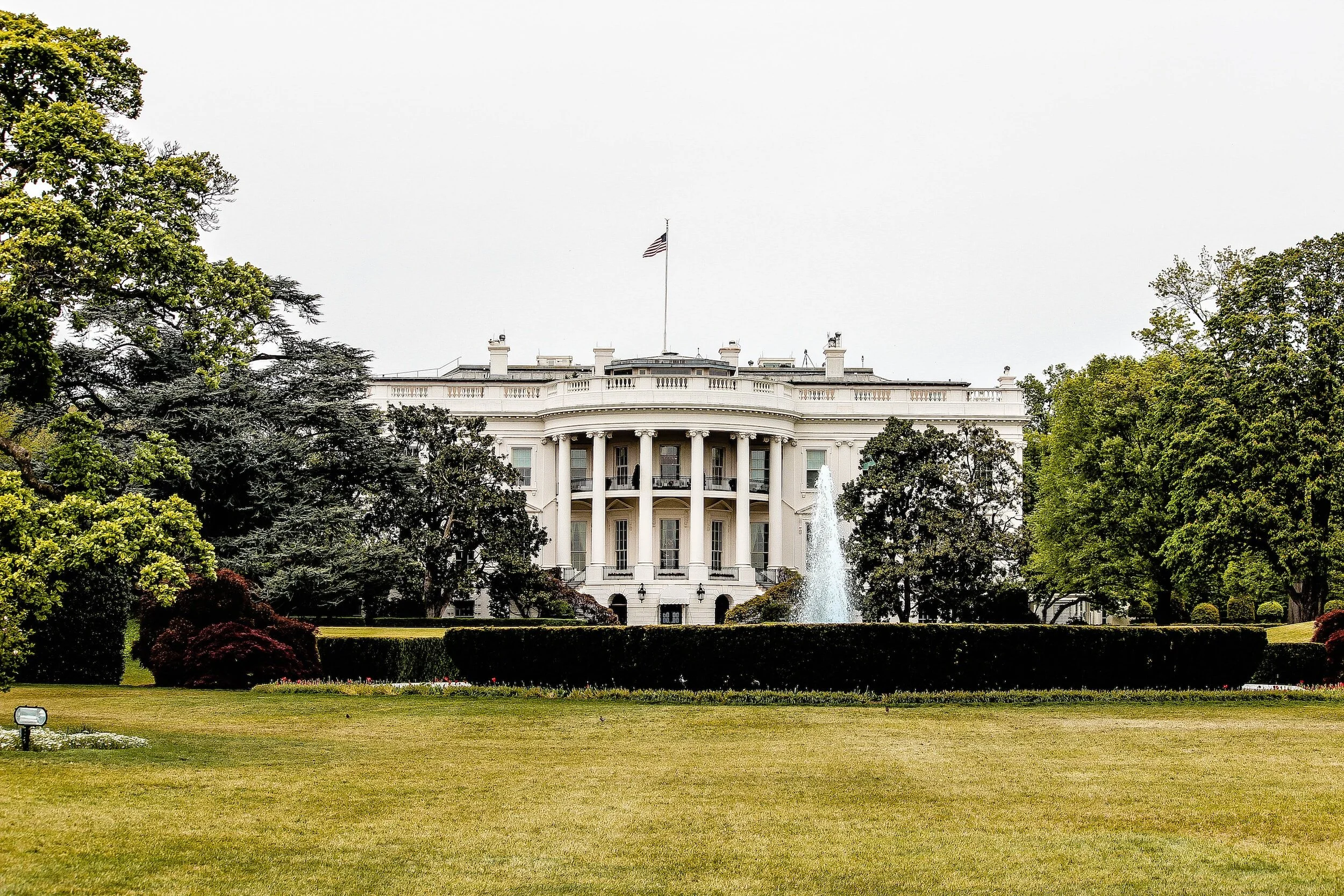
President Biden signed an executive order on August 9, 2023, that will regulate certain U.S. investments in countries of concern in entities engaged in activities involving sensitive technologies critical to national security. The order specifically targets investments in semiconductors and microelectronics, quantum information technologies, and artificial intelligence.
President Biden signed an executive order on August 9, 2023, that will regulate certain U.S. investments in countries of concern in entities engaged in activities involving sensitive technologies critical to national security. The order specifically targets investments in semiconductors and microelectronics, quantum information technologies, and artificial intelligence.
The order identifies the People's Republic of China (PRC) as a country of concern and requires the Secretary of the Treasury develop a program to regulate U.S. investments in these sensitive technologies in countries of concern. The program will prohibit certain investments in entities that engage in specific activities related to these technology areas that pose the most acute national security risks, and require notification for other sensitive investments.
The order is designed to prevent foreign countries of concern from exploiting U.S. investment in these sensitive technologies to develop military, intelligence, surveillance, and cyber-enabled capabilities that risk U.S. national security.
If you are a technology company and you are concerned about how to navigate an evolving regulatory environment, contact Lanton Law today. We stay up-to-date on the latest technology policy and legal trends and can help you implement new business strategies.

U.S. House Sends Chips and Science Act & Sends to the President For Signature
The U.S. House has passed the bipartisan Chips and Science Act of 2022. The bill can be viewed here. The bill aims to strengthen U.S. competitiveness with China by providing more than $52 billion for U.S. companies producing computer chips, as well as billions more in tax credits to encourage investment in chip manufacturing. It also provides tens of billions of dollars to fund scientific research, and to spur the innovation and development of other U.S. technologies.
The U.S. House has passed the bipartisan Chips and Science Act of 2022. The bill can be viewed here. The bill aims to strengthen U.S. competitiveness with China by providing more than $52 billion for U.S. companies producing computer chips, as well as billions more in tax credits to encourage investment in chip manufacturing. It also provides tens of billions of dollars to fund scientific research, and to spur the innovation and development of other U.S. technologies.
This legislation will provide several opportunities for both technology companies and technology stakeholders to expand and thrive.
Lanton Law is a national boutique law and lobbying firm that focuses on technology and healthcare. If you are a tech or healthIT industry stakeholder with questions about the current landscape or if you would like to discuss how your organization’s strategic initiatives might be impacted by either Congress, regulatory agencies or legal decisions, contact us today.

The Policy Conversations Around Tik-Tok Warrant Monitoring from Technology Stakeholders
With all the news surrounding the Trump Administration and its complex political and economic relationship with China, some may find it surprising that the latest company suspected to be possibly impacted by the two countries would be TikTok.
With all the news surrounding the Trump Administration and its complex political and economic relationship with China, some may find it surprising that the latest company suspected to be possibly impacted by the two countries would be TikTok.
According to its website, TikTok is an app for short-form mobile videos. The company says it has offices in Los Angeles, New York, London, Paris, Berlin, Dubai, Mumbai, Singapore, Jakarta, Seoul, and Tokyo, but the company does have close ties to China through the company’s owner ByteDance; a Beijing-based technology company. TikTok has become more mainstream in the U.S. due to the pandemic, whereby various users including small business owners have been using the app to expand their economic reach.
The last few months have brought increased scrutiny over the app. Both India and Indonesia have banned the app, while the U.S. Navy and other U.S. armed forces branches have banned the app as well. Most of the concerns have been around the issue of national security and how much user information is shared with the Chinese government.
TikTok responded to this brewing controversy last year with a statement that addressed the company’s viewpoint on data privacy and security as well as content concerns. In response to the Administration threatening that it is considering a ban on TikTok, the company has been increasing its lobbying presence to hedge against a possible ban.
Will a possible ban have a chilling effect on U.S. technology companies? Currently, the answer is no. We don’t want to cause controversy by suggesting this, but with the recent activities in Congress, the Federal Trade Commission and the Department of Justice that we have been reporting about, warrants that technology stakeholders keep a close watch on how the industry is receiving a lot of policy interests. It is safe to believe that technology policy is on the verge of changing, as technology stakeholders can no longer sit back and think that this industry is immune from regulatory oversight.
Lanton Law is a national boutique law and government affairs firm that focuses on technology, healthcare/life sciences and finance. If you are an industry stakeholder with questions about the current landscape or if you would like to discuss how your organization’s strategic initiatives might be impacted by either Congress, regulatory agencies or legal decisions, contact us today.

EXIM Policies Impacting Biotechnology & Life Science Stakeholders
The Export-Import Bank of the United States (EXIM) has established some new policies that will impact several stakeholder groups, especially biotechnology, biomedical sciences and life sciences stakeholders.
The Export-Import Bank of the United States (EXIM) has established some new policies that will impact several stakeholder groups, especially biotechnology, biomedical sciences and life sciences stakeholders.
According to the EXIM’s release, the “EXIM’s historic seven-year reauthorization (P.L. 116-94), signed into law December 20, 2019, directs EXIM to establish a new “Program on China and Transformational Exports” (see Sec. 402). The Program’s purpose is to support the extension of loans, guarantees, and insurance, at rates and on terms and other conditions, to the extent practicable, that are fully competitive with rates, terms, and other conditions established by the People’s Republic of China or by other covered countries (as designated by the Secretary of the Treasury). The law charges EXIM with a goal of reserving not less than 20 percent of the agency’s total financing authority (i.e., $27 billion out of a total of $135 billion) for support made pursuant to the program, with a focus on specific industries.”
To achieve full implementation, EXIM will hold a July 16th call with Biotechnology and Biomedical Sciences. Additional information on this call can be found here.
Lanton Law is a national boutique law and government affairs firm that focuses on healthcare/life sciences, technology and finance. If you are an industry stakeholder with questions about the current landscape or if you would like to discuss how your organization’s strategic initiatives might be impacted by either Congress, regulatory agencies or legal decisions, contact us today.